
Finger joint cutters are among the most critical tools in woodworking, enabling the creation of strong, precise, and aesthetically pleasing joints. Whether used in furniture manufacturing, decorative woodwork, or structural applications, these tools significantly impact the quality and efficiency of production. Sin embargo, like all precision instruments, they require proper understanding, handling, and maintenance. This article discusses common challenges associated with finger joint cutters, offers practical solutions, provides guidance on selection.

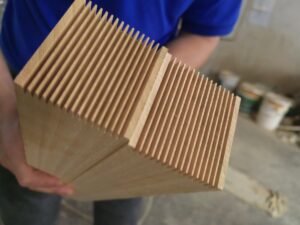
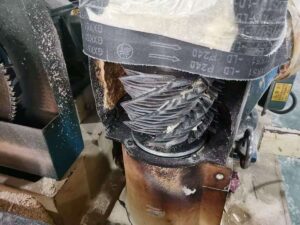
Common Problems and Detailed Solutions
- Side Gaps in Joints
Gaps between joined wood pieces are a frequent issue, often caused by insufficient flatness of the cutter blades or improper machine setup. Such gaps not only weaken the joint but also compromise its appearance. To resolve this, inspect each blade for deformation. Replacing worn or bent blades is essential. Además, verify the saw blade spacing on the dovetailing machine. Even a minor misalignment can cause gaps, so careful adjustment is necessary for a seamless fit.
- Blunt or Dull Blades
Con el tiempo, blades lose their sharpness, resultando en cortes toscos, burnt wood surfaces, and reduced efficiency. This is often due to prolonged use without maintenance or processing abrasive materials. Regular sharpening is crucial. Use a fine-grit grinding wheel (around 500 grit) and sharpen only the front angle of the blade. Avoid mixing old and new blades in the same set, as inconsistencies can lead to uneven joints and further complications.
- Chipped or Broken Teeth
Teeth damage typically occurs when the cutter encounters hard obstacles such as knots, nails, or foreign materials in the wood. This can also happen due to excessively high feed rates. To prevent this, always inspect wood for impurities before processing. Para maderas duras, consider using cutters with larger, more robust teeth. Adjust the feed rate according to the material’s density—slower speeds for harder woods can significantly reduce the risk of damage.
- Inconsistent Joint Depth
Variations in joint depth often stem from differences in the outer diameters of cutters within a set or improper installation on the machine shaft. This leads to weak connections and visible defects. Ensure all cutters in a set are from the same batch and have uniform specifications. Before installation, clean the machine shaft and cutter holes to avoid misalignment. Using precision-matched sets can greatly enhance joint consistency.
- Glue Application Issues
Even with perfectly cut joints, poor glue application can cause failures. Issues like uneven spread, black glue lines, or weak bonds often arise from using low-quality glue or incorrect application methods. Use a stiff-bristled brush to apply glue evenly along the joint surfaces. Avoid acidic glues that can corrode the wood over time. Selecting the right adhesive for the specific wood type is equally important.
Key Considerations When Choosing a Finger Joint Cutter
- Material and Design
The durability and performance of a finger joint cutter largely depend on the material and design. Hard alloy blades are highly recommended for their resistance to wear and ability to maintain sharpness. Además, choose between integral cutters for stability and stackable cutters for flexibility. The right design can improve both precision and ease of use.
- Accuracy and Compatibility
Precision is non-negotiable in woodworking. Ensure the cutters meet strict tolerances in flatness, parallelism, and verticality. Incompatibility with the machine’s shaft size or feed direction can cause operational issues. Always verify technical specifications before purchasing to avoid costly mismatches.
- Tooth Configuration and Joint Depth
The number of teeth and their configuration should align with the machine’s speed and the desired finish. Fewer teeth are suitable for high-speed operations, while more teeth provide a smoother finish. Similarly, joint depth should be selected based on the application—deeper joints offer stronger bonds but require more material.
Recommendation: DH Company’s Finger Joint Cutters
With over 26 years of experience in the woodworking tools industry, DH Company has established itself as a reliable manufacturer of high-quality finger joint cutters. Their products are engineered for precision, durability, and ease of use. The cutters feature hard alloy blades that stay sharp longer, reducing the frequency of maintenance. Además, each set is meticulously tested to ensure consistency in outer diameter and tooth configuration.
DH Company also provides excellent customer support, helping woodworkers choose the right tools for their specific needs. Whether you are engaged in large-scale furniture production or custom woodworking projects, their finger joint cutters deliver reliable performance and longevity.
Conclusión
Using finger joint cutters effectively requires a combination of the right tools, proper maintenance, and operational knowledge. By addressing common problems proactively and selecting cutters based on material quality, exactitud, and design, woodworkers can achieve exceptional results. DH Company’s extensive experience and commitment to quality make their finger joint cutters an excellent choice for professionals seeking reliability and superior performance.
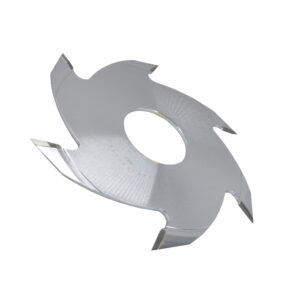
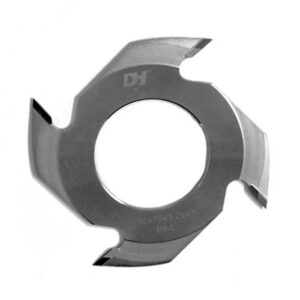


Choose the right cutter for precise, strong woodworking joints.
That’s right! ^^