
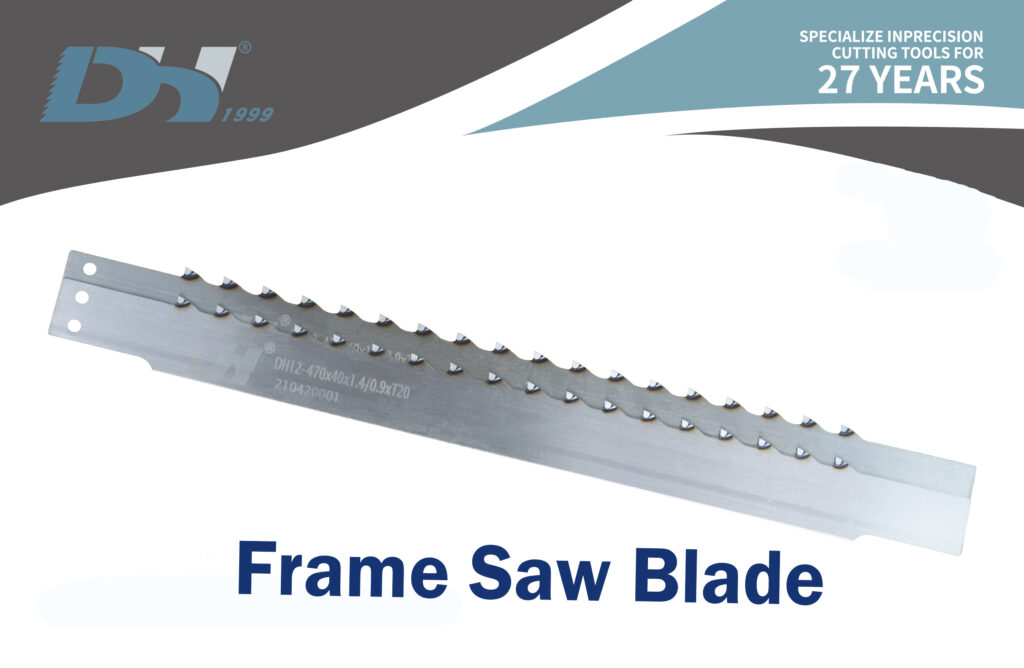
En el procesamiento de madera maciza y la conversión de madera en grandes volúmenes, el TCT frame saw blade has become an indispensable tool for sawmills and large-scale joinery operations. Estas hojas con punta de carburo de tungsteno, Montado en sierras de marco alternativo., Ofrecen una resistencia al desgaste excepcional y una calidad de corte constante al procesar maderas duras., maderas blandas, e incluso productos de madera de ingeniería. With a multi-teeth design engineered for fast and clean cuts, these blades provide smoother cutting action and better surface finishes compared to conventional options.
Sin embargo, incluso los mejores TCT frame saw blade can encounter performance issues when subjected to improper tension, incorrect setup, o mantenimiento inadecuado. Comprender sus funciones principales., reconocer problemas operativos comunes con soluciones prácticas, and following essential safety practices ensures you maximize the service life and cutting performance these premium blades offer.
Funciones primarias de TCT Frame Saw Blades en carpintería
El TCT frame saw blade serves as the primary cutting element in frame sawing machines, which are used extensively in sawmills and timber processing facilities for converting logs into dimensioned lumber. Unlike band saws that use continuous loops, frame saws employ straight blades mounted in a reciprocating frame that moves up and down while the workpiece is fed through.
Tungsten carbide tips are brazed onto the blade teeth, providing exceptional hardness and wear resistance that enables clean cutting through abrasive bark, embedded dirt, and timber species containing high silica content. The multi-teeth design ensures that the blade cuts through larger pieces of wood without splintering or tearing, resulting in better surface finish and faster workflow for woodworkers.
Common applications include producing rough-sawn lumber, precision dimensioning for furniture components, wood panel cutting, cabinet manufacturing, and processing hardwoods where straight cuts are essential. El TCT frame saw blade mantiene su ventaja a través de tiradas de producción extendidas, Reducir el tiempo de inactividad para cambios de cuchillas y reafilado..
With custom sizing available—DH Cutter offers blades in various lengths, widths (including 40mm options), and thicknesses to suit different frame saw models and cutting requirements—these blades deliver professional-quality results in demanding mill environments.

Cinco problemas comunes y soluciones prácticas
Problema 1: Desgaste prematuro o embotamiento de los dientes
One of the most frequent complaints with the TCT frame saw blade is teeth wearing down faster than expected. This typically occurs when cutting extremely abrasive timber species, when the blade is pushed beyond its capacity, or when the wood contains excessive silica, embedded dirt, or foreign objects.
Solución: Primero, Verifique que esté utilizando la hoja correcta para su material.. Mientras TCT frame saw blades are highly wear-resistant, timber with high silica content may require blades with specialized carbide grades. Segundo, reduce feed pressure—forcing material too aggressively generates heat that accelerates wear.
Tercero, ensure proper blade speed and stroke rate; excessive speed increases friction dramatically. Cuatro, Inspeccione su pieza de trabajo en busca de objetos extraños como clavos., piedras, or sand before processing. Finalmente, ensure your TCT frame saw blade is properly broken in by running at reduced feed for the first several cuts.

Problema 2: Chipped or Broken Carbide Tips
Chipped or missing carbide tips on a TCT frame saw blade compromise cut quality and create serious safety hazards. This problem usually results from shock loading—suddenly encountering hard objects, forcing the blade through knots, o usar una presión de alimentación excesiva en materiales densos. Carburo, while extremely hard, is also brittle and susceptible to impact damage.
Solución: Replace the blade immediately if carbide tips are missing or severely chipped, as a damaged TCT frame saw blade risks catastrophic failure. Para prevenir la recurrencia, implement rigorous lumber inspection protocols to remove nails, grapas, and embedded debris before cutting. Segundo, reduce feed pressure when entering cuts and avoid forcing the blade through large knots. Tercero, ensure the blade is properly tensioned within the frame; excessive clearance allows the blade to flex and subject individual teeth to disproportionate loads.
Problema 3: Cortes errantes o torcidos
cuando el TCT frame saw blade comienza a cortar la línea prevista, El problema a menudo se relaciona con la tensión de la hoja., juego de dientes, or frame alignment. Una hoja que se desplaza hacia los lados produce material desperdiciado y compromete la precisión de las piezas., particularly detrimental in dimensioning operations.
Solución: Check blade tension first—under-tensioned TCT frame saw blades wander unpredictably. Consulte las recomendaciones del fabricante de su sierra para obtener la tensión adecuada.. Segundo, verify that the blade guides and frame alignment are correct; misalignment forces the blade to cut at an angle. Tercero, inspect the tooth set pattern; uneven set causes irregular cutting. If the blade has been resharpened multiple times, the set may be compromised. Cuatro, ensure the workpiece is fed straight and consistently without lateral pressure.

Problema 4: Rotura de la hoja en la soldadura o garganta
Mientras que el TCT frame saw blade is designed for durability, puede romperse inesperadamente cuando se somete a estrés por fatiga, tensión inadecuada, o falta de mantenimiento. Hairline cracks often begin at the weld joint or in the tooth gullet—areas of highest tensile stress during the reciprocating action. En comparación con las hojas estándar, reinforced materials and hardened teeth ensure better performance in high-volume applications, but regular inspection remains essential.
Solución: Regular inspection is critical for preventing breakage. Examine the TCT frame saw blade for cracks before each use, particularly around the welded joint. Segundo, Evite tensar demasiado la hoja, ya que esto tensiona el respaldo de acero y acelera la formación de grietas.. Tercero, Inspeccione la soldadura de la hoja con regularidad.; una soldadura mal terminada es un punto de falla común.
Al instalar un nuevo TCT frame saw blade, Realice un procedimiento de rodaje adecuado ejecutando con avance reducido durante los primeros cortes.. Finalmente, never store blades in conditions that could introduce stress points.
Problema 5: Marcas de quemaduras o superficies vidriadas en la pieza de trabajo
Las marcas de quemaduras en la superficie cortada indican un calor de fricción excesivo generado por el TCT frame saw blade. Este problema generalmente se debe a dientes desafilados., velocidad de alimentación insuficiente, o acumulación de resina en los bordes cortantes.
Solución: Resharpen or replace the TCT frame saw blade al primer signo de degradación de la superficie. TCT blades require specialized diamond wheel grinding for proper resharpening. Segundo, aumentar la velocidad de alimentación; alimentar demasiado lentamente hace que la hoja roce en lugar de cortar, generando calor. Tercero, Limpiar bien la hoja; La brea y la resina acumuladas en los dientes aíslan el calor y crean fricción.. Use appropriate cleaning solutions that dissolve wood resins without damaging carbide. Finalmente, reduzca la profundidad del corte si la quema persiste: realizar varias pasadas más ligeras genera menos fricción.

Why Choose DH Cutter for Your TCT Frame Saw Blades?
For sawmill operators, cabinet manufacturers, and timber processors seeking reliable performance and long-term value, DH Cutter se destaca como una fuente confiable de TCT frame saw blades. Our blades feature premium-grade tungsten carbide tips with optimized tooth geometry for superior cutting action and extended service life. The multi-teeth design ensures clean, precise cuts with minimal vibration, essential in applications where surface quality matters—such as wood panel cutting, furniture production, and mold-making.
Desde la perspectiva del propietario de una empresa, los puntos débiles son claros: costoso tiempo de inactividad por cambios de cuchillas y reafilado, inconsistent cut quality that leads to material waste and rework, y cuchillas que fallan prematuramente bajo cargas de producción pesadas. Cortadoras DH TCT frame saw blades address these challenges head-on with exceptional wear resistance and consistent cutting accuracy—meaning fewer interruptions, menos chatarra, y mayor rendimiento.
We offer comprehensive customization options for length, ancho (including 40mm), and thickness to suit various frame saw models and specific machining requirements. Como proveedor de fábrica, we offer competitive wholesale pricing, eliminating middlemen to provide cost-effective solutions for businesses requiring large quantities of high-performance saw blades.
Para el operador usuario final, frustrations often include blades that dull too quickly on abrasive timber, burning that ruins board surfaces, and the constant struggle to achieve straight, accurate cuts. DH Cutter’s precision manufacturing ensures consistent tooth geometry, tensión adecuada, y soldadura fuerte de carburo confiable que resiste condiciones exigentes.
Our blades maintain sharpness through hardwoods and abrasive species, reducing the frequency of frustrating mid-run blade changes. With ISO certifications ensuring high industrial standards for quality and safety, responsive technical support, factory-direct pricing, and reliable after-sales service including free samples and a 1-year warranty, DH Cutter helps you keep production running smoothly and efficiently.
Essential Safety Recommendations for TCT Frame Saw Blades
trabajando con el TCT frame saw blade requiere un estricto cumplimiento de las prácticas de seguridad. Utilice siempre gafas de seguridad o una máscara facial completa: las puntas de carburo rotas o las piezas de trabajo arrojadas pueden provocar lesiones oculares graves.. Cut-resistant gloves protect hands during blade changes and setup, pero nunca use guantes cuando opere la sierra.
Antes de cada uso, inspeccionar el TCT frame saw blade por dientes perdidos, grietas, o soldadura dañada; una hoja comprometida puede fragmentarse a la velocidad de funcionamiento. Ensure all guards and safety devices are in place and properly adjusted—never bypass safety features. Al cambiar las cuchillas, desconectar la energía en la fuente. Mantener un área de trabajo limpia; El aserrín y los escombros acumulados crean riesgos de incendio y resbalones.. Finalmente, never exceed the maximum stroke speed rating specified for the TCT frame saw blade.
Conclusión
El TCT frame saw blade is the backbone of high-volume timber processing, delivering precision and durability across demanding solid wood applications. By understanding its primary functions and recognizing the five common issues outlined above—premature wear, chipped tips, cortes errantes, rotura, and burn marks—operators can implement practical solutions that restore cutting quality and extend blade life.
With DH Cutter’s premium blades featuring premium carbide grades, multi-teeth design for enhanced precision, custom sizing options to fit various equipment, consistent performance for even the most demanding sawmill and woodworking operations. Inspección periódica, tensión adecuada, tasas de alimentación apropiadas, y el cumplimiento de las prácticas de seguridad garantizan que TCT frame saw blade ofrece resultados excepcionales manteniendo un ambiente de trabajo seguro.
Hoja de sierra de carburo para marco de hoja de sierra de madera