
In the world of cutting tools, few innovations have been as transformative as the bimetal band saw blade. This cleverly engineered tool has become a cornerstone in workshops, revolutionizing how we cut everything from sturdy metals to fine woods. Its secret lies in a smart fusion of two different metals, each contributing unique properties to create a blade that is both incredibly tough and surprisingly flexible.
This guide will walk you through everything you need to know about these versatile blades, from their construction and types to their best uses and care.


What Makes It “Bimetal Band Saw Blade”? Construction and Manufacturing
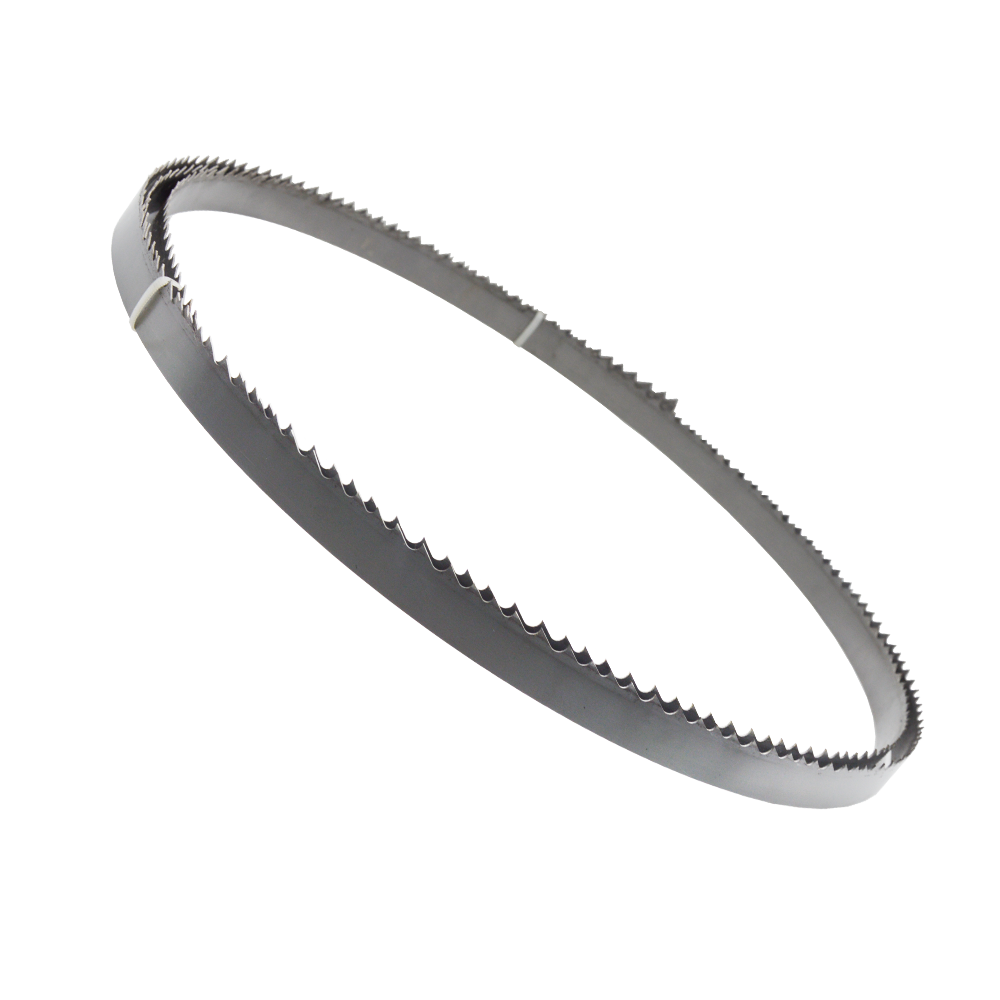
Como el nombre sugiere, a bimetal band saw blade is made by joining two distinct types of steel into one superior tool. This is not a simple layering but a sophisticated manufacturing achievement. The blade’s body, or backing material, is made from a flexible and fatigue-resistant alloy spring steel. This gives the blade the necessary strength to withstand the immense tension and continuous flexing on a band saw machine. The cutting edge, however, is a different story. The teeth are made from a high-speed steel (like M42 cobalt steel) known for its exceptional hardness and ability to retain a sharp edge even under high heat.
The process of uniting these two metals is precise. Techniques like electronic beam welding in a vacuum or specialized spot welding are used to fuse the high-speed steel teeth onto the spring steel body. Following welding, the blade undergoes critical heat treatment processes—often separately for the teeth and the back—to optimize hardness and toughness. The final steps involve grinding the teeth to a sharp, precise finish, ensuring the bimetal band saw blade is ready for demanding tasks.


Two Main Arenas: Woodworking and Metalworking
While supremely capable with metal, the bimetal band saw blade is also a favorite in advanced woodworking. The key difference between blades for these two materials primarily lies in the tooth design and spacing.
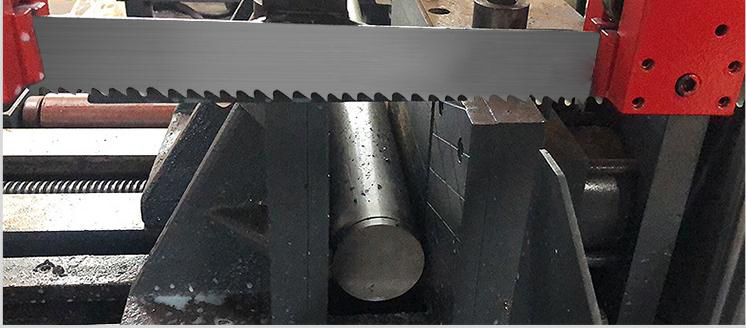
* Metalworking Blades: These are the most common application. Designed to cut through hard materials, they feature smaller, harder teeth. The spacing of the teeth (measured in teeth per inch, or TPI) is chosen based on the metal type and thickness.
For cutting solid bars or thick structural steel, a blade with a lower TPI (like 2/3 o 3/4) is used. For cutting thin-walled tubes or harder alloys like stainless steel, a higher TPI (como 10/14) is necessary to ensure smooth cuts and prevent tooth damage. Specialized tooth patterns like “raker sets” or “claw” shapes are engineered for specific challenges, such as cutting high-alloy steels or reducing vibration.
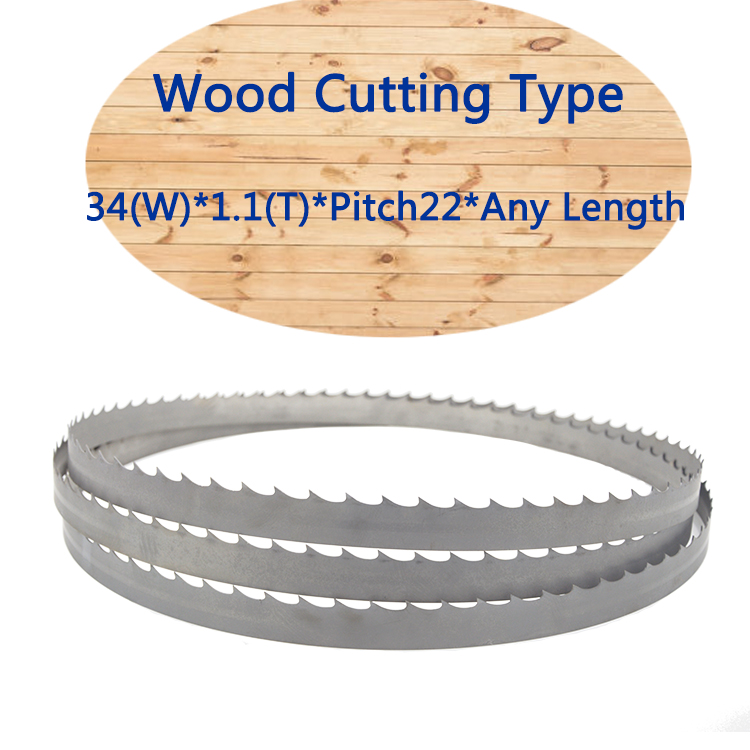
* Woodworking Blades: When used for wood, a bimetal blade typically has larger, more widely spaced teeth with deep gullets to efficiently clear sawdust. Their advantage in woodworking comes from the wear-resistant teeth, which stay sharp much longer than standard carbon steel wood-cutting blades when processing hardwoods, abrasive composite boards, or even wood with embedded nails.

Capabilities and Ideal Applications
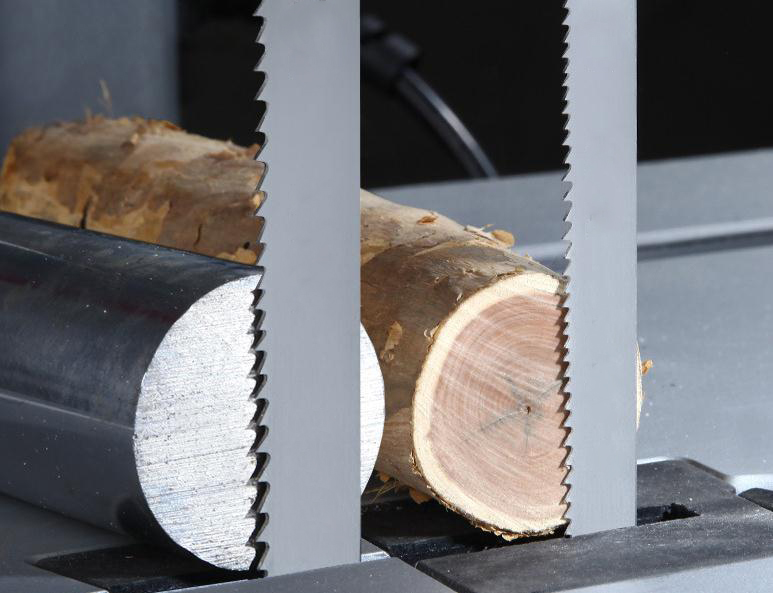
The versatility of a bimetal band saw blade is remarkable. In metal shops, it cleanly slices through structural steel, acero inoxidable, tool steel, aluminio, brass, and even tough plastics. It can handle a variety of shapes—solid blocks, pipes, profiles, and bundles. The result is a precise, straight cut with a good surface finish, often eliminating the need for further machining.
Para carpinteros, its durability makes it perfect for resawing thick hardwoods, cutting curves in dense materials, or any production work where long blade life is crucial to reduce downtime and cost.
Bimetal vs. Ordinary Blades: A Clear Advantage
The difference between a bimetal blade and an ordinary carbon steel blade is significant. Traditional blades are made from a single type of steel, forcing a compromise between hardness (for sharpness) and flexibility (to prevent breaking).
A bimetal band saw blade eliminates this compromise. Its high-speed steel teeth are far harder and more heat-resistant, meaning they stay sharp up to three times longer than standard blades.
Mientras tanto, the flexible spring steel back absorbs stress and vibration, dramatically reducing the chance of premature cracking or catastrophic failure. This synergy makes the bimetal design not only more efficient and precise but also more economical in the long run, despite a higher initial cost.

Essential Maintenance for Maximum Life
To get the full value from your bimetal band saw blade, proper use and care are essential:
* Proper Break-in: A new blade’s teeth are extremely sharp and slightly brittle. Always start by running it at reduced speed and feed pressure for the first few hundred square centimeters of cut. This gently wears off microscopic imperfections and prepares the teeth for full-power work, potentially tripling the blade’s overall life.
* Use the Correct Settings: Match the blade’s speed (SFPM) and feed pressure to the material. Harder materials require slower speeds. Listening to the cut and observing the chips can guide you; ideal chips are loosely curled and warm to the touch.
* Ensure Adequate Lubrication: Use the correct cutting fluid or coolant. This reduces heat, lubricates the cut, and flushes away chips, preventing premature tooth wear and material welding to the blade.
* Correct Tension and Alignment: An under-tensioned blade will wander and wear unevenly, while an over-tensioned one is prone to breaking. Follow your saw manual’s guidance. También, ensure the guides are properly adjusted close to the workpiece for optimal support.
En conclusión, the bimetal band saw blade is a brilliant solution that offers the best of both worlds: unparalleled cutting endurance and resilient flexibility. By understanding its design, selecting the right type for your material, and following simple maintenance practices, you can unlock a new level of efficiency and precision in your workshop, making it an indispensable tool for any serious craftsman or manufacturer.