
Dans le domaine professionnel du travail du bois et de la transformation des panneaux industriels, peu d'outils offrent la combinaison de la précision, durabilité, et la rentabilité trouvée dans Lames de scie TCT. Ces lames de scie circulaire à pointe en carbure de tungstène sont devenues la norme de l'industrie pour la coupe du bois naturel., panneaux d'ingénierie, et même les métaux non ferreux utilisés dans la fabrication de meubles. Que vous exploitiez un atelier d'ébénisterie à volume élevé, un atelier de menuiserie, ou un chantier de construction, les performances de votreLames de scie TCT affecte directement la qualité de coupe, rendement matière, et disponibilité opérationnelle. Comprendre leur construction, avantages uniques par rapport aux alternatives, et un entretien approprié vous garantit d'extraire une valeur maximale de ces outils de coupe essentiels.

Construction et fabrication: Comment Lames de scie TCT Sont construits
Lame de scie TCT la construction commence par la sélection du matériau du corps approprié : généralement de l'acier à ressort de haute qualité ou de l'acier allié trempé qui offre une stabilité dimensionnelle lors d'une rotation à grande vitesse. Ce disque en acier subit des processus d'aplatissement et de tension de précision pour garantir qu'il reste parfaitement plat et équilibré aux vitesses de fonctionnement., empêchant les vibrations qui compromettraient la qualité de coupe.
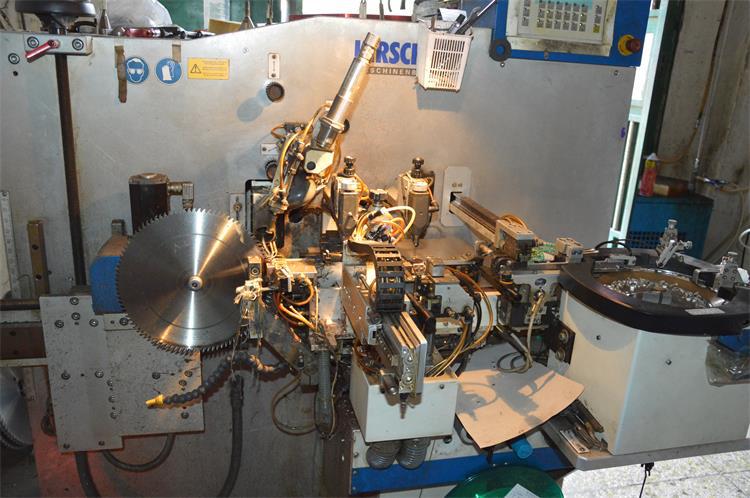
Ce qui transforme ce disque en acier en un outil de coupe efficace, c'est le processus de pointe en carbure de tungstène.. Pointes individuelles en carbure, fabriqué à partir de poudre de carbure de tungstène de première qualité frittée sous des températures et des pressions extrêmes, sont brasés avec précision sur le corps en acier à chaque emplacement de dent. Le processus de brasage nécessite un contrôle minutieux de la température pour garantir une forte liaison métallurgique sans déformer le corps en acier.. Suite à la pièce jointe, les pointes en carbure subissent un meulage de précision à l'aide de meules diamantées pour obtenir une géométrie exacte des dents, y compris les angles de crochet spécifiques, angles de dépouille, et configurations de biseau supérieures optimisées pour différentes applications de coupe.
Qualité Lames de scie TCT comportent également des fentes d'expansion ou des fonctions de soulagement des contraintes découpées au laser qui s'adaptent à la dilatation thermique lors de coupes lourdes, empêchant la déformation de la lame. La dernière étape de production implique un équilibrage dynamique pour éliminer les vibrations aux vitesses de fonctionnement, allant généralement de 3,000 pour 7,000 RPM en fonction du diamètre de la lame.
Applications et performances: Où Lames de scie TCT Exceller
Lames de scie TCT démontrer une polyvalence exceptionnelle dans tout le spectre du travail du bois. Dans les applications de traitement de panneaux, ces lames sont propres, coupe sans éclats les panneaux de particules mélaminés, MDF, et contreplaqué – des matériaux qui émousseraient rapidement les lames en acier conventionnelles. Les bords tranchants en carbure cisaillent les résines synthétiques et les adhésifs tout en résistant à l'usure abrasive causée par ces matériaux..
Pour les applications en bois massif, Lames de scie TCT gérer tout, de la coupe de bois dimensionné à la coupe transversale de bois durs pour de beaux meubles. Les configurations de dents variables permettent aux opérateurs de sélectionner des lames optimisées pour des tâches spécifiques: dents à dessus plat pour déchirer, biseau supérieur alterné pour la coupe transversale, et triple broyage pour matériaux abrasifs. Les ébénistes professionnels comptent sur Lames de scie TCT pour coupes d'onglet, papa, et opérations de rainurage où la précision et l'état de surface déterminent la qualité du produit final.
Au-delà du travail du bois conventionnel, Lames de scie TCT s'avèrent tout aussi utiles pour couper des métaux non ferreux, notamment les extrusions d'aluminium utilisées dans les agencements de magasins et les cadres de fenêtres., ainsi que les plastiques, stratifiés, et même certains panneaux en fibrociment utilisés dans la construction moderne. Cette polyvalence les rend indispensables dans les ateliers mixtes.
TCT et lames en acier rapide: Comprendre les différences critiques
Alors que l'acier rapide (SSS) les lames de scie circulaire servent aux applications de coupe de base, Lames de scie TCT offrir des avantages fondamentaux qui transforment les attentes de production. Les lames HSS reposent sur des dents en acier trempé qui offrent des performances adéquates pour une coupe nette, bois tendres mais s'émoussent rapidement lorsqu'ils sont confrontés à des matériaux abrasifs, débris incrustés, ou surfaces synthétiques. La durée de vie typique d'une lame HSS en usage professionnel peut s'étendre sur des heures plutôt que sur des jours..
Les avantages uniques de Lames de scie TCT commencez par les propriétés matérielles du carbure de tungstène. Inscription environ 89 pour 92 sur l'échelle Rockwell A, par rapport à 63 pour 65 pour HSS : le carbure maintient le tranchant de coupe dix à vingt fois plus longtemps que l'acier dans des conditions comparables. Pour un atelier d'ébénisterie traitant des panneaux de mélamine, cela signifie qu'une lame HSS peut nécessiter un affûtage toutes les quelques heures de fonctionnement, alors que Lames de scie TCT effectuent souvent des semaines de production entières entre les intervalles de maintenance.
La qualité de coupe représente un autre domaine dans lequel Lames de scie TCT surperformer les options HSS. L'extrême dureté et la rectification précise du carbure produisent des coupes plus nettes avec moins d'arrachements et de peluches sur les surfaces stratifiées.. Pour les opérations de placage de chants et de finition, cette qualité de coupe supérieure réduit les besoins de ponçage et améliore le collage. En plus, Lames de scie TCT conserver leur géométrie de coupe plus longtemps, garantir des dimensions de pièces constantes tout au long de séries de production prolongées.
Les arguments économiques en faveur Lames de scie TCT devient clair lors du calcul du coût total de possession. Bien que les prix d'achat initiaux dépassent considérablement les alternatives HSS, la durée de vie prolongée de l'outil, temps d'arrêt réduit pour les changements de lame, et une qualité de production constante offrent généralement un retour sur investissement rapide pour les opérations avec des volumes de production même modérés. En outre, Lames de scie TCT peut être réaffûté plusieurs fois (souvent cinq à dix cycles) avant que l'usure du carbure ne nécessite un remplacement, augmentant encore leur valeur.
Prolonger la vie: Entretenir vos lames de scie TCT
Même les plus beaux Lames de scie TCT nécessitent des soins systématiques pour atteindre leur durée de vie potentielle. Un nettoyage adéquat compte parmi les facteurs les plus critiques., résine, et l'accumulation d'adhésif sur les surfaces des dents augmente la friction de coupe et la génération de chaleur., usure accélérée. Les opérateurs doivent nettoyer régulièrement les lames à l'aide de solutions de nettoyage spécialisées conçues pour dissoudre les résines de bois sans endommager les pointes en carbure ou les corps en acier.. Évitez les nettoyants caustiques agressifs qui peuvent attaquer le matériau de brasage contenant les pointes en carbure..
Les vitesses d'avance et les paramètres de coupe affectent considérablement Lame de scie TCT longévité. Le fonctionnement selon les paramètres recommandés par le fabricant garantit que les dents s'engagent correctement dans les matériaux sans subir de charges de choc ou de chaleur excessives.. Lors du traitement de bois durs denses ou de composites abrasifs, la réduction des vitesses d'avance protège les pointes en carbure tout en maintenant des vitesses de production acceptables. Inversement, une alimentation trop lente génère une friction sans formation adéquate de copeaux, provoquant également une accumulation de chaleur.
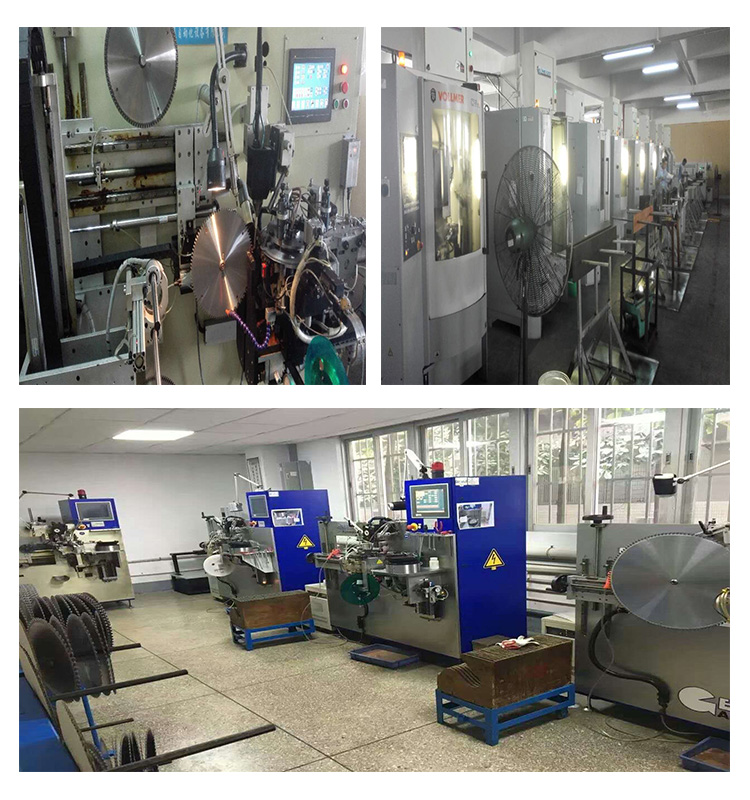
Inspection régulière du Lame de scie TCT fournit une alerte précoce en cas de problèmes en développement. Les opérateurs doivent examiner les dents pour déceler des ébréchures., motifs d'usure inégaux, ou desserrage des pointes en carbure : conditions qui indiquent des problèmes de configuration ou des problèmes de traitement nécessitant une attention particulière.. Quand l’affûtage devient nécessaire, Un équipement d'affûtage CNC spécialisé avec meules diamantées maintient la géométrie précise des dents, essentielle pour des performances de qualité.. Tenter d'aiguiser Lames de scie TCT avec des meules conventionnelles, cela endommage généralement les pointes en carbure.
Les pratiques de stockage ont également un impact sur la durée de vie des lames. Lames de scie TCT doivent être stockés dans des étuis à lames dédiés ou accrochés sur des supports magnétiques qui empêchent les dents d'entrer en contact avec des surfaces dures. Carbure, bien qu'extrêmement dur, est fragile et peut s'écailler lorsqu'il est frappé contre du métal ou du béton. Le maintien d'un stockage organisé des lames évite également les dommages qui se produisent lorsque les lames sont empilées sans serrer ou jetées dans des boîtes à outils..
Conclusion
Lames de scie TCT représentent la référence en matière d'applications professionnelles de travail du bois et de transformation de panneaux. Leur construction sophistiquée (pointes en carbure de tungstène brasées sur des corps en acier rectifiés avec précision) offre une résistance à l'usure exceptionnelle et une qualité de coupe inégalée par les lames en acier rapide conventionnelles.. Comprendre les différences entre les options TCT et HSS permet de prendre des décisions d'achat éclairées qui optimisent les coûts de production totaux. Avec un bon nettoyage, paramètres de fonctionnement appropriés, affûtage soigné, et un stockage correct, qualité Lames de scie TCT fournir des années de service fiable qui maintiennent les lignes de production en mouvement et la qualité des produits constante.

