
Nella lavorazione professionale del legno e nella lavorazione dei pannelli, IL Lame per seghe a nastro TCT delivers exceptional cutting performance and durability for demanding applications. Queste lame con punta in carburo di tungsteno mantengono l'affilatura molto più a lungo rispetto alle tradizionali lame in acciaio, rendendoli ideali per il taglio di materiali abrasivi come MDF, truciolare, legni duri, e legname congelato.
Tuttavia, anche il più bello Lame per seghe a nastro TCT can crack, snap, or chip teeth when subjected to improper operation, tensione errata, or—critically—seasonal temperature changes that alter the physical properties of the steel backing. Understanding the primary functions of these blades, recognizing the five most common problems with practical solutions, and following essential safety practices ensures you maximize blade life and cutting quality.
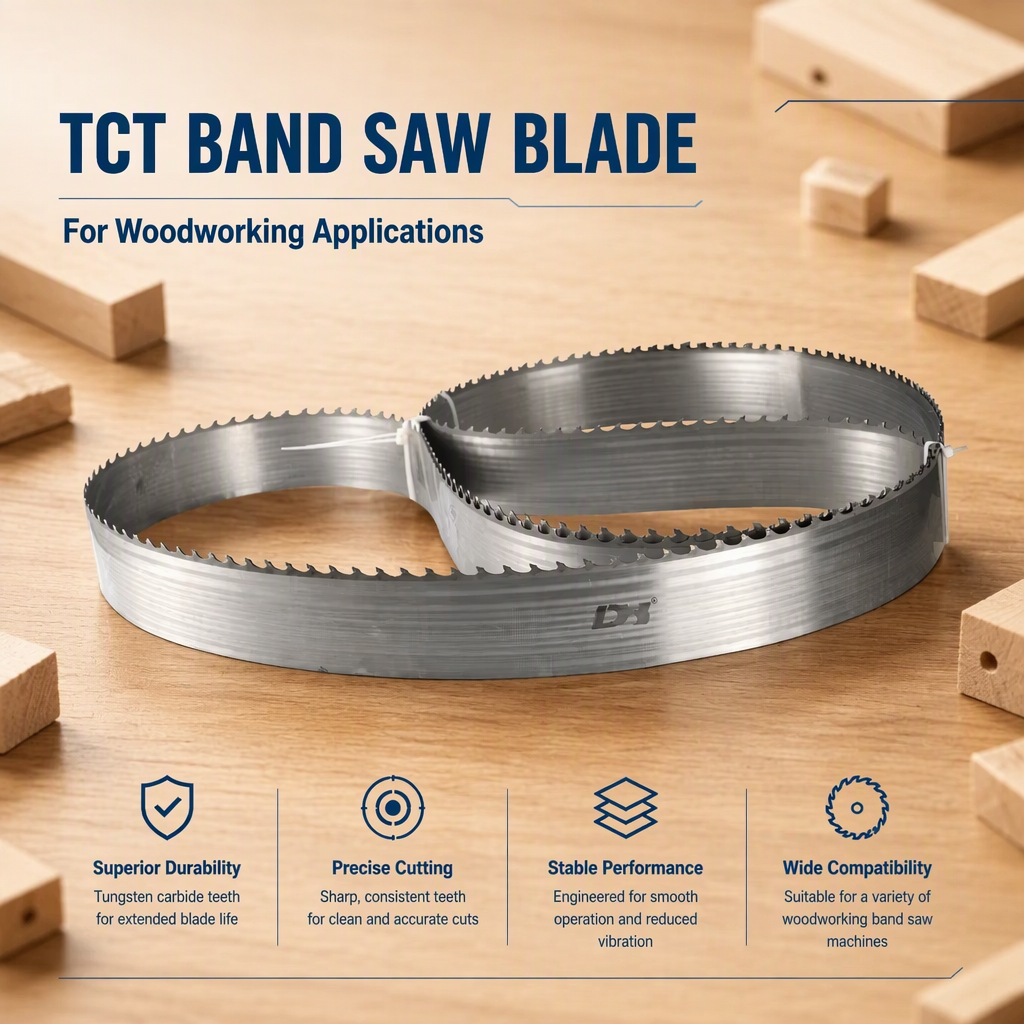
Funzioni primarie di Lame per seghe a nastro TCT nella lavorazione del legno
The TCT band saw blade serves as a high-performance cutting tool specifically engineered for applications where standard blades fail prematurely. Tungsten carbide tips brazed onto the tooth points provide exceptional wear resistance when cutting abrasive engineered woods, laminati, e legni duri contenenti silice.
Unlike conventional blades that dull rapidly, IL Lame per seghe a nastro TCT maintains its cutting edge through extended production runs, riducendo i tempi di inattività per il cambio lama. Common applications include resawing valuable hardwoods, processing large volumes of MDF and particleboard, taglio di pannelli laminati, and handling reclaimed lumber with embedded debris. For high-production sawmills, cabinet shops, and furniture factories, the TCT band saw blade delivers consistent cut quality and exceptional value over its extended service life.

Cinque problemi comuni e soluzioni pratiche
Problema 1: Cold-Weather Cracking and Blade Breakage
Many operators notice a troubling pattern: as autumn turns to winter and temperatures drop, TCT band saw blades suddenly become prone to cracking, snapping, and tooth chipping. This is not coincidence. Low temperatures directly change the physical properties of the steel backing—the band becomes harder and more brittle, its toughness drops, and its tolerance for stress falls sharply. A blade that performs reliably in summer may crack under only minor loading in winter.
Soluzione: Adjust your maintenance routine for cold weather.
Primo, always warm up the machine at low speed before cutting—never start a cold machine at high speed or feed it large, hard material immediately, as the sudden impact can instantly chip teeth or snap the band.
Secondo, break in new blades gently: run light material at reduced feed for the first cuts so the tooth tips condition gradually.
Terzo, set tension slightly looser than your summer setting, since cold steel has less elasticity and over-tensioning accelerates cracking.
Quarto, avoid heavy loading on a cold machine, and allow the blade to reach operating temperature before demanding work. Finalmente, store TCT band saw blades in a dry, sealed environment—moisture in winter causes rust spots, and every rust spot becomes a stress weakness that invites cracking once the blade is mounted.

Problema 2: Usura o opacizzazione prematura dei denti
One of the most frequent complaints with the TCT band saw blade is teeth wearing faster than expected. This typically occurs when cutting extremely abrasive materials, quando la lama viene spinta oltre la sua capacità, or when the wood contains excessive silica or embedded dirt.
Soluzione: Verify that you are using the correct blade for your material—extremely abrasive stock may require specialized carbide grades. Reduce feed pressure; forcing material too aggressively generates heat that accelerates wear. Ensure proper blade speed, since running too fast increases friction dramatically. Inspect workpieces for nails, pietre, and sand before cutting. Finalmente, ensure the TCT band saw blade is properly broken in by reducing feed pressure for the first several cuts.
Problema 3: Punte in carburo scheggiate o rotte
Chipped or missing carbide tips compromise cut quality and safety. Questo problema di solito deriva dal carico d'urto, ovvero dall'incontro improvviso con oggetti duri, costringendo la lama a compiere curve strette, o utilizzando una pressione di alimentazione eccessiva su materiali densi. Carbide is extremely hard but also brittle.
Soluzione: Replace the blade immediately if tips are missing or severely chipped. Avoid feeding material with loose knots, unghia, o inclusioni di corteccia. Reduce feed pressure when entering cuts and avoid forcing the TCT band saw blade around radii beyond its design capability. Ensure guides are properly adjusted so the blade cannot twist, and consider a wider blade for straight cuts to improve stability.
Problema 4: Tagli vaganti o storti
When the TCT band saw blade begins cutting off the intended line, the issue usually relates to blade tension, set di denti, o guidare l'allineamento. A drifting blade wastes material and compromises part accuracy.
Soluzione: Controllare prima la tensione della lama: le lame sottotensione vagano in modo imprevedibile. Verify guide bearings sit close to the blade without pinching. Inspect the tooth set; uneven set causes irregular cutting, and a blade resharpened many times may have compromised set requiring replacement. Feed the work following the blade’s natural tendency rather than forcing lateral pressure, and use a wider TCT band saw blade for resawing to gain beam strength.
Problema 5: Segni di bruciature o superfici vetrate
Burn marks indicate excessive friction heat generated by the TCT band saw blades. This typically stems from dull teeth, velocità di avanzamento insufficiente, o accumulo di resina sui taglienti.
Soluzione: Replace or resharpen the blade at the first sign of surface degradation—TCT blades require specialized diamond wheel grinding. Increase feed speed so each tooth takes a thicker chip that carries heat away. Clean the blade thoroughly to remove pitch and resin, which insulate heat and create friction. Reduce depth of cut if burning persists, taking multiple lighter passes.

Il vantaggio del marchio DH: Reliable Supply and Expert Support
For woodworkers and tool distributors seeking dependable band saw tooling, DH brand TCT band saw blades offer compelling advantages built on 27 years of industry experience. DH understands that every workshop and production line has unique requirements—which is why we provide fast delivery, professional engineering guidance, and responsive after-sales support.
Our TCT band saw blades are available in a full range of sizes and tooth configurations to match any machine and application, with custom specifications produced to your exact requirements. Our experienced engineers help you select the right blade, set optimal tension and feed parameters, and troubleshoot seasonal problems such as winter cracking before they cost you production time.
DH’s diverse woodworking tool supply covers the full range of production needs—from band saw blades to sizing cutters, punta del trapano, and cutter heads—with consistently high quality and extended tool life. For both self-operating producers and tool distributors, DH provides guaranteed supply that saves cost and frees up time and energy to focus on building great products and serving their own customers. With fast response after-sales guidance and 27 years of manufacturing expertise behind every blade, DH is the partner you can rely on.
Essential Safety Recommendations for TCT Band Saw Blades
Working with the TCT band saw blades requires strict adherence to safety practices. Indossare sempre occhiali di sicurezza o una visiera: lame rotte o pezzi scagliati possono causare gravi lesioni agli occhi. I guanti antitaglio proteggono le mani durante il cambio della lama, but never wear gloves while operating the saw.
Prima di ogni utilizzo, inspect the TCT band saw blades for cracks, punte in carburo mancanti, o saldature danneggiate; una lama compromessa può frammentarsi alla velocità operativa. In cold weather, inspect even more carefully, since low temperatures increase brittleness. Tenere le mani ben lontane dalla zona di taglio, utilizzando bastoncini o dispositivi di fissaggio per pezzi di piccole dimensioni. Assicurarsi che le protezioni delle lame siano a posto e regolate correttamente: non bypassare mai gli interblocchi di sicurezza. Quando si cambiano le lame, scollegare l'alimentazione alla fonte. Mantenere un ambiente pulito, dry work area; winter moisture and accumulated debris both interfere with blade tracking. Finalmente, use appropriate dust extraction, as fine particles from engineered wood are respiratory hazards.

Conclusione
The TCT band saw blades provides exceptional wear resistance and cutting performance for demanding woodworking applications. By understanding its primary functions and recognizing the five common issues outlined above—cold-weather cracking, premature wear, punte scheggiate, tagli erranti, and burn marks—operators can implement practical solutions that restore cutting quality and extend blade life. Winter demands special attention: warm up slowly, break in gently, tension slightly looser, avoid cold heavy loads, and store dry and sealed.
With DH brand’s 27 years of expertise, consegna veloce, professional engineering guidance, responsive after-sales support, and diverse high-quality tooling supply, you gain a reliable partner dedicated to keeping your production efficient and cost-effective. With proper care and operation, quality TCT band saw blades deliver the consistent performance that modern woodworking demands.
Altra raccomandazione