
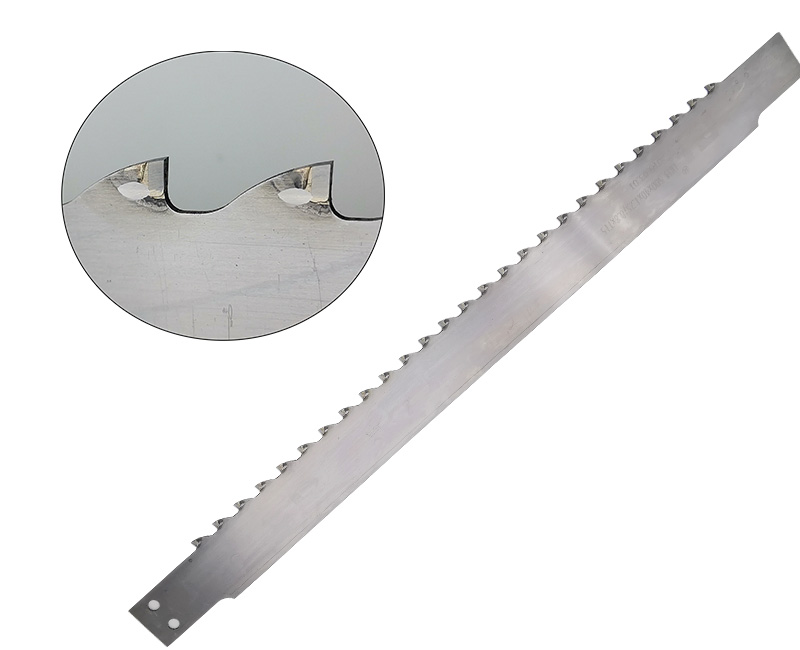
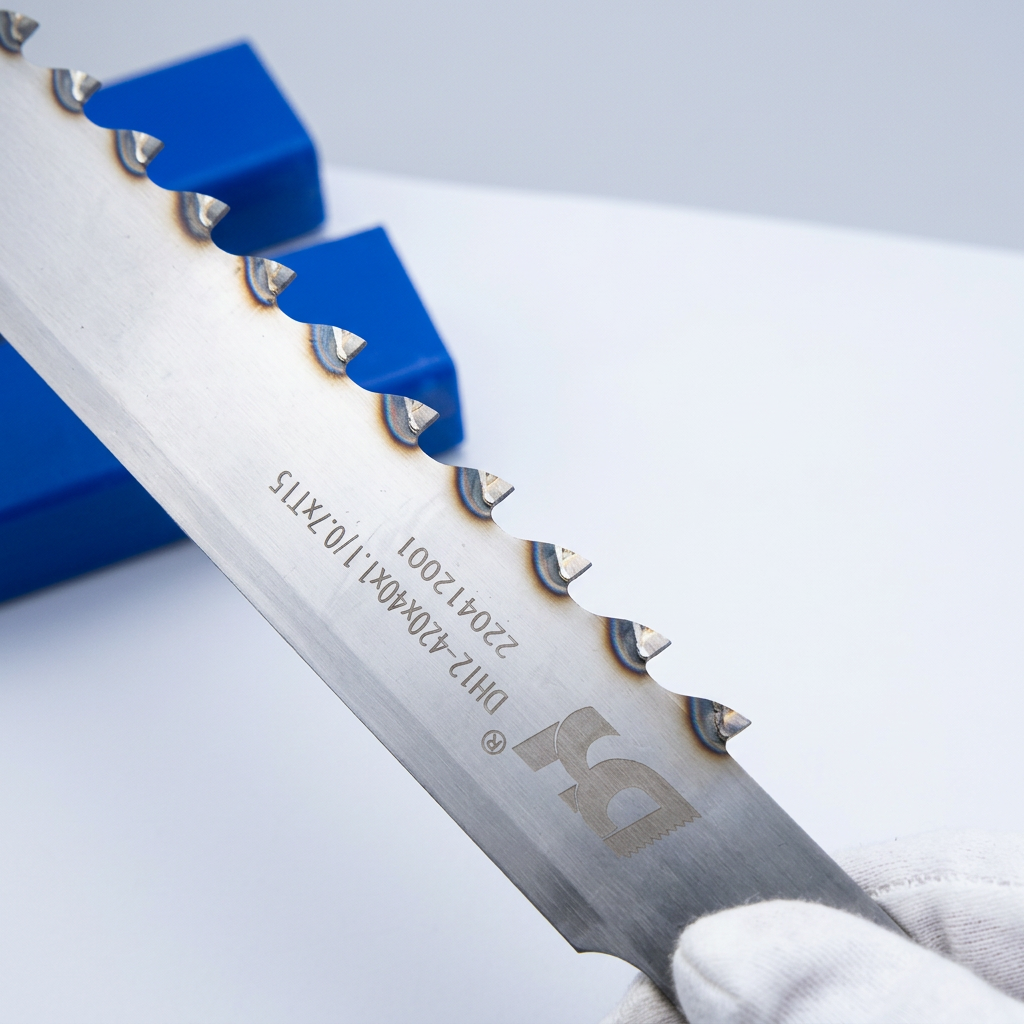
In the demanding world of solid wood processing and large-scale timber conversion, few tools combine durability with cutting efficiency as effectively as the TCT frame saw blade. These specialized cutting implements, featuring tungsten carbide-tipped teeth, represent a significant advancement over conventional steel blades, delivering extended service life and consistent cutting quality across demanding applications. Whether you operate a sawmill processing hardwood lumber, run a joinery workshop cutting dimensioned timber, or manage a parquet flooring production line, the performance of your TCT frame saw blade directly influences throughput, material yield, and operational costs. Understanding their construction, unique capabilities, and proper maintenance ensures you maximize the return on this essential tooling investment.
Construction and Manufacturing: How TCT Frame Saw Blades Are Built
TCT frame saw blade construction begins with selecting the appropriate backing material—typically high-quality spring steel that provides the flexibility required for reciprocating frame saw operation while maintaining the tension necessary for straight, accurate cuts. This steel body undergoes precise rolling and heat treatment to achieve consistent thickness and uniform mechanical properties along the entire blade length.
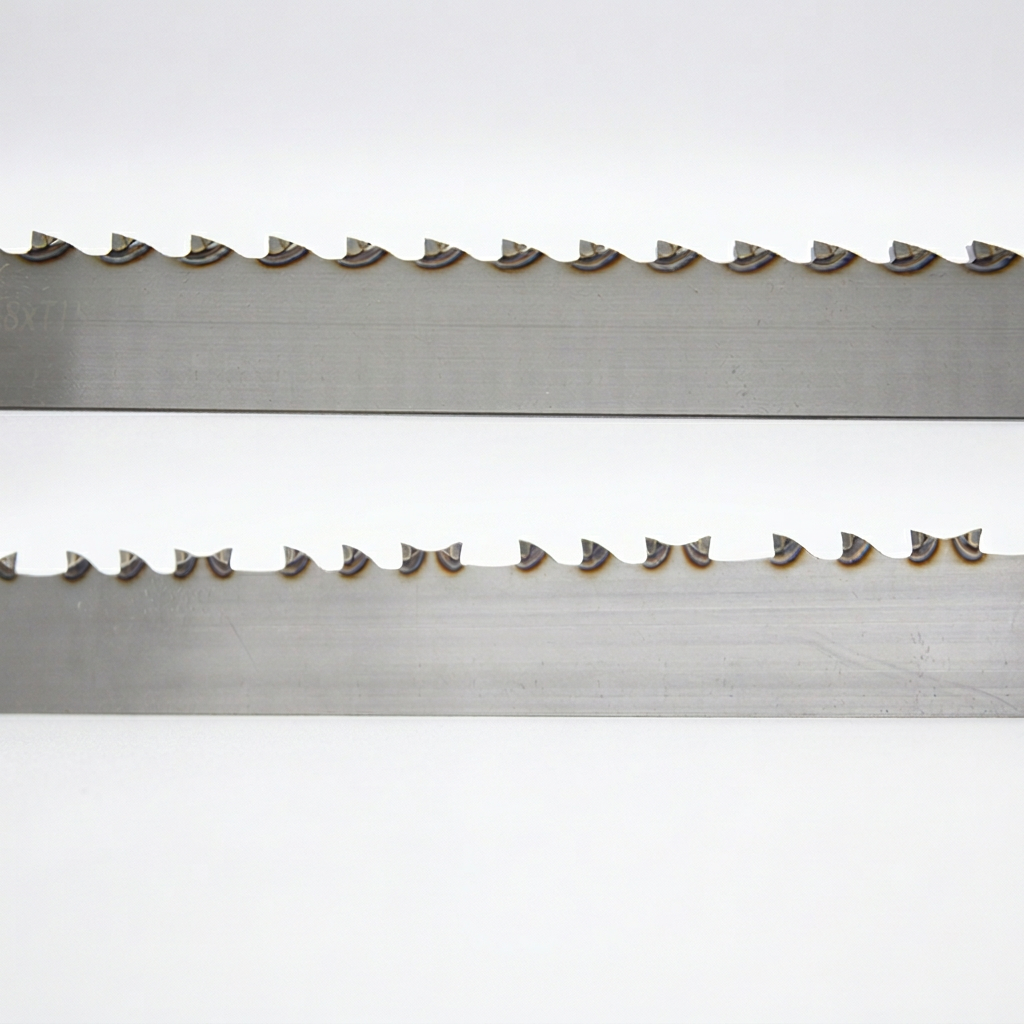
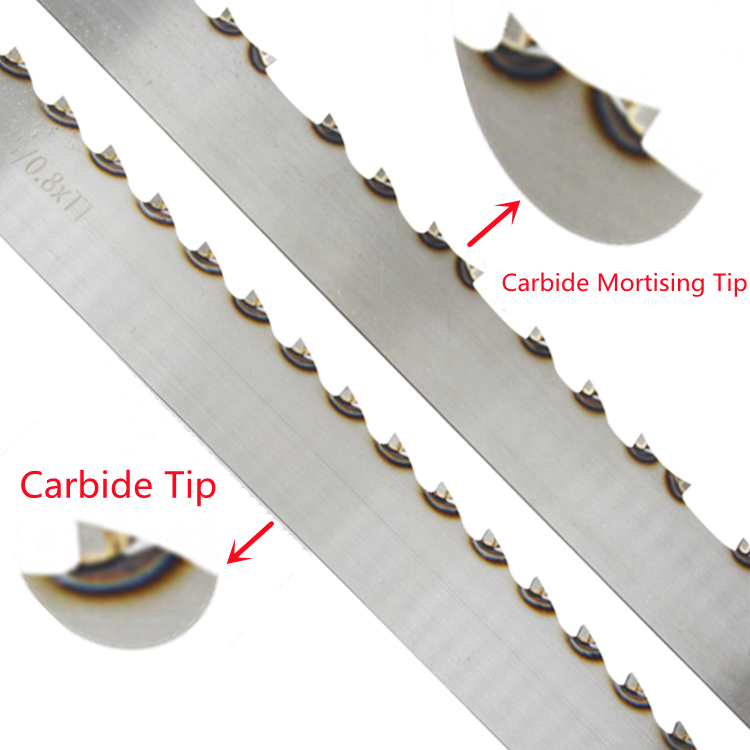
What transforms this steel strip into an effective cutting tool is the tungsten carbide tipping process. Individual carbide tips, manufactured from premium-grade tungsten carbide powder sintered under extreme pressure and temperature, are precisely brazed onto the steel body at each tooth location. The brazing process requires careful temperature control to ensure strong metallurgical bonding without compromising the temper of the spring steel backing. Following attachment, the carbide tips undergo precision grinding to achieve exact tooth geometry, clearance angles, and set patterns optimized for specific cutting applications.
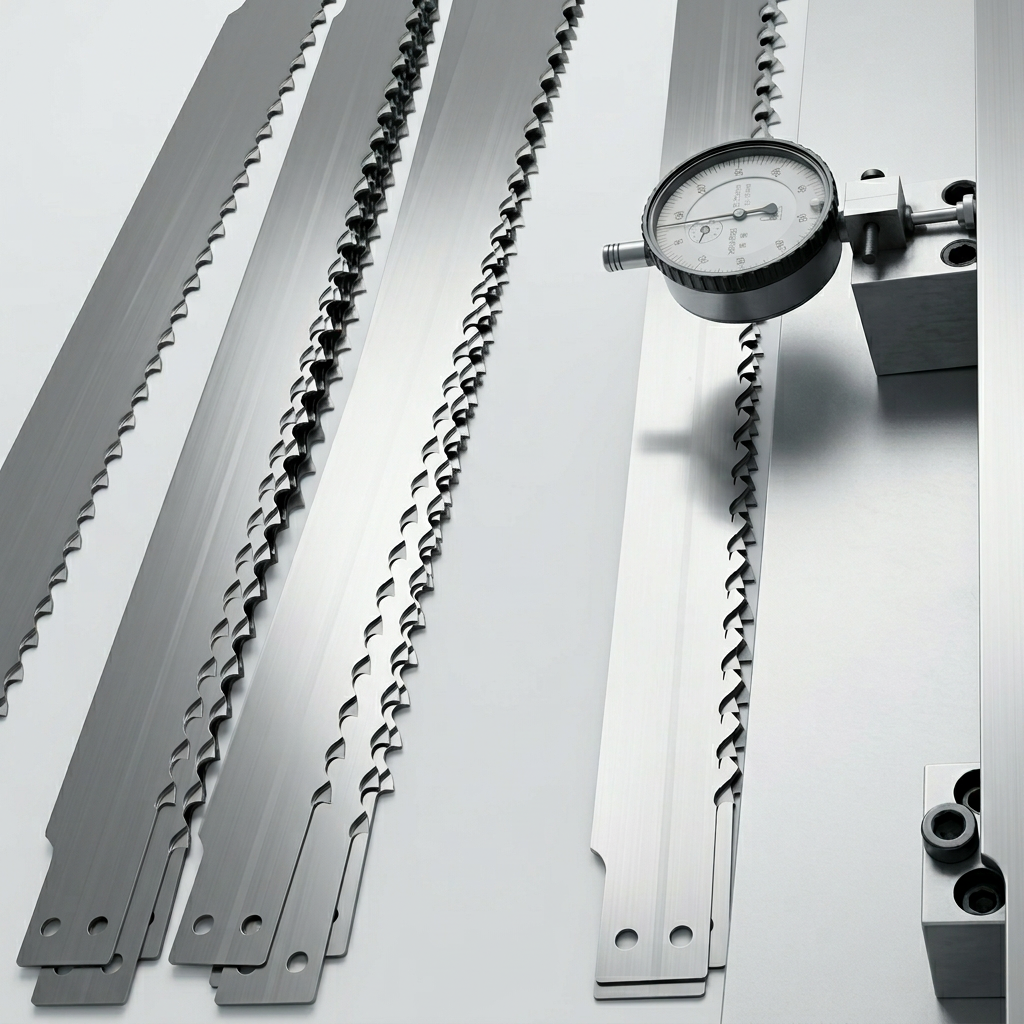
Qualità TCT frame saw blade manufacturing also incorporates careful straightening and tensioning processes. Frame saw blades operate under significant tension within the saw frame, and proper initial tensioning ensures stable tracking and straight cutting throughout the blade’s service life. Leading manufacturers also apply specialized coatings or treatments to the steel body, reducing friction and preventing rust formation during operation or storage.

Applications and Performance: Where TCT Frame Saw Blades Excel
TCT frame saw blade applications center on high-volume solid wood processing where productivity and consistency matter most. In sawmill operations, these blades excel at converting logs into dimensioned lumber, handling both softwoods and hardwoods with equal effectiveness. The tungsten carbide tips maintain cutting sharpness through abrasive bark, embedded dirt, and the natural silica content found in many timber species—conditions that rapidly dull conventional steel blades.
For manufacturers producing parquet flooring, the TCT frame saw blade delivers the precision required for consistent strip dimensions and clean surface finishes. The wear resistance of carbide ensures that thousands of linear meters of cutting maintain the tight tolerances necessary for flooring components to fit together correctly during installation. Similarly, in joinery and furniture manufacturing, these blades process dimensioned timber for components requiring precise sizing before further machining operations.
Beyond solid wood processing, TCT frame saw blades prove equally valuable for cutting engineered wood products including laminated veneer lumber, glued laminated timber, and certain grades of particleboard. The carbide tips resist the abrasive effects of adhesives and resin systems that would quickly compromise conventional blade edges, maintaining productivity and cut quality across extended production runs.
TCT Versus Standard Frame Saw Blades: Understanding Critical Differences
While conventional frame saw blades with hardened steel teeth serve basic cutting applications, TCT frame saw blade technology offers fundamental advantages that transform production economics. Standard blades rely on tooth hardening through heat treatment processes that create a balance between cutting edge hardness and overall blade flexibility. Tuttavia, even premium steel teeth eventually lose their edge when processing abrasive materials, requiring frequent sharpening or replacement that introduces downtime and quality inconsistency.
The unique advantages of TCT frame saw blades begin with the material properties of tungsten carbide. This composite material, typically containing tungsten carbide particles bound with cobalt, achieves hardness approaching that of industrial diamonds while maintaining sufficient toughness for sawing applications. In practical terms, a TCT frame saw blade typically delivers ten to twenty times the cutting life of a conventional steel blade under comparable operating conditions.
Surface finish quality represents another area where TCT frame saw blades outperform standard options. The precise grinding possible with carbide tips produces cleaner cutting action with reduced surface tearing and fiber lifting. For applications where sawn surfaces require minimal preparation before subsequent processing, this improved finish quality reduces sanding requirements and material waste. Inoltre, the consistent wear characteristics of carbide maintain cutting geometry longer, ensuring that components cut early in a production run match those cut thousands of cycles later.
The operational advantages extend to reduced downtime. Where conventional blades might require multiple changes during a single production shift when processing abrasive materials, a TCT frame saw blade often completes full production runs without interruption. This reliability proves particularly valuable in automated processing environments where unscheduled blade changes disrupt workflow and reduce overall equipment effectiveness.
Extending Life: Maintaining Your TCT Frame Saw Blade
Even the finest TCT frame saw blade requires systematic care to achieve its potential service life. Proper tensioning within the saw frame ranks among the most critical factors—under-tensioned blades wander during cutting, leading to uneven tooth wear and potential blade damage, while over-tensioning stresses the steel backing unnecessarily. Operators should verify tension according to manufacturer specifications, particularly following blade installation or when processing materials with significantly different cutting characteristics.
Blade sharpening, when eventually required, demands specialized equipment and expertise. Unlike conventional blades that can be sharpened with standard tooling, TCT frame saw blade sharpening requires diamond grinding wheels and precise control of tooth geometry. Attempting to sharpen carbide-tipped blades with conventional grinding equipment typically damages the tips and compromises cutting performance. Establishing relationships with qualified sharpening services ensures blades receive proper maintenance when sharpening intervals arrive.
Regular inspection of the TCT frame saw blade provides early warning of developing issues. Operators should examine teeth for chipping, uneven wear patterns, or loosening of carbide tips—conditions that indicate setup problems or processing issues requiring attention. The steel backing should also be inspected for cracks, particularly near the welded joint or at stress concentration points. Addressing minor issues promptly prevents catastrophic failures that could damage the saw frame or compromise operator safety.
Cleanliness contributes significantly to TCT frame saw blade longevity. Resin buildup on tooth surfaces increases cutting friction and heat generation, accelerating wear. Regular cleaning with appropriate solvents removes pitch and adhesive residues that would otherwise compromise cutting efficiency. Similarly, ensuring proper lubrication where applicable reduces friction and dissipates heat during operation.
Conclusione
TCT frame saw blade technology represents a significant advancement in solid wood processing and timber conversion. The sophisticated construction—tungsten carbide tips precisely brazed to premium spring steel backing—delivers exceptional wear resistance and consistent cutting quality unmatched by conventional steel blades. Understanding the differences between TCT and standard options enables informed purchasing decisions that optimize total production costs. With proper tensioning, appropriate sharpening practices, and regular inspection, qualità TCT frame saw blades provide extended service life that keeps production lines moving and product quality consistent across demanding applications.
