
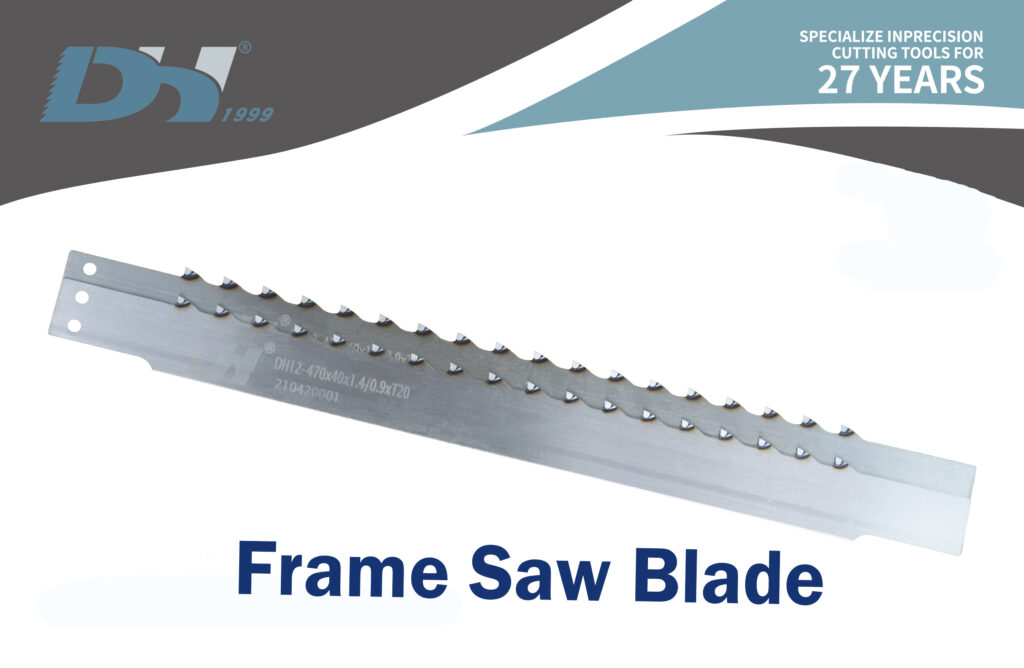
Nella lavorazione del legno massiccio e nella conversione del legno in grandi volumi, IL Lama per sega a telaio TCT has become an indispensable tool for sawmills and large-scale joinery operations. Queste lame con punta in carburo di tungsteno, montato su seghe alternative a telaio, garantiscono un'eccezionale resistenza all'usura e una qualità di taglio costante durante la lavorazione di legni duri, legni teneri, e persino prodotti in legno ingegnerizzato. With a multi-teeth design engineered for fast and clean cuts, these blades provide smoother cutting action and better surface finishes compared to conventional options.
Tuttavia, anche il più bello Lama per sega a telaio TCT can encounter performance issues when subjected to improper tension, incorrect setup, o manutenzione inadeguata. Comprendere le loro funzioni primarie, riconoscere i problemi operativi comuni con soluzioni pratiche, e il rispetto delle pratiche di sicurezza essenziali garantisce di massimizzare la durata e le prestazioni di taglio offerte da queste lame premium.
Funzioni primarie di Lame per seghe a telaio TCT nella lavorazione del legno
IL Lama per sega a telaio TCT serves as the primary cutting element in frame sawing machines, which are used extensively in sawmills and timber processing facilities for converting logs into dimensioned lumber. Unlike band saws that use continuous loops, frame saws employ straight blades mounted in a reciprocating frame that moves up and down while the workpiece is fed through.
Tungsten carbide tips are brazed onto the blade teeth, providing exceptional hardness and wear resistance that enables clean cutting through abrasive bark, sporco incorporato, and timber species containing high silica content. The multi-teeth design ensures that the blade cuts through larger pieces of wood without splintering or tearing, resulting in better surface finish and faster workflow for woodworkers.
Common applications include producing rough-sawn lumber, precision dimensioning for furniture components, wood panel cutting, cabinet manufacturing, and processing hardwoods where straight cuts are essential. IL Lama per sega a telaio TCT maintains its edge through extended production runs, reducing downtime for blade changes and resharpening.
With custom sizing available—DH Cutter offers blades in various lengths, widths (including 40mm options), and thicknesses to suit different frame saw models and cutting requirements—these blades deliver professional-quality results in demanding mill environments.

Cinque problemi comuni e soluzioni pratiche
Problema 1: Usura o opacizzazione prematura dei denti
Una delle lamentele più frequenti con il Lama per sega a telaio TCT i denti si consumano più velocemente del previsto. This typically occurs when cutting extremely abrasive timber species, quando la lama viene spinta oltre la sua capacità, or when the wood contains excessive silica, sporco incorporato, or foreign objects.
Soluzione: Primo, verificare che si stia utilizzando la lama corretta per il materiale. Mentre Lame per seghe a telaio TCT sono altamente resistenti all'usura, timber with high silica content may require blades with specialized carbide grades. Secondo, ridurre la pressione di alimentazione: forzare il materiale in modo troppo aggressivo genera calore che accelera l'usura.
Terzo, ensure proper blade speed and stroke rate; excessive speed increases friction dramatically. Quarto, ispezionare il pezzo in lavorazione per eventuali oggetti estranei come chiodi, pietre, or sand before processing. Finalmente, assicurati il tuo Lama per sega a telaio TCT is properly broken in by running at reduced feed for the first several cuts.

Problema 2: Punte in carburo scheggiate o rotte
Punte in carburo scheggiate o mancanti su a Lama per sega a telaio TCT compromise cut quality and create serious safety hazards. Questo problema di solito deriva dal carico d'urto, ovvero dall'incontro improvviso con oggetti duri, forcing the blade through knots, o utilizzando una pressione di alimentazione eccessiva su materiali densi. Carburo, mentre estremamente difficile, è anche fragile e suscettibile ai danni da impatto.
Soluzione: Sostituire immediatamente la lama se le punte in carburo mancano o sono gravemente scheggiate, as a damaged Lama per sega a telaio TCT risks catastrophic failure. Per prevenire il ripetersi, implement rigorous lumber inspection protocols to remove nails, graffette, and embedded debris before cutting. Secondo, reduce feed pressure when entering cuts and avoid forcing the blade through large knots. Terzo, ensure the blade is properly tensioned within the frame; excessive clearance allows the blade to flex and subject individual teeth to disproportionate loads.
Problema 3: Tagli vaganti o storti
Quando il Lama per sega a telaio TCT inizia a tagliare la linea prevista, il problema spesso riguarda la tensione della lama, set di denti, or frame alignment. Una lama che si sposta lateralmente produce materiale di scarto e compromette la precisione della parte, particularly detrimental in dimensioning operations.
Soluzione: Controllare prima la tensione della lama: sottotensione Lame per seghe a telaio TCT vagare in modo imprevedibile. Consultare le raccomandazioni del produttore della sega per la corretta tensione. Secondo, verify that the blade guides and frame alignment are correct; misalignment forces the blade to cut at an angle. Terzo, ispezionare il modello di inserimento dei denti; uneven set causes irregular cutting. Se la lama è stata riaffilata più volte, the set may be compromised. Quarto, ensure the workpiece is fed straight and consistently without lateral pressure.

Problema 4: Rottura della lama in corrispondenza della saldatura o della gola
Mentre il Lama per sega a telaio TCT is designed for durability, può rompersi inaspettatamente se sottoposto a stress da fatica, tensione impropria, o mancanza di manutenzione. Hairline cracks often begin at the weld joint or in the tooth gullet—areas of highest tensile stress during the reciprocating action. Rispetto alle lame standard, reinforced materials and hardened teeth ensure better performance in high-volume applications, but regular inspection remains essential.
Soluzione: L'ispezione regolare è fondamentale per prevenire rotture. Esaminare il Lama per sega a telaio TCT per eventuali crepe prima di ogni utilizzo, in particolare attorno al giunto saldato. Secondo, evitare di tensionare eccessivamente la lama: questo sollecita il supporto in acciaio e accelera la formazione di crepe. Terzo, ispezionare regolarmente la saldatura della lama; una saldatura mal rifinita è un punto di fallimento comune.
Quando si installa un nuovo Lama per sega a telaio TCT, eseguire una corretta procedura di rodaggio funzionando ad avanzamento ridotto per i primi tagli. Finalmente, never store blades in conditions that could introduce stress points.
Problema 5: Segni di bruciature o superfici vetrate sul pezzo
Burn marks across the cut surface indicate excessive friction heat generated by the Lama per sega a telaio TCT. Questo problema deriva tipicamente da denti opachi, velocità di avanzamento insufficiente, o accumulo di resina sui taglienti.
Soluzione: Resharpen or replace the Lama per sega a telaio TCT al primo segno di degrado della superficie. TCT blades require specialized diamond wheel grinding for proper resharpening. Secondo, aumentare la velocità di avanzamento; feeding too slowly causes the blade to rub rather than cut, generating heat. Terzo, pulire accuratamente la lama; la pece e la resina accumulate sui denti isolano dal calore e creano attrito. Use appropriate cleaning solutions that dissolve wood resins without damaging carbide. Finalmente, ridurre la profondità di taglio se la bruciatura persiste: eseguire più passaggi più leggeri genera meno attrito.

Why Choose DH Cutter for Your TCT Frame Saw Blades?
For sawmill operators, cabinet manufacturers, and timber processors seeking reliable performance and long-term value, DH Cutter si distingue come una fonte affidabile per Lame per seghe a telaio TCT. Our blades feature premium-grade tungsten carbide tips with optimized tooth geometry for superior cutting action and extended service life. The multi-teeth design ensures clean, precise cuts with minimal vibration, essential in applications where surface quality matters—such as wood panel cutting, furniture production, and mold-making.
Dal punto di vista di un imprenditore, i punti dolenti sono chiari: costly downtime from blade changes and resharpening, inconsistent cut quality that leads to material waste and rework, and blades that fail prematurely under heavy production loads. DH Cutter Lame per seghe a telaio TCT address these challenges head-on with exceptional wear resistance and consistent cutting accuracy—meaning fewer interruptions, less scrap, e una maggiore produttività.
We offer comprehensive customization options for length, larghezza (including 40mm), and thickness to suit various frame saw models and specific machining requirements. Come fornitore di fabbrica, we offer competitive wholesale pricing, eliminating middlemen to provide cost-effective solutions for businesses requiring large quantities of high-performance saw blades.
Per l'operatore utente finale, frustrations often include blades that dull too quickly on abrasive timber, burning that ruins board surfaces, and the constant struggle to achieve straight, tagli accurati. La produzione di precisione di DH Cutter garantisce una geometria dei denti coerente, tensionamento adeguato, and reliable carbide brazing that stands up to demanding conditions.
Our blades maintain sharpness through hardwoods and abrasive species, reducing the frequency of frustrating mid-run blade changes. With ISO certifications ensuring high industrial standards for quality and safety, responsive technical support, factory-direct pricing, and reliable after-sales service including free samples and a 1-year warranty, DH Cutter helps you keep production running smoothly and efficiently.
Raccomandazioni di sicurezza essenziali per Lame per seghe a telaio TCT
Lavorare con il Lama per sega a telaio TCT richiede il rigoroso rispetto delle pratiche di sicurezza. Always wear safety glasses or a full face shield—broken carbide tips or thrown workpieces can cause serious eye injuries. I guanti resistenti al taglio proteggono le mani durante il cambio e l'impostazione della lama, ma non indossare mai i guanti quando si utilizza la sega.
Prima di ogni utilizzo, ispezionare il Lama per sega a telaio TCT for missing teeth, crepe, or damaged brazing; una lama compromessa può frammentarsi alla velocità operativa. Ensure all guards and safety devices are in place and properly adjusted—never bypass safety features. Quando si cambiano le lame, scollegare l'alimentazione alla fonte. Mantenere un'area di lavoro pulita; accumulated sawdust and debris create fire and slip hazards. Finalmente, never exceed the maximum stroke speed rating specified for the Lama per sega a telaio TCT.
Conclusione
IL Lama per sega a telaio TCT is the backbone of high-volume timber processing, delivering precision and durability across demanding solid wood applications. Comprendendone le funzioni primarie e riconoscendo i cinque problemi comuni sopra descritti: usura prematura, punte scheggiate, tagli erranti, rottura, and burn marks—operators can implement practical solutions that restore cutting quality and extend blade life.
With DH Cutter’s premium blades featuring premium carbide grades, multi-teeth design for enhanced precision, custom sizing options to fit various equipment, consistent performance for even the most demanding sawmill and woodworking operations. Ispezione regolare, tensionamento adeguato, velocità di avanzamento adeguate, e il rispetto delle pratiche di sicurezza garantiscono che il Lama per sega a telaio TCT delivers exceptional results while maintaining a safe work environment.
Lama per sega in metallo duro per telaio lama per sega da legno