
In the vast world of woodworking, the choice of cutting tools can make the dramatic difference between a frustrating, flawed project and a masterpiece of precision and efficiency. Among the various saw blades available, one category stands out for its specialized role in high-volume, consistent ripping operations.
This is the domain of the multi rip saw blades, a game-changing solution for professionals seeking to optimize their workflow. Unlike standard blades designed for occasional cuts, these are engineered for a singular, powerful purpose: transforming raw lumber into multiple, identical strips in a single, swift pass. Understanding their design, variety, and proper use unlocks a new level of productivity in any woodworking shop.

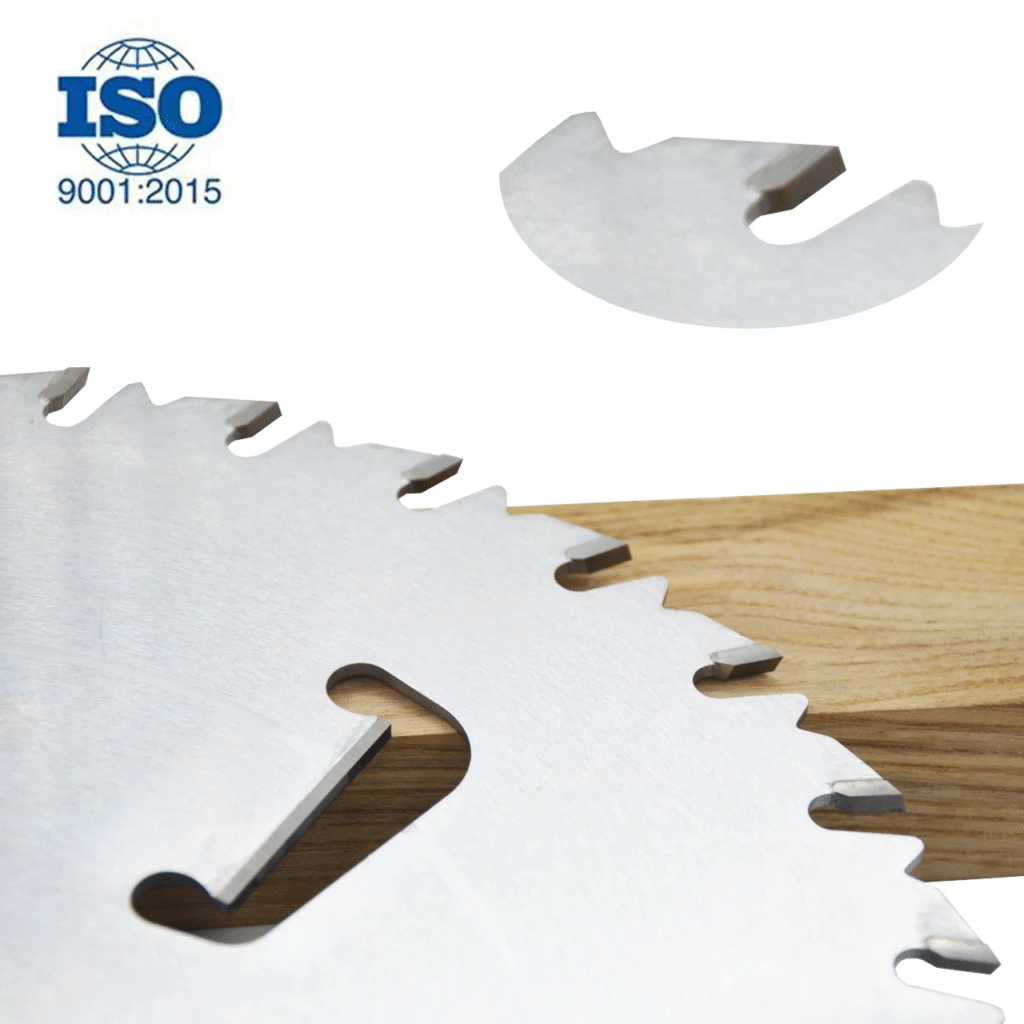
Core Anatomy: The Built-for-Speed Design
A multi rip saw blade is not a single entity but a carefully assembled set. Its primary components are the arbor, the multiple saw blades themselves, and the crucial spacers or chippers.
The arbor is the central shaft that holds the entire stack together. The individual blades, typically thinner than standard saw blades, are mounted on this shaft. Between them, precision spacers determine the exact width of each cut piece. Some advanced systems also include scoring blades at the top and bottom to pre-cut the wood surface, preventing tear-out on the top and bottom faces for a cleaner finish on both sides of the board.
Common Types, Specs, and Material Suitability
Multi rip saw blades come in several configurations tailored for different finishes and materials. The flat plate type is the most basic, used for general ripping of softwoods and hardwoods. The hollow ground or planer type features a slightly concave body between the tip and the base, reducing friction and heat buildup, ideal for cutting dense or resinous woods.
Blades with attached knives or chipper have small carbide knives fixed between the main blades to help clear sawdust, enhancing chip removal and stability. Specialty teeth like trapezoidal or dovetail teeth are designed for exceptionally hard materials, laminated boards, or abrasive panels like MDF, offering extended life and cleaner cuts.
Common specifications focus on diameter (ranging widely to suit different machines), the number of blades in a set, and the kerf (cut width). The choice of carbide grade on the tips is critical. Softer woods like pine or poplar are less demanding, while engineered boards containing glue and resins require harder, more wear-resistant carbide to maintain a sharp edge. A well-chosen set of multi rip saw blades is matched to the material, ensuring longevity and cut quality.


Distinct Advantages Over Standard Circular Saw Blades
The fundamental difference between a multi rip saw blade setup and a standard single circular blade lies in purpose and result. A conventional blade is versatile, used for crosscuts, tagli strappati, and miters, often on a table saw or miter saw.
In contrast, a set of multi rip saw blades is a dedicated system for high-efficiency rip cutting. Its paramount advantage is staggering productivity; it can produce dozens of uniform strips from a wide board in one feed, a task that would require dozens of dangerous, time-consuming passes with a single blade. This leads to superior consistency—every piece is identical in width, a crucial factor for flooring, fencing, or furniture component manufacturing. Inoltre, by consolidating many cuts into one, it minimizes material waste and significantly reduces machine operation time.
Primary Applications and Machining Effects
The primary application of multi rip saw blades is in industrial milling and high-output professional workshops. They are the heart of stationary multi-blade rip saws. Key scenarios include manufacturing hardwood flooring strips, producing slats for furniture frames, bed slats, or pallets, cutting precise staves for door cores, and sizing timber for framing or fencing.
The processing effects they deliver are unmatched: high-volume output, exceptional dimensional accuracy across all pieces, and relatively smooth edges ready for further processing. For any operation that demands repeating the same rip cut hundreds or thousands of times, investing in a proper multi rip saw blades system is transformative.

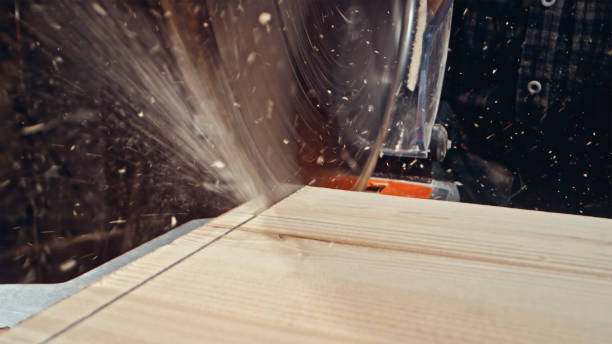
Essential Usage Recommendations
To harness the full potential of these powerful tools, follow key guidelines.
-Primo, always match the blade type and tooth configuration to your specific material. Using a blade designed for clean softwood cutting on abrasive MDF will lead to rapid dulling.
-Second, impeccable machine setup is non-negotiable. The arbor must be perfectly true, and the entire blade stack must be balanced and tensioned correctly to avoid vibration and dangerous operation.
-Third, maintain sharpness. Dull multi rip saw blades burn wood, increase load on the motor, and produce poor-quality surfaces. Implement a regular sharpening schedule.
-Finalmente, prioritize safety. These powerful machines demand respect. Use appropriate push sticks and feeders, ensure all guards are in place, and never stand directly in line with the blade stack during operation.
Insomma, for woodworking professionals aiming to scale their rip-cutting operations, the strategic adoption of specialized multi rip saw blades is a decisive step toward unmatched efficiency and precision.
By selecting the correct type, pairing it with the right material, and adhering to strict maintenance and safety protocols, these blade sets become not just a tool, but a core driver of productivity and profit, cleanly slicing through the competition.