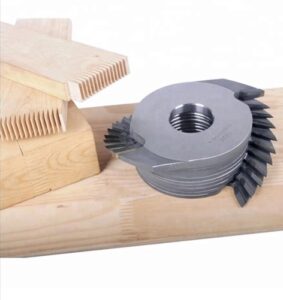
Prsti spoji so ena najmočnejših vrst spojev in se uporabljajo pri različnih projektih obdelave lesa. Ta spoj nastane tako, da se konec enega kosa lesa prepleta s koncem drugega, tvori močno povezavo, ki lahko prenese različne sile. Ta spoj se pogosto uporablja in se lahko uporablja za povezavo dveh kosov lesa različnih debelin in dolžin.
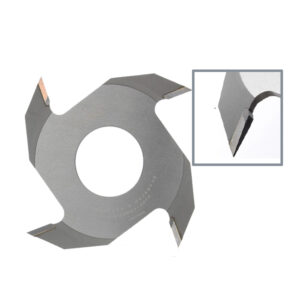
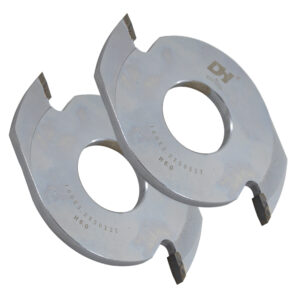
Noži za prstne sklepe so na voljo v dveh oblikah: noži s prstnimi zgibi po celotni dolžini in noži s prstnimi zgibi enojne dolžine. Noži z enojno dolžino prstnih zgibov vključujejo nože z enim čepom in nože z robom. Noži za prstne sklepe ene dolžine se običajno uporabljajo kot komplet.
Noži za prstne sklepe so razdeljeni na integralne materiale in cepljene materiale iz materiala. Noži s prstnimi zgibi po celotni dolžini so izdelani iz hitroreznega jekla ali jekla T8.
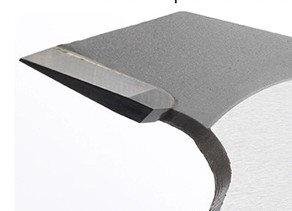
Noži iz razcepljenih materialov so sestavljeni iz dveh materialov: telo noža in glava noža. Obstajata dve vrsti materialov: intarzirani in varjeni. Material glave noža je hitrorezno jeklo in karbid.
torej, kako naj izberemo najboljši nož za prstne sklepe? Spodaj bodo za vašo referenco upoštevane štiri ključne točke. Upam, da vam bo v pomoč pri izbiri.
Material prstnih sklepov
Glede izbire materiala prstnega sklepa noža, Vedeti moramo, da manganovega materiala ni enostavno deformirati in ima dobro trdnost po toplotni obdelavi. Karbid ima visoko trdoto in dobro odpornost proti obrabi, vendar ni enostavno obdelati.
Parametri prstnih sklepov
The most important thing is the inner hole and outer diameter of the finger jointing knife. The inner hole and outer diameter of the finger jointing knife are determined according to the equipment you use. Different equipment has different positions and gaps between the knife shaft and the knife. Zato, you need to consult your equipment supplier to choose the correct inner hole and outer diameter.
The second is the number of teeth. The number of teeth of the finger jointing knife is generally two teeth or four teeth, which is determined by the speed of the equipment. The number of teeth is selected according to the speed of the equipment. Fast equipment uses a tool with a small number of teeth, and slow equipment uses a tool with a large number of teeth. Vendar, more teeth can improve the finish of the cutting surface. Na splošno, a multi-tooth finger jointing knife is selected, among which four teeth are the most popular.
Another thing to consider is the angle of the finger jointing knife. Its angles mainly include the front angle, the back angle, and the bevel angle. The angle of the finger jointing knife is determined by the material of the processed wood, the depth of the finger jointing, and the speed of the equipment. If you do not have clear requirements for these angles, you can inform the material of the processed wood, the depth of the finger jointing, and the speed of your equipment.
The depth requirements of finger joints vary. When other conditions are the same, the bevel angle is different, the equipment speed is different, the front angle and back angle of the tool are different, the front angle of the tool is large when the speed is slow, and the front angle of the tool is small when the speed is fast.
Processing Materials
Due to the wide variety of wood materials, such as paulownia, bor, birch, hrast, itd., their softness and hardness vary greatly, so when choosing a finger joint knife, you also need to consider the material to be processed in order to find the tool with the best processing effect.
Finger Joints Accuracy
The accuracy of the finger joint knife includes the flatness, parallelism, verticality, end jump, itd. of the direct material. The accuracy of the finger joint knife is the embodiment of the inherent quality of the finger joint knife. The accuracy of the finger joint knife is determined according to the production capacity and production conditions of the manufacturer, so it is particularly important to choose a high-quality manufacturer with rich production experience.
Finger joints are generally stronger than butt joints and can be used to join pieces of wood that are not perfectly aligned, which makes them ideal for furniture and cabinet making.
Ob istem času, finger joints are also used to join pieces of wood that are too short to be joined with full-length joints. This is particularly useful when making furniture with intricate designs, as it allows the carpenter to create the desired shape without using longer pieces of wood. This joint is also often used to join pieces of wood that are too thin to be joined with full-length joints. If you learn how to choose the best finger jointing knife, I believe this tool will definitely play a very important role in your woodworking projects.