


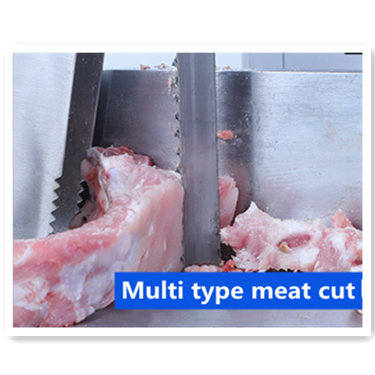
In the demanding environment of commercial food processing, where hygiene intersects with productivity, few tools prove as critical as the Food band saw blade. These specialized cutting implements represent far more than simple toothed steel—they embody engineering solutions designed specifically for the unique challenges of cutting meat, bone, fish, and other food products while maintaining impeccable sanitary standards. Whether you’re operating a high-volume meat processing plant, running a butcher shop, or managing a commercial kitchen, the performance of your Food band saw blade directly impacts product quality, food safety compliance, and operational efficiency. Understanding their construction, unique characteristics, and proper maintenance ensures you maximize both cutting performance and regulatory peace of mind.
Construction and Manufacturing: How Food Band Saw Blade Are Built
Food band saw blade construction prioritizes two seemingly contradictory requirements: cutting effectiveness and hygienic safety. The foundation typically consists of high-carbon spring steel, precision rolled to achieve consistent thickness and flatness essential for straight tracking. The most common configurations feature blade widths of 16mm and 19mm with a standardized thickness of 0.56mm, dimensions that have proven optimal for the majority of food processing applications.
What transforms this steel strip into an effective cutting tool is the tooth hardening process. Unlike blades that receive uniform hardening across their entire width, kakovosti Food band saw blade utilize selective tooth-tip hardening—a process that heats only the tooth tips to hardening temperature before rapid quenching. This technique creates blades with hardened teeth capable of slicing through bone and frozen product while maintaining a flexible, fatigue-resistant back that withstands repeated flexing around band wheels.
The manufacturing process accommodates custom length requirements, allowing fabricators to produce Food band saw blades welded to exact specifications for any band saw model. Following tooth formation and hardening, blades undergo careful finishing to remove burrs and ensure consistent tooth geometry along the entire cutting edge. Leading manufacturers ensure their blades meet strict NSF/ANSI standards for food contact, with specially formulated coatings and lubricants that leave no harmful residues on food products.
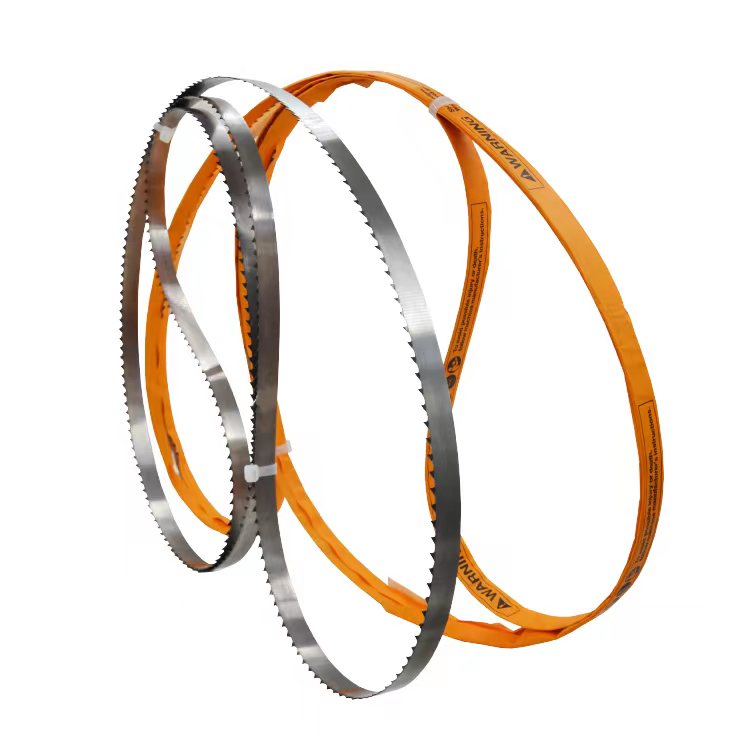

Applications and Performance: Where List tračne žage za hrano Excel
Food band saw blades demonstrate remarkable versatility across the food processing spectrum. In meat processing plants, the 16mm and 19mm widths handle everything from carcass splitting to portioning bone-in cuts, with the wider blade providing additional stability for heavy-duty breakdown work. The selectively hardened teeth efficiently slice through dense connective tissue and bone while the flexible 0.56mm thickness maintains tracking precision and minimizes product shredding.
For frozen food applications, the carefully balanced hardness of theseFood band saw blademaintains cutting effectiveness even at sub-zero temperatures. The optimized tooth geometry slices through frozen fish blocks, meat, and vegetables without cracking or shattering the product, ensuring portion control accuracy essential for proper packaging and pricing. The 0.56mm thickness proves particularly valuable here—thin enough to minimize kerf waste yet robust enough to withstand the shock loads of frozen material.
Beyond protein processing, Food band saw blades of these dimensions prove equally effective for cutting dairy products, baked goods, and plant-based alternatives. The consistent 16mm and 19mm widths track well on standard band saw wheels while the 0.56mm thickness provides the stiffness needed for straight cuts without excessive drag. Commercial kitchens and catering operations rely on these blades to portion large ingredients efficiently, reducing labor time and injury risk compared to manual methods.
Food Grade Versus Standard Hardened Blade: Understanding Critical Differences
While standard tooth-hardened blades might physically resemble Food band saw blades, fundamental differences in design and certification make them unsuitable for food contact applications. Standard tooth-quenched blades, typically designed for wood or light metal cutting, lack the material certifications required for food environments and may introduce serious contamination risks.
The unique advantages of Food band saw blade begin with material selection. The high-carbon spring steel used in food-grade blades is specially processed to eliminate surface imperfections where bacteria could harbor. The 0.56mm thickness provides optimal strength while maintaining the flexibility needed for food processing applications—thicker blades would create excessive waste through kerf loss, while thinner options lack durability for bone-in work.
Furthermore, certified Food band saw blade undergo rigorous testing to meet standards such as NSF/ANSI/3-A, which specifically addresses hygiene requirements for meat and poultry processing equipment. These certifications verify that blade materials are non-toxic and that manufacturing processes prevent contamination. Standard tooth-quenched blades carry no such assurances, potentially introducing unknown materials or residues into the food chain.
The 16mm and 19mm widths available in quality Food band saw blade represent carefully chosen dimensions that balance cutting capacity with tracking stability. Narrower blades would wander in dense materials, while wider options might not fit standard food saw wheels or could create excessive friction. The ability to order custom lengths means any food processing operation can obtain blades perfectly matched to their specific equipment.

Extending Life: Maintaining Your Food Band Saw Blade
Even the finest Food band saw blade require systematic care to achieve their design life while maintaining hygienic standards. Regular cleaning ranks among the most critical factors—food debris, fat, and protein buildup on blades and guides causes uneven running, inaccurate cuts, and accelerated wear. Cleaning should follow each use using soft brushes and food-grade cleaning solutions to remove all residue without damaging blade surfaces.
Proper tensioning dramatically affects Food band saw blade longevity. Under-tensioned 16mm or 19mm blades wander and flex excessively, leading to premature tooth wear and potential breakage. Over-tensioned blades risk cracking or warping, particularly at the critical weld joint. Operators should verify tension regularly, following equipment manufacturer recommendations for blades of this thickness.
Blade guide maintenance proves equally important. The guides that keep Food band saw blade tracking properly accumulate debris and wear over time, requiring regular inspection and cleaning. Worn guides allow blade deflection that stresses the blade unevenly and produces poor cut quality. Many facilities implement preventive maintenance schedules that include guide inspection weekly and replacement as needed.
Storage practices also impact blade life. Food band saw blade, whether 16mm or 19mm width, should be stored in clean, dry environments, ideally hanging vertically to prevent distortion. Coiled storage can introduce permanent set that affects tracking and cutting accuracy. Dodatno, regular inspection of cut quality provides early warning of developing issues—rough surfaces, unusual noise, or increasing cutting times indicate blades need attention before catastrophic failure risks product contamination.
Zaključek
Food band saw blades in the proven 16mm and 19mm widths with 0.56mm thickness represent specialized cutting tools engineered specifically for food processing environments. Their selective tooth-tip hardening creates an ideal balance of cutting performance and flexibility, while custom length availability ensures perfect equipment fit. Understanding the differences between food-grade and standard tooth-quenched blades ensures compliance with food safety regulations while optimizing cutting performance. With proper maintenance—including regular cleaning, correct tensioning, and guide care—quality Food band saw blades deliver reliable service that keeps production flowing and hygiene standards met.
Other band saw blade for your interest
Visoko natančen rezil za tračno žago z dvojno trdimi zobmi znamke DH
List za tračno žago Navpična žaga za tračno žago Karbidna žaga