
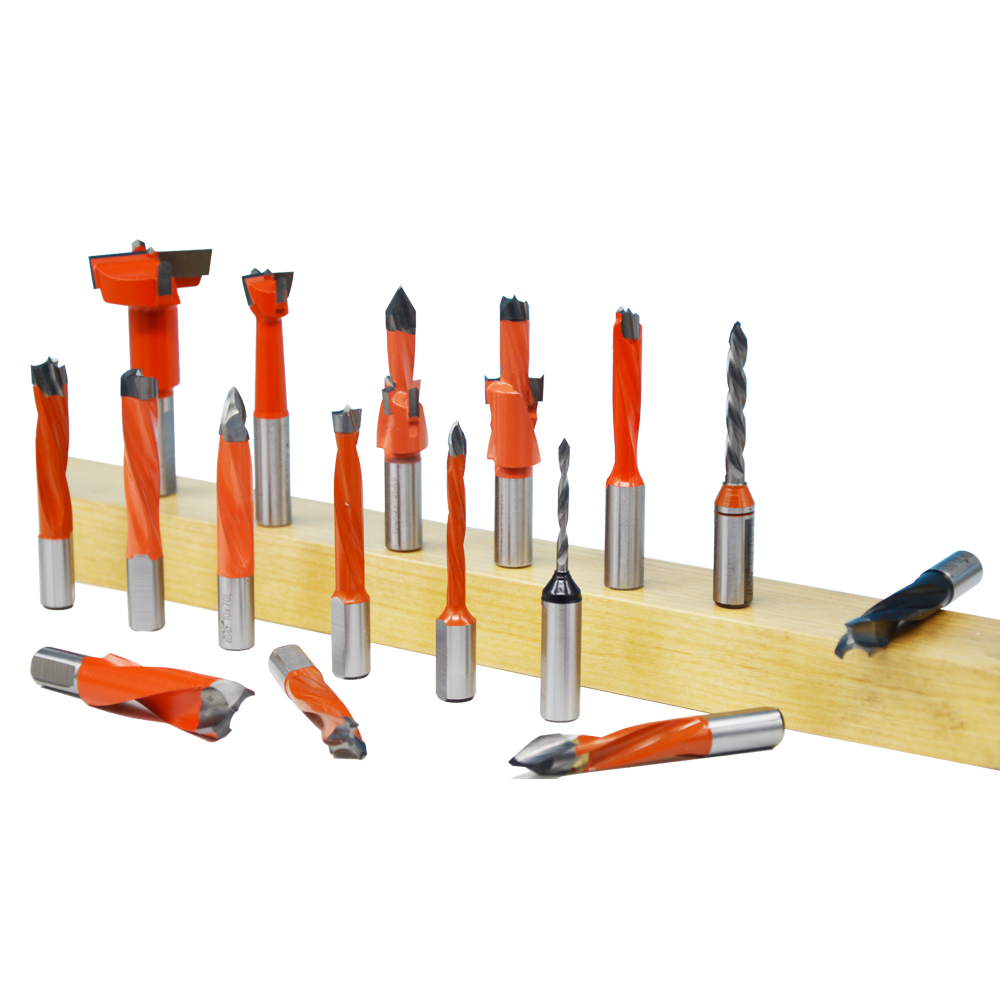
V sodobni izdelavi pohištva in izdelavi omar, TCT svedri have become the standard tooling for drilling precise, čiščenje lukenj v izdelanih lesenih ploščah. Ti svedri s konico iz volframovega karbida preoblikujejo iverne plošče, MDF, in melaminske plošče v natančne komponente za moznične spoje, tečajne skodelice, in sklopi skozi luknje. Ne glede na to, ali upravljate CNC stroj za gnezdenje, večvretenski vrtalni stroj, or a manual line drill, understanding the construction, types, and maintenance of TCT svedri ensures you achieve consistent hole quality and maximum tool life.
Gradbeništvo in proizvodnja: Why It Is Called Alloy
TCT svedri derive their name from the tungsten carbide alloy that forms their cutting heads. Izraz “alloy” refers to the sintered composite of tungsten carbide particles bonded with cobalt or nickel—a material far harder than high-speed steel yet tough enough to withstand the shock loads of drilling. The drill body is typically made from hardened alloy steel, precision ground to exact shank diameter and flute geometry. The carbide head is then brazed onto the body using specialized techniques that create a permanent metallurgical bond.
Following brazing, the cutting edges are precision ground with diamond wheels to achieve the exact tip geometry, rake angle, and surface finish required for specific drilling applications. This bimetallic construction—steel body plus carbide alloy head—gives TCT svedri their name and their distinctive performance characteristics.
Two Main Types: Through-Hole and Blind-Hole Drills
TCT svedri are available in two primary configurations, each defined by the geometry of the cutting head. Understanding the difference is essential for selecting the right tool for your application.
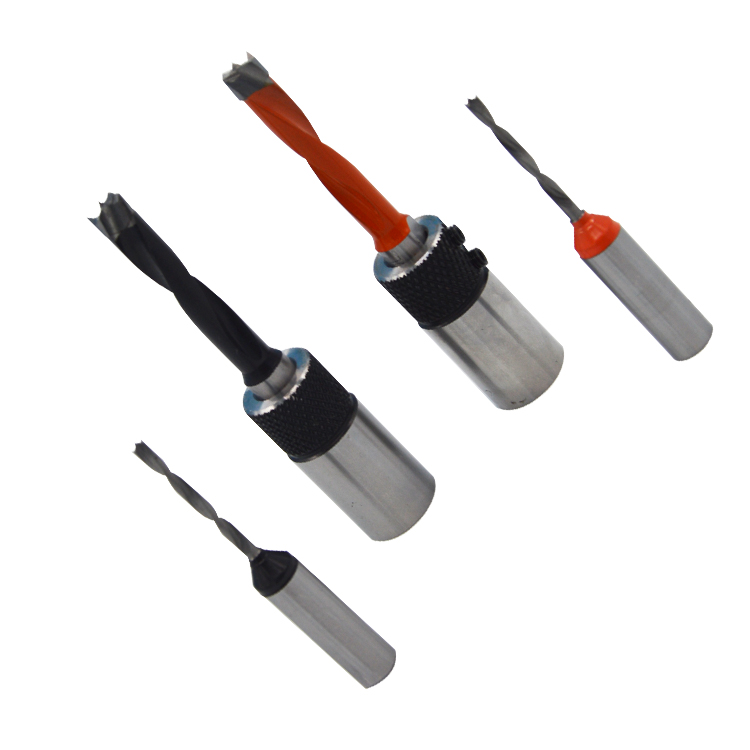
Blind-hole TCT svedri feature a flat-bottom cutting head with only a small centering point in the middle. The cutting edges sit flat across the bottom, allowing the drill to stop at a set depth without penetrating through the panel. The result is a flat, closed hole bottom—ideal for dowel locating holes, 35mm hinge cup boring, embedded nut inserts, and countersunk blind holes. When a dowel is inserted, it sits flush against the flat hole bottom, ensuring proper alignment and joint strength. Blind-hole drills must be used with depth stop rings to control drilling depth and prevent breakthrough. Common shank diameters include 10mm for dowel holes and 35mm for hinge cups.
Through-hole TCT Drill bits feature a center-point structure—often called a three-point drill—with a protruding tip that engages the material first. These drills are designed to penetrate completely through the panel, with the center point establishing accurate positioning before the outer cutting edges enlarge the hole. The result is a clean exit hole on the back side of the panel. Through-hole drills are used for screw clearance holes, connecting holes between panels, and any application requiring a fully open passage. They generally do not require depth limiters, as the drill passes completely through the material. The center point provides efficient positioning and higher penetration efficiency.
Aplikacije in zmogljivost: kje TCT svedri Excel
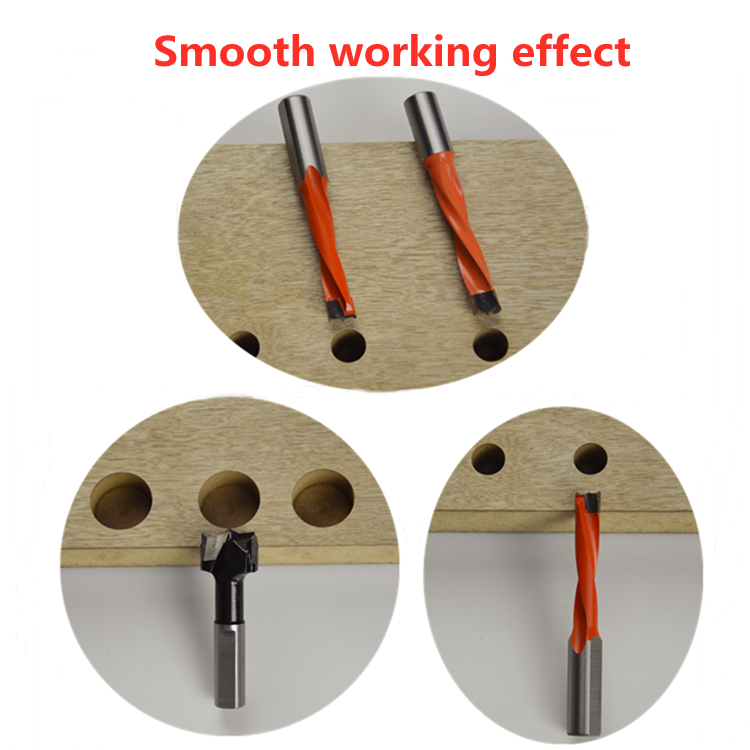
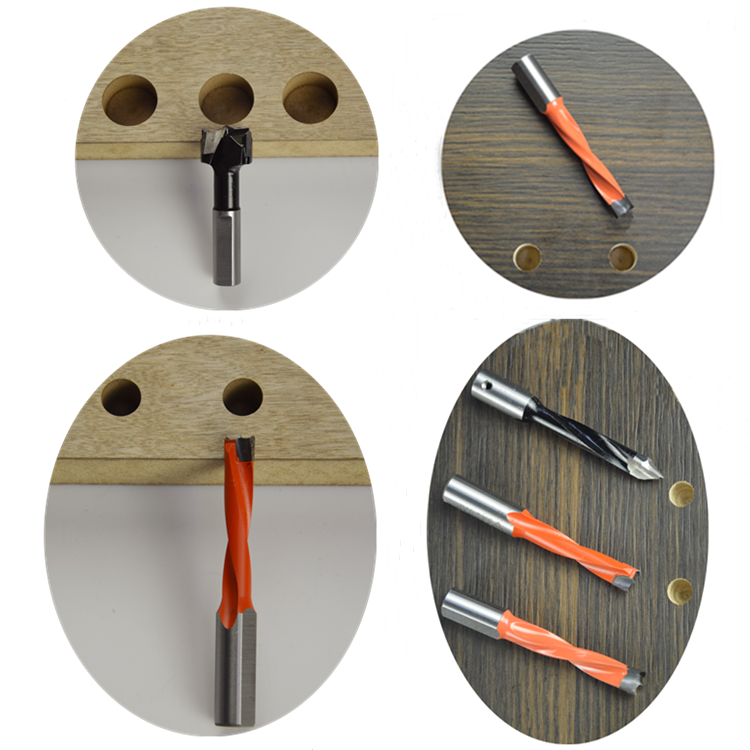
TCT svedri deliver exceptional results across a wide range of panel processing applications. Their primary function is producing clean, accurate holes in engineered wood products—particleboard, MDF, vezan les, and melamine-faced panels—without the tear-out and splintering that plague standard steel drills.
In cabinet and furniture manufacturing, TCT svedri handle dowel joint drilling with precision, producing holes that accept wooden dowels with proper fit and alignment. Hinge boring operations rely on 35mm blind-hole TCT svedri to create clean cup holes for European-style hinges. Through-hole drills produce screw clearance holes and connecting holes for knock-down fittings and cam-lock systems. For flat-pack furniture production, TCT svedri mounted on multi-spindle boring machines deliver consistent hole patterns at high throughput.
The carbide cutting edges maintain sharpness through abrasive panel materials far longer than high-speed steel alternatives. This extended tool life reduces downtime for drill changes and ensures consistent hole quality throughout long production runs. TCT svedri also perform effectively on solid wood and plastic components, making them versatile tools for mixed-material workshops.
Alloy-Head Versus Insert-Type TCT Drill Bits: Understanding the Advantages
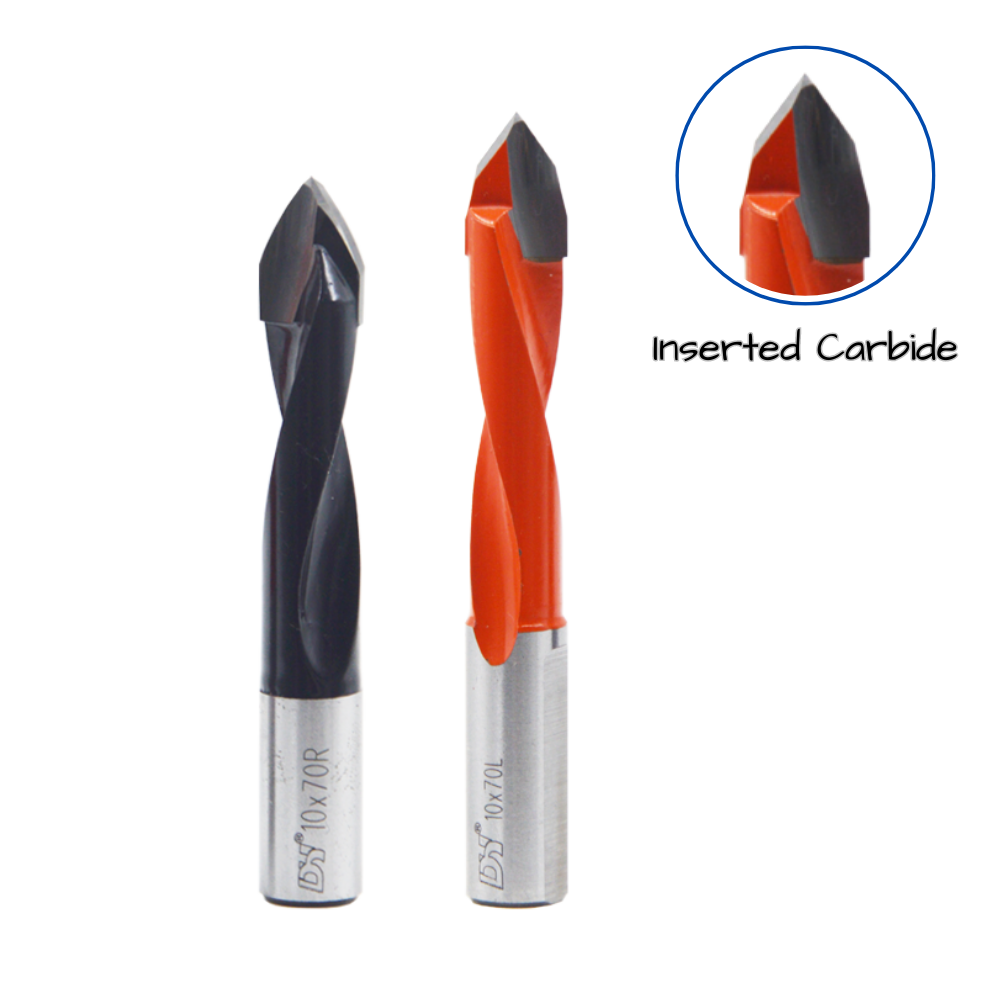
TCT svedri are available in two main constructions: alloy-head (solid carbide head brazed to steel body) and insert-type (indexable carbide inserts clamped into a steel body). Understanding the difference helps operators choose the right tool for their production requirements.
Insert-type TCT svedri feature replaceable carbide inserts secured with screws. When an edge dulls, the operator rotates or replaces the insert. While this design offers convenience, the insert clamping mechanism can introduce vibration, and the inserts may shift under heavy loads. The cutting geometry is also limited by the insert shape.
Alloy-head TCT Drill bits feature a solid carbide head brazed permanently to the steel body. This construction offers several distinct advantages. najprej, the brazed head provides superior rigidity and stability—there are no clamping screws to loosen or inserts to shift.
drugič, the solid carbide head allows for more complex and precisely ground cutting geometries, including the flat-bottom and center-point designs essential for blind-hole and through-hole applications. Tretjič, the brazed connection distributes cutting forces more evenly, reducing vibration and improving hole quality. Četrtič, alloy-head TCT svedri typically last longer because the carbide head has more mass and can be resharpened multiple times. For high-precision panel processing, alloy-head TCT svedri are the preferred choice.

Prednost blagovne znamke DH: Custom Sizes, Fast Delivery, and Long Life
For furniture manufacturers and cabinet makers seeking the ultimate in drilling performance, Znamka DH TCT svedri offer compelling advantages built on decades of tooling expertise. DH understands that every production line has unique requirements—which is why we offer comprehensive customization services.
DH TCT svedri are available in a full range of sizes to match any machine and application, from standard dowel and hinge boring to specialized through-hole configurations. We produce custom shank diameters, lengths, and head geometries to meet your exact specifications.
Our advanced carbide materials deliver exceptional wear resistance, extending tool life and reducing changeover frequency. With optimized manufacturing processes and inventory management, DH ensures fast delivery so your production never waits for tooling. Whether you need a single custom drill or a full production run, DH provides the TCT svedri that keep your operation running efficiently.

Vzdrževanje: Extending the Life of Your TCT Drill Bits
Tudi najboljša TCT svedri require systematic care to achieve their potential service life. Proper cleaning ranks among the most critical factors—resin, smola, and adhesive buildup on cutting edges increases friction and heat, pospeševanje obrabe. Clean drills regularly using soft brushes and mild cleaning solutions, avoiding abrasive cleaners that could damage the carbide head.
Proper drilling parameters significantly affect TCT svedri dolgoživost. Use high spindle speeds with moderate feed rates—this combination produces clean cuts while minimising heat and stress on the carbide edge. Feeding too slowly causes rubbing and heat buildup; feeding too aggressively risks chipping the brittle carbide.
For blind-hole drilling, always use depth stop rings and set them correctly to prevent breakthrough that can damage the drill and the panel. For through-hole drilling, allow the center point to establish position before increasing feed pressure.
Handle TCT svedri with care during installation and removal. Karbid je trd, a krhek; dropping a drill or striking it against a hard surface can chip the cutting edges. Store drills in protective cases or holders that prevent contact between carbide heads. Keep drills clean and lightly oiled to prevent corrosion of the steel body during storage. Ko je ponovno ostrenje potrebno, use a qualified service with diamond grinding equipment. Attempting to sharpen TCT svedri with conventional grinding wheels damages the carbide head. Professional sharpening maintains the precise geometry essential for quality holes.
Zaključek
TCT svedri represent the standard for precision hole-making in modern panel processing. Their tungsten carbide alloy heads deliver exceptional wear resistance and cutting accuracy across a wide range of engineered wood materials. Available in blind-hole and through-hole configurations, these drills handle dowel joints, hinge boring, and through-hole assemblies with equal effectiveness.
Alloy-head construction offers superior rigidity and longevity compared to insert-type alternatives. With DH brand’s commitment to custom sizing, full-range availability, fast delivery, in podaljšana življenjska doba orodja, you gain a partner dedicated to optimizing your drilling operations. With proper cleaning, appropriate drilling parameters, careful handling, and professional sharpening, kakovosti TCT svedri provide reliable service that keeps production flowing and hole quality consistent.
Brad Point Drill Bits Dowel vrtajo polno karbid skozi vrtalne koščke za obdelavo lesa