Selecting the appropriate helical spiral cutter head for your woodworking planer is a crucial decision that impacts not only the quality of your work but also safety and efficiency. With options like light-duty spiral cutter heads, heavy-duty spiral cutter heads, and straight-knife cutter heads available, understanding their differences and ideal applications is key. This guide will help woodworkers navigate these choices, offering practical advice tailored to different needs.


Understanding Cutter Head Types
Helical spiral cutter heads are renowned for their superior cutting performance and quieter operation compared to traditional straight-knife heads. They feature strategically arranged carbide inserts that shear wood fibers cleanly, resulting in smoother surfaces and reduced tear-out, especially in figured or difficult grain.
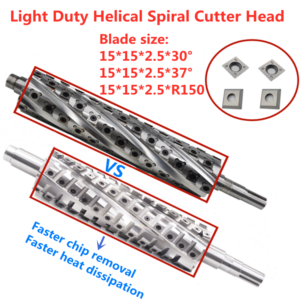
* Light-Duty Helical Spiral Cutter Heads: These are characterized by a lower number of knife slots and inserts. They are ideal for smaller planers and personal studios where the workload involves occasional use, softer woods, and finishing work. They generate less noise and vibration, making them suitable for environments where noise is a concern.
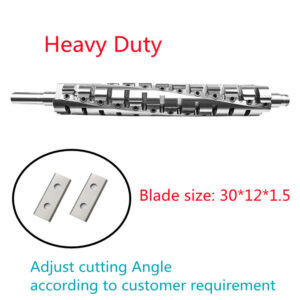
* Heavy-Duty Helical Spiral Cutter Heads: Designed for industrial applications, these feature a higher number of knife slots and more inserts arranged in a spiral pattern. This design provides exceptional durability and is built to handle the continuous milling of hardwoods, abrasive composite materials, and high-volume production runs common in large woodworking factories.
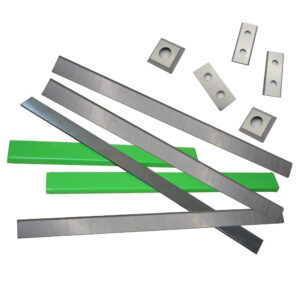
* Straight-Knife Cutter Heads: This is the traditional, often more affordable, design. While they can produce excellent results, they tend to operate louder and are more prone to tear-out on tricky grain. They require more frequent sharpening and can be more dangerous due to their larger cutting surface exposure at one time.
5 Key Tips for Choosing a Cutter Head
- Match the Cutter Head to Your Workload and Material: The primary consideration is the type of work you do. A light-duty helical spiral cutterhead is perfect for a hobbyist working with softwoods and hardwoods for furniture projects. Conversely, a large shop processing dense hardwoods or man-made boards daily should invest in a heavy-duty model for longevity and consistent performance.
- Ensure Compatibility with Your Machine: Not all cutter heads fit all planers. Check the manufacturer’s specifications for your specific planer model—whether it’s a benchtop unit for a personal workshop or a large industrial machine—to determine the compatible type and size of the helical spiral cutter head.
- Prioritize Safety and Design Features: Safety is paramount. Always choose a cutterhead with a proven safety record. Crucially, ensure thecutter head is cylindrical (圆形的) and never square. Squarecutter head are extremely dangerous and prohibited. 还, verify that the design includes minimal exposed areas and proper guarding.
- Consider the Total Cost of Ownership: While the upfront cost of a helical head is higher, consider long-term benefits. Individual carbide inserts on a helical spiral cutterhead can be rotated and replaced when damaged or dull, unlike straight knives which require professional sharpening or full replacement. This can lead to significant savings on maintenance and downtime over time.
- Evaluate the Quality of Manufacture: The quality of a helical spiral cutterhead varies. Factors like the number of grooves and inserts, the material of the body, and the precision of balancing affect performance and finish quality. A well-balanced head reduces vibration and ensures smoother operation.
Choosing for Personal Studio vs. Large Factory
* Personal/Hobbyist Studios: Budget and versatility are often key. A light-duty or mid-range helical spiral cutterhead is often an excellent upgrade from a straight-knife head, offering better finish and quieter operation without the premium price of a heavy-duty industrial head. The focus is on improving the quality of individual projects in a quieter, safer environment.
* Large Woodworking Factories: The priorities shift to durability, productivity, and minimizing downtime. A heavy-duty helical spiral cutter head is essential. Its robust construction withstands continuous use, and the ability to quickly rotate inserts keeps the planer running with only brief pauses for maintenance. The superior finish also reduces the need for extensive sanding, speeding up production lines.
3 Important Usage Notes for Helical Spiral Cutter Heads
- Proper Installation and Balancing: Installing a helical spiral cutter head is a precision task. It must be installed correctly and securely to avoid vibration, which can ruin finish quality and damage machine bearings. For safety and performance, it’s often recommended to have a professional or experienced technician handle the installation, especially for complex models.
- Safe Handling and Insert Maintenance: Although safer than squarecutter head, the cutters are still extremely sharp. Always disconnect power before performing any maintenance. When rotating or replacing inserts, wear protective gloves and use the correct tools. Ensure each insert is seated securely and that its radial projection is consistent and within safe limits (例如, not exceeding 1.1mm of radial exposure).
- Listen and Observe During Operation: A well-functioning helical spiral cutter head should run with a relatively quiet, rhythmic sound. Develop a habit of listening to your machine. Any new or unusual vibration, chirping, or knocking sounds are immediate indicators to stop and inspect the head for a loose insert, debris, or other issues that need addressing before continuing work.
By carefully considering your specific needs, machine compatibility, and these safety tips, you can select the best helical spiral cutter head to enhance your woodworking, ensuring beautiful results for years to come.