
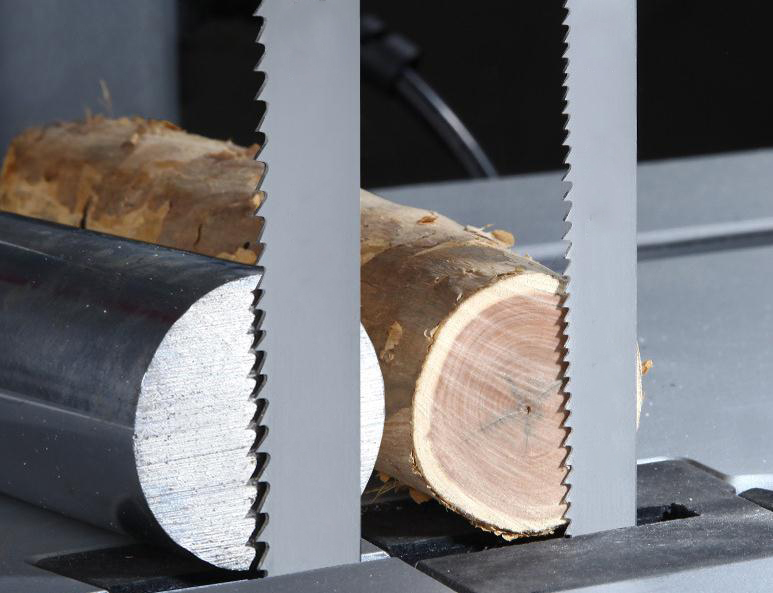

In the demanding world of material cutting, few tools demonstrate the engineering ingenuity of Bi-metal band saw blades. These sophisticated cutting implements represent the perfect marriage of flexibility and durability, solving the age-old problem of blades that either snap under stress or dull too quickly. Whether you’re cutting structural steel in a fabrication shop, processing hardwoods in a millwork facility, or performing intricate contour work in a tool room, the performance of Bi-metal band saw blades directly impacts productivity, material waste, and bottom-line profitability. Understanding their construction, capabilities, and proper maintenance ensures you harness their full potential for years of reliable service.
Construction and Manufacturing: How Bi-metal Band Saw Blades Are Built
Bi-metal band saw blades derive their name from their dual-material construction—a deliberate engineering choice that addresses the conflicting requirements of cutting tools. The blade body, comprising approximately 95% of the total width, consists of a flexible alloy steel, typically containing elements such as silicon, manganese, 和铬. This spring-tempered backing material provides the resilience necessary to withstand repeated flexing around band wheel diameters without developing fatigue cracks.
What transforms these blades into effective cutting tools is the second edge—literally. A strip of high-speed steel, electron beam welded along the entire length of the blade’s backer, forms the cutting edge. This welding process proves critical, as it creates a metallurgical bond nearly as strong as the parent materials themselves. Following welding, manufacturers precision machine teeth into the high-speed steel strip, grind appropriate set patterns, and heat-treat the entire assembly to achieve optimal hardness balance between the flexible back and wear-resistant teeth.
This marriage of materials means Bi-metal band saw blades resist the stretching and breakage common to solid high-speed steel blades while maintaining cutting edges that outlast carbon steel alternatives dramatically. The electron beam welding technology, refined over decades, ensures the tooth strip remains securely attached even under the most demanding feed pressures.
Remarkable Versatility: Cutting Both Metal and Wood with Bi-metal Band Saw Blades
One of the most valuable characteristics of Bi-metal band saw blades is their exceptional versatility across vastly different material categories. Unlike blades designed exclusively for wood or metal, quality bi-metal options can effectively cut both ferrous metals and various wood species, making them invaluable for facilities handling mixed material workflows. A fabrication shop that occasionally processes wooden pallets or a woodworking operation cutting metal hardware components benefits enormously from this flexibility without maintaining separate blade inventories.
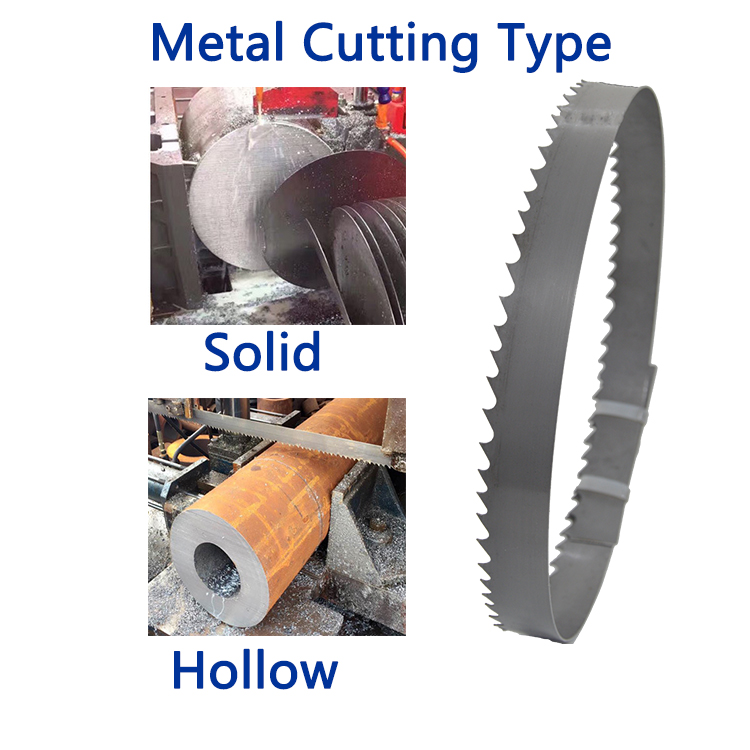
然而, Bi-metal band saw blades intended primarily for metal cutting differ significantly from those optimized for wood processing. Metal-cutting configurations typically feature finer tooth pitches—more teeth per inch—to distribute cutting forces across multiple contact points, preventing tooth shock and stripping when encountering hard surfaces. These blades also incorporate specific tooth geometries, often with positive rake angles, designed to shear through metal efficiently while resisting the heat generated by friction.
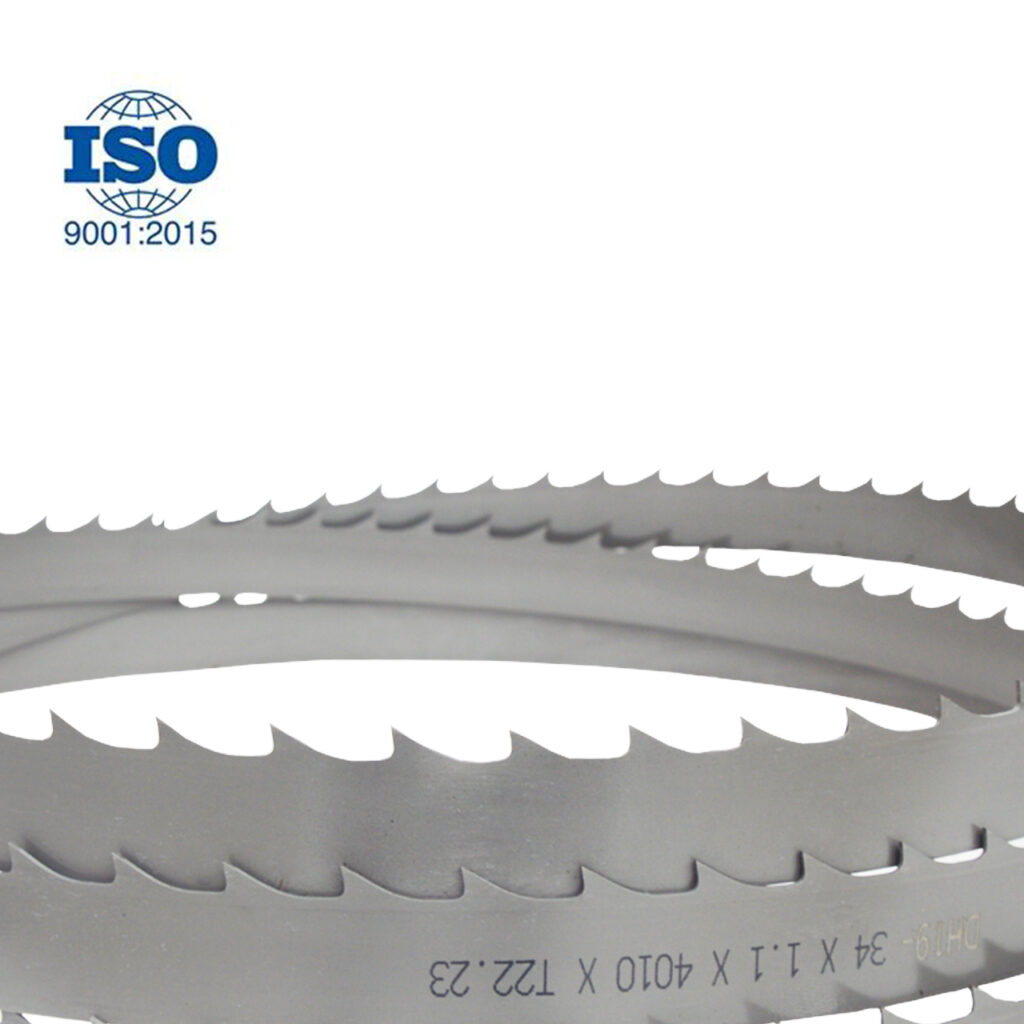
Wood-optimized Bi-metal band saw blades, conversely, utilize coarser tooth patterns with deeper gullets between teeth. This design accommodates the larger chips produced when cutting timber while preventing the packing and binding that occurs when fine-tooth blades attempt to process fibrous materials. The set pattern—the alternating bend of teeth to create kerf width—also differs, with wood-cutting blades requiring more aggressive set to prevent binding in green or resinous lumber.
https://www.alibaba.com/product-detail/Woodworking-Industrial-Grade-M42-Bi-metal_1601699990225.html
For operations regularly switching between materials, specialized general-purpose Bi-metal band saw blades offer compromise tooth geometries that perform reasonably well across both categories. These blades typically feature variable tooth pitches—alternating spacing between teeth—that reduce vibration in both metal and wood while providing acceptable chip clearance for various materials. Understanding these distinctions ensures operators select appropriate Bi-metal band saw blades for their specific applications, maximizing both cut quality and blade longevity.
Applications and Performance: Where Bi-metal Band Saw Blades Shine
The versatility of Bi-metal band saw blades makes them suitable for an extraordinary range of materials and cutting scenarios. In general fabrication, they excel at cutting structural shapes including angle iron, channel, pipe, and solid bar stock. The blade’s flexibility allows it to maintain consistent tracking while the hardened teeth slice through scale and surface irregularities that would immediately dull carbon blades.
Beyond routine structural work, Bi-metal band saw blades prove invaluable for cutting harder materials such as stainless steel, tool steel, and exotic alloys. The high-speed steel teeth retain hardness at elevated temperatures generated during aggressive cutting, maintaining sharpness while the flexible backer absorbs vibration and shock loads. This combination particularly benefits contour cutting applications where blade twist and flex are unavoidable.
For maintenance departments and job shops encountering mixed material inventories, Bi-metal band saw blades offer the flexibility to cut everything from mild steel to titanium without changing blades constantly. The consistent performance across material types reduces downtime and simplifies inventory management, making them the default choice for facilities prioritizing efficiency.
M42 Versus M51: Understanding Premium Bi-metal Band Saw Blade Options
Not all Bi-metal band saw blades perform identically, and understanding the metallurgy behind premium options significantly affects cutting economics. Traditional premium blades utilize M42 high-speed steel, containing approximately 8% cobalt, which provides excellent hot hardness and wear resistance for most production cutting. These blades handle stainless steels and heat-treated materials competently, representing the industry standard for decades.
M51 Bi-metal band saw blades, however, represent a genuine advancement in cutting technology. This high-speed steel grade contains elevated cobalt levels alongside vanadium and tungsten additions, creating a microstructure of exceptionally hard carbide particles within the tempered martensite matrix. The result is a blade material approaching the wear resistance of carbide while maintaining the toughness and manufacturability of high-speed steel.
The primary advantage of M51 Bi-metal band saw blades lies in their ability to cut abrasive and difficult materials at significantly higher speeds and feed rates than M42 alternatives. When sawing superalloys, stainless steels, or materials with heavy scale, M51 blades maintain sharpness two to three times longer than equivalent M42 products. This extended tool life translates directly to reduced changeover time, lower blade consumption, and increased machine utilization—factors that quickly outweigh any initial price premium.
Furthermore, M51’s superior heat resistance allows operators to push cutting parameters aggressively without sacrificing edge life. For production environments where every minute counts, upgrading to M51 Bi-metal band saw blades often delivers the fastest return on investment of any process improvement.
Extending Life: Maintaining Your Bi-metal Band Saw Blades
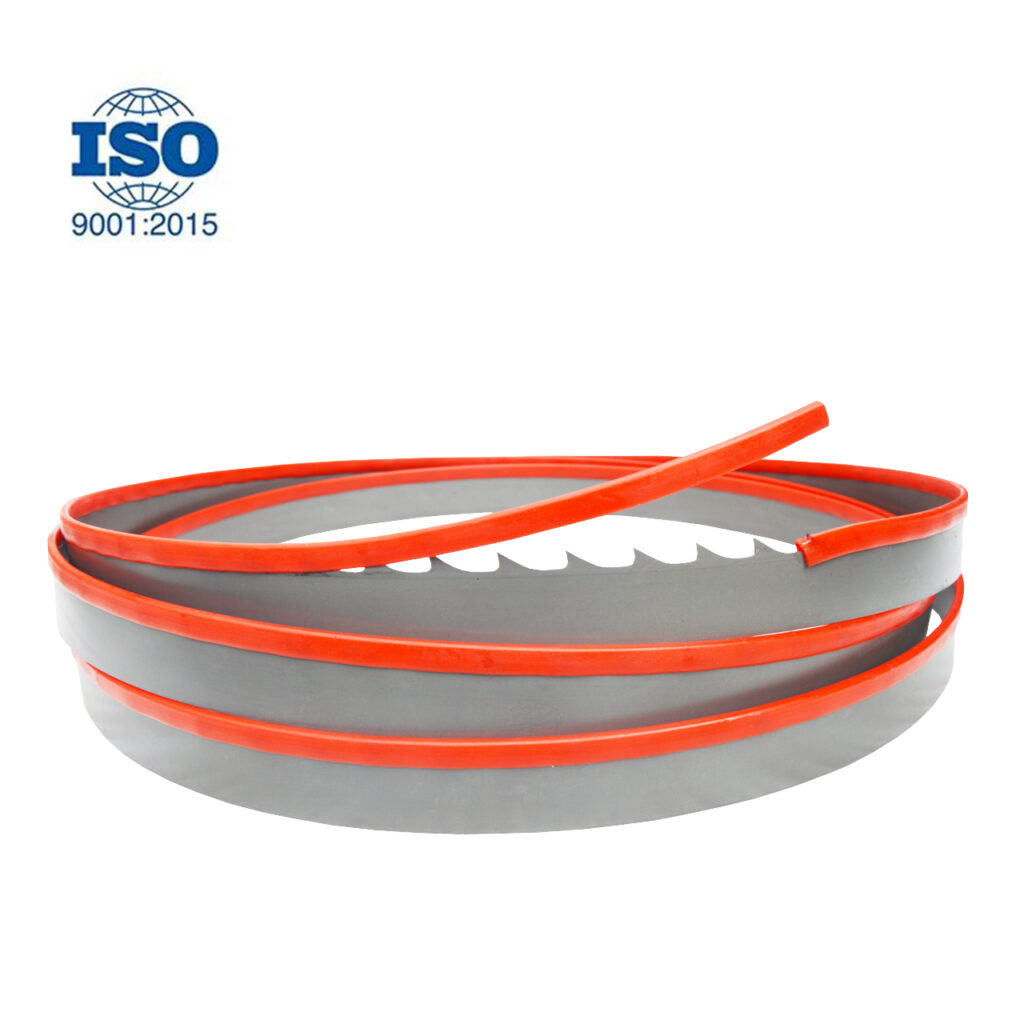
Even the finest Bi-metal band saw blades require systematic care to achieve their design life. Proper break-in procedures rank among the most critical yet overlooked factors—new blades should run at reduced feed pressure for the first several square inches of cutting to condition the tooth tips gradually. This controlled wear establishes microscopic radii on cutting edges that actually improve stability and prevent premature tooth stripping.
Coolant application dramatically affects Bi-metal band saw blades performance and longevity. Flood coolant with appropriate concentrations of soluble oil reduces friction, evacuates chips from the gullets, and prevents heat buildup that softens tooth hardness. When flood cooling isn’t feasible, mist systems or even manual application prove vastly superior to dry cutting.
Blade tension requires periodic verification, as both over-tensioning and under-tensioning shorten blade life. Proper tension maintains tracking accuracy while allowing the blade to flex naturally around wheels; excessive tension stresses the backer material unnecessarily, while insufficient tension permits tooth strippage during heavy feeds. Similarly, checking band wheel condition and alignment prevents side-loading that fatigues the blade unevenly.
Regular inspection of cut quality provides early warning of developing issues. Rough surfaces, unusual noise, or increasing cutting times indicate Bi-metal band saw blades require attention—perhaps resharpening, chip removal, or replacement before catastrophic failure damages workpieces or machinery. Storing blades properly, ideally hanging vertically to prevent distortion, ensures they remain ready for service when needed.
结论
Bi-metal band saw blades have revolutionized industrial cutting by combining flexibility with wear resistance impossible in single-material designs. Their sophisticated construction—spring-tempered backers married to high-speed steel edges—delivers performance across an unmatched range of materials and applications, from structural steel to exotic alloys and even wood products when appropriately configured. Understanding the differences between metal-optimized and wood-optimized designs, as well as premium grades like M42 and M51, enables informed purchasing decisions that optimize total cutting costs. With proper maintenance, including careful break-in, adequate coolant, and regular inspection, 质量 Bi-metal band saw blades provide reliable service that keeps production flowing and costs contained.
https://www.alibaba.com/product-detail/Wood-Bi-metal-Saws-for-Multitool_1601699937491.html