
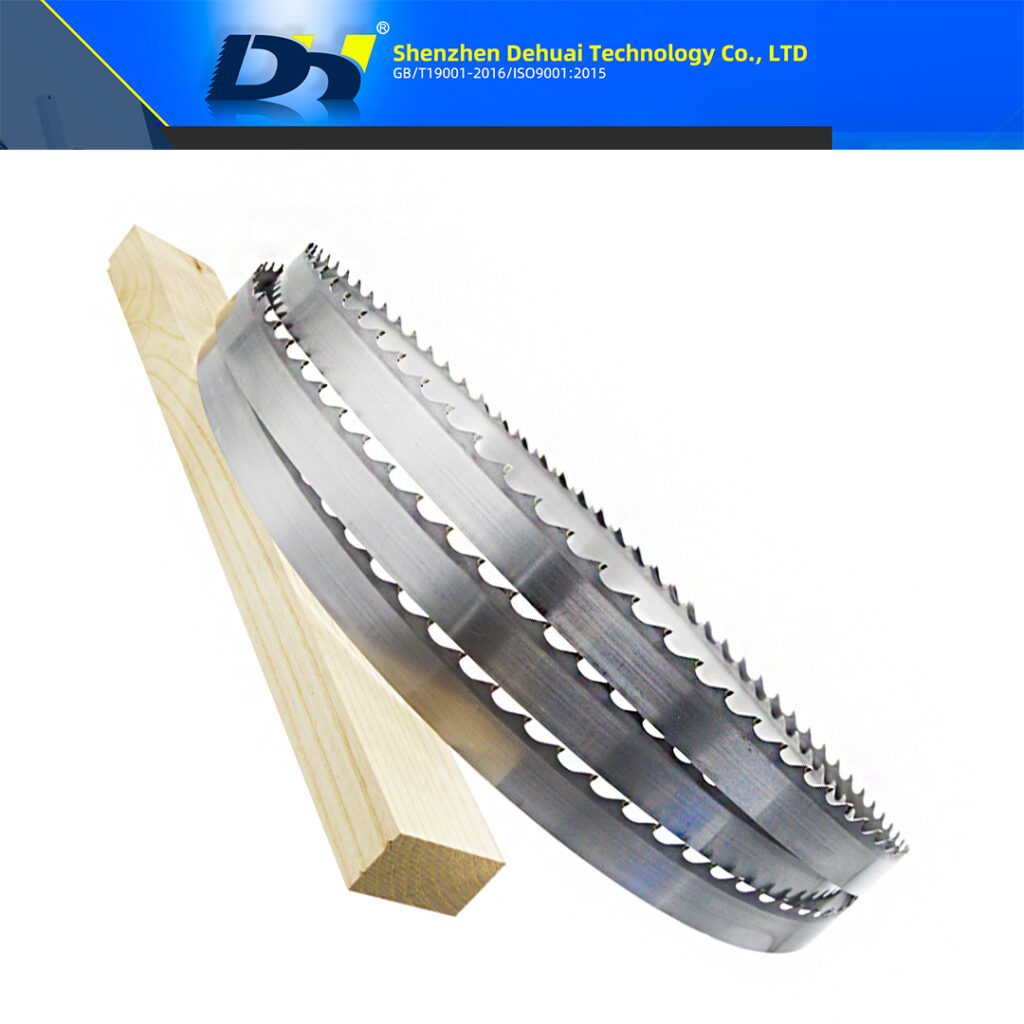
In der professionellen Holz- und Plattenbearbeitung, Die TCT-Bandsägeblatt offers exceptional cutting performance and durability for demanding applications. Diese mit Wolframcarbid bestückten Klingen behalten die Schärfe deutlich länger als herkömmliche Stahlklingen, Damit eignen sie sich ideal zum Schneiden abrasiver Materialien wie MDF, Spanplatte, und exotische Harthölzer.
Jedoch, sogar vom Feinsten TCT-Bandsägeblatt can encounter issues when improperly used or maintained. Ihre Hauptfunktionen verstehen, Erkennen häufiger Probleme mit praktischen Lösungen, Durch die Einhaltung grundlegender Sicherheitsmaßnahmen können Sie die Lebensdauer und Schneidleistung dieser Premium-Klingen maximieren.
Hauptfunktionen von TCT Band Saw Blades in der Holzbearbeitung
Der TCT-Bandsägeblatt serves as a high-performance cutting tool specifically designed for demanding woodworking applications where standard blades fail prematurely. Tungsten carbide tips are brazed onto the blade teeth, providing exceptional wear resistance when cutting abrasive engineered woods, Laminate, und Harthölzer, die Kieselsäure enthalten. Unlike conventional blades that dull rapidly in these materials, Die TCT-Bandsägeblatt maintains its cutting edge through extended production runs, reducing downtime for blade changes.
Common applications include resawing valuable hardwoods, processing large volumes of MDF and particleboard, cutting laminated panels, and handling reclaimed lumber with embedded debris. For high-production sawmills and cabinet shops, Die TCT-Bandsägeblatt delivers consistent cut quality and exceptional value over its extended service life.

Fünf häufige Probleme und praktische Lösungen
Problem 1: Premature Tooth Wear or Dulling
Eine der häufigsten Beschwerden bei der TCT-Bandsägeblatt is teeth wearing down faster than expected. This typically occurs when cutting extremely abrasive materials, when the blade is pushed beyond its capacity, or when the wood contains excessive silica or embedded dirt.
Lösung: Erste, verify that you are using the correct blade for your material. Während TCT-Bandsägeblätter are highly wear-resistant, extremely abrasive materials may require blades with specialized carbide grades. Zweite, reduce feed pressure—forcing material too aggressively generates heat that accelerates wear. Dritte, Achten Sie auf die richtige Klingengeschwindigkeit; running too fast increases friction dramatically. Vierte, Untersuchen Sie Ihr Werkstück auf Fremdkörper wie Nägel, Steine, or sand embedded in the bark before cutting. Endlich, ensure your TCT-Bandsägeblatt is properly broken in by reducing feed pressure for the first several cuts.
Problem 2: Chipped or Broken Carbide Tips
Chipped or missing carbide tips on a TCT-Bandsägeblatt compromise cut quality and safety. This problem usually results from shock loading—suddenly encountering hard objects, forcing the blade into tight curves, or using excessive feed pressure on dense materials. Carbid, while extremely hard, is also brittle and susceptible to impact damage.
Lösung: Replace the blade immediately if carbide tips are missing or severely chipped, as a damaged blade risks catastrophic failure. To prevent recurrence, avoid feeding material with loose knots, Nägel, or bark inclusions. Zweite, reduce feed pressure when entering cuts and avoid forcing the TCT-Bandsägeblatt around tight radii that exceed its design capabilities. Dritte, ensure your blade guides are properly adjusted; excessive clearance allows the blade to twist, subjecting individual teeth to disproportionate loads. Endlich, consider using a wider blade for straight cuts to improve stability.

Problem 3: Wandernde oder krumme Schnitte
Wenn die TCT-Bandsägeblatt beginnt, die beabsichtigte Zeile abzuschneiden, Das Problem hängt oft mit der Klingenspannung zusammen, Zahngarnitur, oder Führungsausrichtung. Eine seitlich abdriftende Klinge erzeugt Materialverschwendung und beeinträchtigt die Teilegenauigkeit.
Lösung: Prüfen Sie zunächst die Sägeblattspannung – unter Spannung TCT-Bandsägeblätter unvorhersehbar wandern. Informationen zur richtigen Spannung finden Sie in den Empfehlungen Ihres Sägeherstellers. Zweite, verify guide bearings are properly positioned close to the blade without pinching it. Dritte, inspect the tooth set; Eine ungleichmäßige Einstellung führt dazu, dass die Klinge unregelmäßig schneidet.
Wenn die Klinge mehrmals nachgeschliffen wurde, Das Set ist möglicherweise beschädigt und ein Austausch ist erforderlich. Vierte, Stellen Sie sicher, dass Ihre Vorschubrichtung der natürlichen Schneidtendenz der Klinge folgt und keinen seitlichen Druck erzwingt. Für Nachsägearbeiten, Erwägen Sie die Verwendung eines breiteren TCT-Bandsägeblatt that provides greater beam strength.
Problem 4: Blade Breakage at the Weld or Gullet
While the TCT-Bandsägeblatt is durable, it can snap unexpectedly when subjected to fatigue stress, improper tension, or lack of maintenance. Hairline cracks often begin at the weld joint or in the tooth gullet—areas of highest tensile stress.
Lösung: Regular inspection is critical for preventing breakage. Examine the TCT-Bandsägeblatt for cracks before each use, particularly around the welded joint. Zweite, avoid over-tensioning the blade—this stresses the steel backing and accelerates crack formation.
Dritte, inspect the blade weld regularly; Eine schlecht verarbeitete Schweißnaht ist ein häufiger Fehlerpunkt. When installing a new TCT-Bandsägeblatt, perform a proper break-in procedure by running at reduced feed for the first several cuts. Endlich, never store blades coiled too tightly, as this introduces stress points.
Problem 5: Brandflecken oder glasierte Oberflächen auf dem Werkstück
Burn marks across the workpiece indicate excessive friction heat generated by the TCT-Bandsägeblatt. Dieses Problem ist typischerweise auf stumpfe Zähne zurückzuführen, unzureichende Vorschubgeschwindigkeit, oder Harzansammlungen an den Schnittkanten.
Lösung: Replace or reshappen the TCT-Bandsägeblatt beim ersten Anzeichen einer Oberflächenverschlechterung.
TCT blades require specialized diamond wheel grinding for proper resharpening. Zweite, Vorschubgeschwindigkeit erhöhen; im Gegensatz zur Intuition, feeding faster reduces burning because each tooth takes a thicker chip that carries heat away from the cutting zone.
Dritte, Reinigen Sie die Klinge gründlich; Auf den Zähnen angesammeltes Pech und Harz isolieren die Wärme und erzeugen Reibung. For resinous woods, apply specialized lubricants to the blade between passes. Endlich, reduce the depth of cut if burning persists—taking multiple lighter passes generates less friction.

Essential Safety Recommendations for TCT Band Saw Blades
Arbeiten mit dem TCT-Bandsägeblatt erfordert die strikte Einhaltung von Sicherheitspraktiken. Always wear safety glasses or a face shield; broken blades or thrown workpieces can cause serious eye injuries. Schnittfeste Handschuhe schützen die Hände beim Klingenwechsel und beim Einrichten, Tragen Sie jedoch niemals Handschuhe, wenn Sie die Säge bedienen, da sie sich an beweglichen Teilen verfangen können. Vor jedem Gebrauch, inspizieren Sie die TCT-Bandsägeblatt für Risse, missing carbide tips, oder beschädigte Schweißnähte; Eine beschädigte Klinge kann bei Betriebsgeschwindigkeit zersplittern. Halten Sie Ihre Hände mindestens 15 cm vom Schneidbereich entfernt, using push sticks or fixtures for small workpieces.
Ensure blade guards are in place and properly adjusted—never bypass safety interlocks. Beim Klingenwechsel, Trennen Sie die Stromversorgung an der Quelle, anstatt sich nur auf den Schalter zu verlassen. Maintain a clean work area; accumulated debris can interfere with blade tracking. Zusätzlich, use appropriate dust extraction as fine particles from engineered wood can be respiratory hazards.

Abschluss
Der TCT-Bandsägeblatt provides exceptional wear resistance and cutting performance for demanding woodworking applications. Durch das Verständnis seiner Hauptfunktionen und das Erkennen der fünf oben genannten häufigen Probleme – vorzeitiger Verschleiß, chipped tips, wandernde Schnitte, Bruch, and burn marks—operators can implement practical solutions that restore cutting quality and extend blade service life.
Regelmäßige Inspektion, richtige Spannung, entsprechende Vorschubgeschwindigkeiten, und die Einhaltung von Sicherheitspraktiken stellen sicher, dass die TCT-Bandsägeblatt liefert zuverlässige Leistung und sorgt gleichzeitig für eine sichere Arbeitsumgebung. Mit der richtigen Sorgfalt und Aufmerksamkeit, these premium blades handle the most challenging workshop cutting tasks effectively and economically.
Hartmetall-Tct-Blatt für Holz Horizontales Holzbandsägeblatt
2021 Heißer Verkauf Schiebetisch Holz Schneiden Hartmetall Bestückte Bandsägeblatt
Other recommendation
Zähne gehärtetes Bandsägeblatt
Bandsägeblätter zum Schneiden von Holz Bandsägeblatt für Hartholz Horizontales Holzbandsägewerk
Legiertes Hartmetall-Bandsägeblatt Tragbares Holz-Schneidband Sägeblätter aus Stellit
Food band saw blade(teeth hardened)