
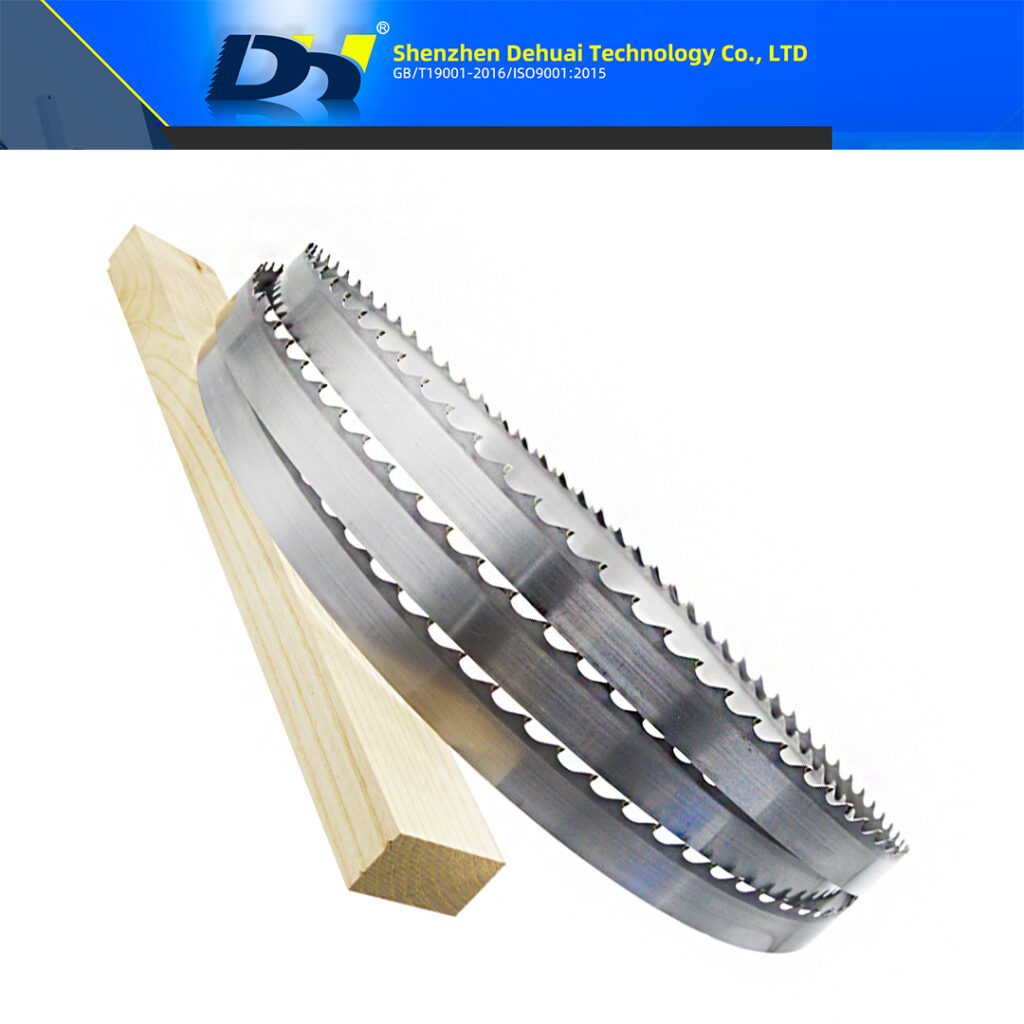
In professional woodworking and panel processing, the Hoja de sierra de cinta TCT offers exceptional cutting performance and durability for demanding applications. These tungsten carbide-tipped blades maintain sharpness significantly longer than conventional steel blades, making them ideal for cutting abrasive materials like MDF, tablero de partículas, and exotic hardwoods.
Sin embargo, even the finest Hoja de sierra de cinta TCT can encounter issues when improperly used or maintained. Understanding their primary functions, recognizing common problems with practical solutions, and following essential safety practices ensures you maximize the service life and cutting performance these premium blades offer.
Primary Functions of Hojas de sierra de cinta TCT in Woodworking
The Hoja de sierra de cinta TCT serves as a high-performance cutting tool specifically designed for demanding woodworking applications where standard blades fail prematurely. Tungsten carbide tips are brazed onto the blade teeth, providing exceptional wear resistance when cutting abrasive engineered woods, laminates, and hardwoods containing silica. Unlike conventional blades that dull rapidly in these materials, the Hoja de sierra de cinta TCT maintains its cutting edge through extended production runs, reducing downtime for blade changes.
Common applications include resawing valuable hardwoods, processing large volumes of MDF and particleboard, cutting laminated panels, and handling reclaimed lumber with embedded debris. For high-production sawmills and cabinet shops, the Hoja de sierra de cinta TCT delivers consistent cut quality and exceptional value over its extended service life.

Five Common Problems and Practical Solutions
Problem 1: Premature Tooth Wear or Dulling
One of the most frequent complaints with the Hoja de sierra de cinta TCT is teeth wearing down faster than expected. This typically occurs when cutting extremely abrasive materials, when the blade is pushed beyond its capacity, or when the wood contains excessive silica or embedded dirt.
Solution: Primero, verify that you are using the correct blade for your material. While TCT band saw blades are highly wear-resistant, extremely abrasive materials may require blades with specialized carbide grades. Segundo, reduce feed pressure—forcing material too aggressively generates heat that accelerates wear. Tercero, ensure proper blade speed; running too fast increases friction dramatically. Fourth, inspect your workpiece for foreign objects like nails, stones, or sand embedded in the bark before cutting. Finalmente, ensure your Hoja de sierra de cinta TCT is properly broken in by reducing feed pressure for the first several cuts.
Problem 2: Chipped or Broken Carbide Tips
Chipped or missing carbide tips on a Hoja de sierra de cinta TCT compromise cut quality and safety. This problem usually results from shock loading—suddenly encountering hard objects, forcing the blade into tight curves, or using excessive feed pressure on dense materials. Carburo, while extremely hard, is also brittle and susceptible to impact damage.
Solution: Replace the blade immediately if carbide tips are missing or severely chipped, as a damaged blade risks catastrophic failure. To prevent recurrence, avoid feeding material with loose knots, clavos, or bark inclusions. Segundo, reduce feed pressure when entering cuts and avoid forcing the Hoja de sierra de cinta TCT around tight radii that exceed its design capabilities. Tercero, ensure your blade guides are properly adjusted; excessive clearance allows the blade to twist, subjecting individual teeth to disproportionate loads. Finalmente, consider using a wider blade for straight cuts to improve stability.

Problem 3: Wandering or Crooked Cuts
When the Hoja de sierra de cinta TCT begins cutting off the intended line, the issue often relates to blade tension, tooth set, or guide alignment. A blade that drifts sideways produces wasted material and compromises part accuracy.
Solution: Check blade tension first—under-tensioned TCT band saw blades wander unpredictably. Consult your saw manufacturer’s recommendations for proper tension. Segundo, verify guide bearings are properly positioned close to the blade without pinching it. Tercero, inspect the tooth set; uneven set causes the blade to cut irregularly.
If the blade has been resharpened multiple times, the set may be compromised and replacement is necessary. Fourth, ensure your feed direction follows the blade’s natural cutting tendency rather than forcing lateral pressure. For resawing operations, consider using a wider Hoja de sierra de cinta TCT that provides greater beam strength.
Problem 4: Blade Breakage at the Weld or Gullet
While the Hoja de sierra de cinta TCT is durable, it can snap unexpectedly when subjected to fatigue stress, improper tension, or lack of maintenance. Hairline cracks often begin at the weld joint or in the tooth gullet—areas of highest tensile stress.
Solution: Regular inspection is critical for preventing breakage. Examine the Hoja de sierra de cinta TCT for cracks before each use, particularly around the welded joint. Segundo, avoid over-tensioning the blade—this stresses the steel backing and accelerates crack formation.
Tercero, inspect the blade weld regularly; a poorly finished weld is a common failure point. When installing a new Hoja de sierra de cinta TCT, perform a proper break-in procedure by running at reduced feed for the first several cuts. Finalmente, never store blades coiled too tightly, as this introduces stress points.
Problem 5: Burn Marks or Glazed Surfaces on Workpiece
Burn marks across the workpiece indicate excessive friction heat generated by the Hoja de sierra de cinta TCT. This problem typically stems from dull teeth, insufficient feed speed, or resin buildup on the cutting edges.
Solution: Replace or reshappen the Hoja de sierra de cinta TCT at the first sign of surface degradation.
TCT blades require specialized diamond wheel grinding for proper resharpening. Segundo, increase feed speed; contrary to intuition, feeding faster reduces burning because each tooth takes a thicker chip that carries heat away from the cutting zone.
Tercero, clean the blade thoroughly; pitch and resin accumulated on teeth insulates heat and creates friction. For resinous woods, apply specialized lubricants to the blade between passes. Finalmente, reduce the depth of cut if burning persists—taking multiple lighter passes generates less friction.

Essential Safety Recommendations for TCT Band Saw Blades
Working with the Hoja de sierra de cinta TCT requires strict adherence to safety practices. Always wear safety glasses or a face shield; broken blades or thrown workpieces can cause serious eye injuries. Cut-resistant gloves protect hands during blade changes and setup, but never wear gloves when operating the saw, as they can catch on moving parts. Before each use, inspect the Hoja de sierra de cinta TCT for cracks, missing carbide tips, or damaged welds; a compromised blade can fragment at operating speed. Keep hands at least six inches from the cutting zone, using push sticks or fixtures for small workpieces.
Ensure blade guards are in place and properly adjusted—never bypass safety interlocks. When changing blades, disconnect power at the source rather than relying on the switch alone. Maintain a clean work area; accumulated debris can interfere with blade tracking. Además, use appropriate dust extraction as fine particles from engineered wood can be respiratory hazards.

Conclusión
The Hoja de sierra de cinta TCT provides exceptional wear resistance and cutting performance for demanding woodworking applications. By understanding its primary functions and recognizing the five common issues outlined above—premature wear, chipped tips, wandering cuts, breakage, and burn marks—operators can implement practical solutions that restore cutting quality and extend blade service life.
Regular inspection, proper tensioning, appropriate feed rates, and adherence to safety practices ensure that the Hoja de sierra de cinta TCT delivers reliable performance while maintaining a safe work environment. With proper care and attention, these premium blades handle the most challenging workshop cutting tasks effectively and economically.
Hoja Tct de carburo para madera Hoja de sierra de cinta de corte de madera horizontal
Other recommendation
Hoja de sierra de cinta de estelita
Hoja de sierra de cinta bimetálica
Food band saw blade(teeth hardened)