

En menuiserie professionnelle, le Lame de scie à ruban stellite offers an exceptional balance of wear resistance and toughness, ce qui le rend idéal pour les opérations exigeantes de refendage et de refente. Le stellite est un alliage dur cobalt-chrome appliqué sur les dents de scie grâce à un processus de soudage spécialisé., augmentant considérablement leur résistance à l'abrasion par rapport aux lames en acier standard.
This unique property allows the Lame de scie à ruban stellite to maintain a sharp cutting edge for extended periods, même lors du traitement de bois durs abrasifs. Cependant, même ces lames haut de gamme peuvent rencontrer des problèmes de performances lorsqu'elles sont soumises à une mauvaise utilisation, tension incorrecte, ou un entretien inadéquat.
Fonctions principales de Lames de scie à ruban Stellite dans le travail du bois
Le Lame de scie à ruban stellite serves primarily in high-production resawing and ripping applications where durability and cut quality are paramount. Unlike conventional steel blades that dull quickly when cutting abrasive exotic hardwoods like ipe, teck, or jatoba, the Stellite teeth retain their sharpness for significantly longer. These blades are especially advantageous when dealing with wood containing high silicate levels or when processing reclaimed lumber with embedded debris.
Le Lame de scie à ruban stellite can be resharpened up to ten times, making it a cost-effective solution for sawmills and large workshops. Typical applications include producing veneer-quality cuts, processing tropical wood species, and handling both hardwoods and softwoods with outstanding precision.
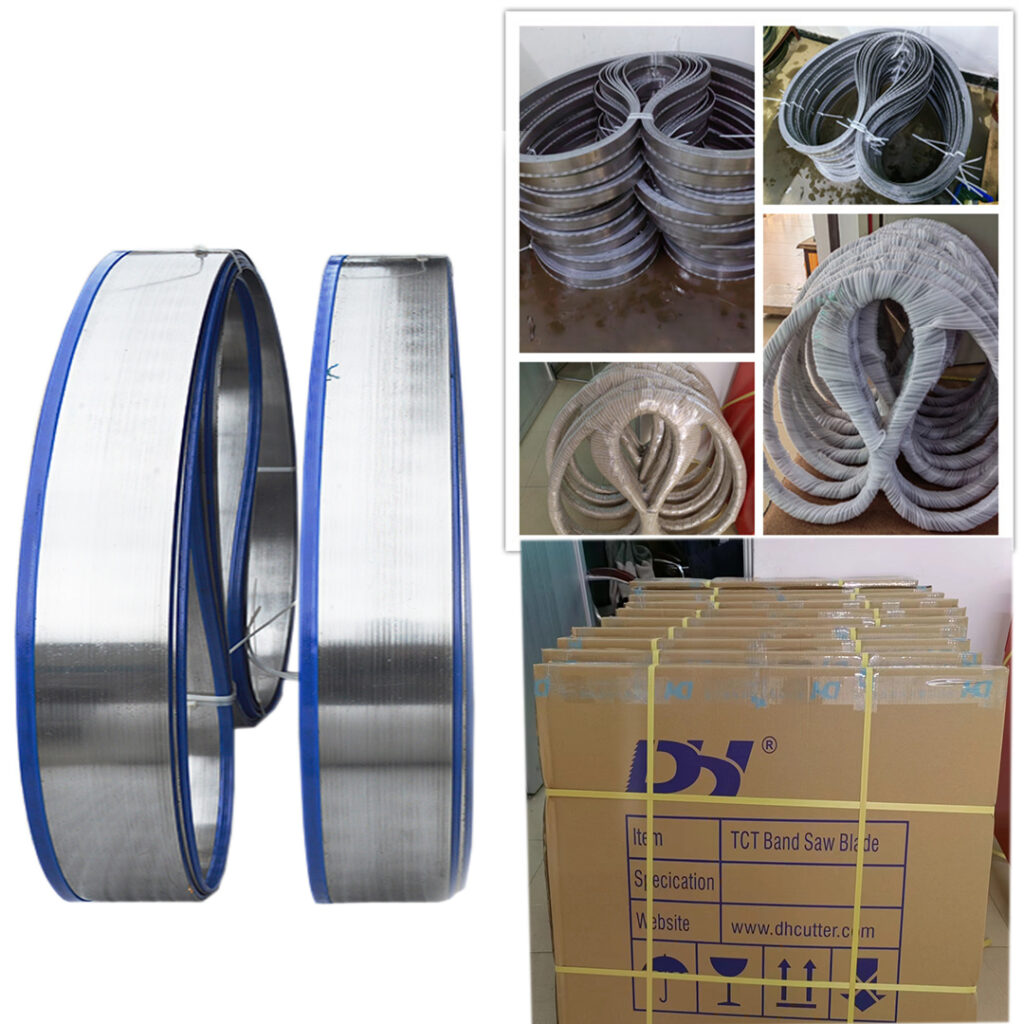
For industrial operations requiring continuous high-volume processing, Professional Grade Stellite Tipped Band Saw Blades are optimized for efficient wood cutting in large-scale production environments. Built with high-quality steel and Stellite-tipped teeth, these blades deliver precision, stability, and extended lifespan, reducing downtime and boosting overall productivity.

Cinq problèmes courants et solutions pratiques
Problème 1: Premature Dulling of the Stellite Tips
L'un des problèmes les plus frustrants liés au Lame de scie à ruban stellite is teeth dulling much faster than expected. This typically occurs when the blade is pushed beyond its capacity on extremely abrasive materials or when the wood contains excessive silica or dirt.
Solution: D'abord, vérifiez que vous utilisez la bonne lame pour votre matériau. While Stellite is durable, extremely high-silicate woods like teak may require carbide-tipped blades. Deuxième, reduce feed pressure; forcing material too aggressively generates heat that can affect the tooth structure. Troisième, assurer une vitesse de lame appropriée; running too fast increases friction and accelerates wear. Enfin, inspectez votre pièce à la recherche de corps étrangers comme des clous, pierres, ou du sable incrusté dans l'écorce avant de couper. Aussi, ensure you are following a proper blade break-in procedure by reducing feed pressure for the first few cuts.
Problème 2: Tooth Breakage or Chipping
Teeth on a Lame de scie à ruban stellite can chip or break when subjected to shock loading—suddenly encountering hard objects, forcer la lame dans des courbes serrées, ou en utilisant une pression d'alimentation excessive sur des matériaux denses. Unlike carbide, Stellite is less brittle but can still fracture under extreme impact.
Solution: Replace the blade immediately if teeth are missing, car une lame endommagée risque une panne catastrophique. Pour prévenir la récidive, avoid feeding material with loose knots or bark inclusions. Deuxième, reduce feed pressure when entering cuts and avoid forcing the blade around tight radii that exceed the blade’s design capabilities. Troisième, assurez-vous que vos guides de lame sont correctement ajustés; un jeu excessif permet à la lame de se tordre, soumettre des dents individuelles à des charges disproportionnées.

Problème 3: Coupes errantes ou tordues
Quand le Lame de scie à ruban stellite commence à couper la ligne prévue, le problème est souvent lié à la tension de la lame, ensemble de dents, ou guider l'alignement. Une lame qui dérive latéralement produit un gaspillage de matière et compromet la précision des pièces.
Solution: Vérifiez d'abord la tension de la lame : les lames sous-tendues se déplacent de manière imprévisible.. Consultez les recommandations du fabricant de votre scie pour connaître la tension appropriée., puis vérifiez que les roulements de guidage sont correctement positionnés à proximité de la lame sans la pincer. Deuxième, inspect the side projection (ensemble de dents); if the set has been damaged or worn away during previous sharpening cycles, the blade will not cut straight. Le Lame de scie à ruban stellite requires side grinding rather than setting after sharpening. Troisième, assurez-vous que votre direction d'avance suit la tendance naturelle de coupe de la lame plutôt que de forcer une pression latérale.
Problème 4: Rupture de lame au niveau de la soudure ou de l'oesophage
Alors que le Lame de scie à ruban stellite est durable, il peut se briser de manière inattendue lorsqu'il est soumis à une contrainte de fatigue, tension inappropriée, ou manque d'entretien. Hairline cracks often begin in the tooth gullet—the area of highest tensile stress—and grow over time if the blade is not resharpened regularly.
Solution: Regular profile grinding is critical for preventing breakage. Le Lame de scie à ruban stellite must be resharpened before cracks develop, even when some teeth are not yet dull. Follow a routine sharpening schedule using specialized profile grinding machines. Deuxième, évitez de trop tendre la lame – cela stresse le support en acier et accélère la formation de fissures. Troisième, inspecter régulièrement la soudure de la lame; une soudure mal finie est un point de défaillance courant. Lors de l'installation d'un nouveau Lame de scie à ruban stellite, effectuer une procédure de rodage appropriée en fonctionnant à avance réduite pour les premières coupes.

Problème 5: Burn Marks or Glazed Surfaces
Les marques de brûlure sur la pièce indiquent une chaleur de friction excessive générée par le Lame de scie à ruban stellite. Ce problème provient généralement de dents ternes, vitesse d'avance insuffisante, ou accumulation de résine sur les arêtes de coupe.
Solution: Resharpen the blade at the first sign of surface degradation. Stellite band saw blades are designed for professional regrinding using the appropriate machinery. Deuxième, augmenter la vitesse d'alimentation; contrairement à l'intuition, une alimentation plus rapide réduit les brûlures car chaque dent reçoit un copeau plus épais qui éloigne la chaleur de la zone de coupe. Troisième, nettoyer soigneusement la lame; la poix et la résine accumulées sur les dents isolent la chaleur et créent une friction. Pour les bois résineux, appliquer des lubrifiants spécialisés sur la lame entre les passes. Enfin, réduisez la profondeur de coupe si la brûlure persiste : effectuer plusieurs passes plus légères génère moins de friction.

Recommandations de sécurité essentielles pour les lames de scie à ruban Stellite
Travailler avec le Lame de scie à ruban stellite nécessite le strict respect des pratiques de sécurité. Portez toujours des lunettes de sécurité ou un écran facial; des lames cassées ou des pièces projetées peuvent provoquer de graves blessures aux yeux. Cut-resistant gloves protect hands during blade changes, mais ne portez jamais de gants lorsque vous utilisez la scie, car ils peuvent s'accrocher aux pièces mobiles. Avant chaque utilisation, inspecter le Lame de scie à ruban stellite pour les fissures, dents manquantes, ou soudures endommagées; une lame compromise peut se fragmenter à la vitesse de fonctionnement.
Gardez les mains bien éloignées de la zone de coupe, utiliser des poussoirs ou des accessoires pour les petites pièces. Assurez-vous que les protège-lames sont en place et correctement ajustés ; ne contournez jamais les verrouillages de sécurité.. Lors du changement de lame, couper l'alimentation à la source. Maintenir une zone de travail propre; les débris accumulés peuvent interférer avec le suivi de la lame. En plus, grinding and sharpening Stellite band saw blades can release airborne metals; ensure proper ventilation and use appropriate respiratory protection where necessary.
Conclusion
Le Lame de scie à ruban stellite offre un excellent équilibre de durabilité, sharpness retention, et rentabilité pour les applications exigeantes du travail du bois. By understanding its primary functions and recognizing the five common issues outlined above—premature dulling, tooth breakage, coupes errantes, rupture, et marques de brûlure : les opérateurs peuvent mettre en œuvre des solutions pratiques qui restaurent la qualité de coupe et prolongent la durée de vie de la lame..
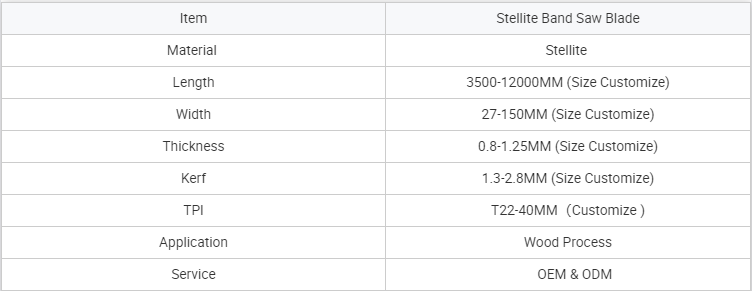
Regular profile grinding, bonne tension, et le respect des pratiques de sécurité garantissent que le Lame de scie à ruban stellite offre des performances fiables tout en maintenant un environnement de travail sûr. With custom size options available to suit various wood processing machinery, from small workshops to large production lines, professional-grade Stellite-tipped blades provide enhanced cutting efficiency, reduced vibration, and superior accuracy for woodworking projects requiring professional-grade results.

Lame de scierie à bande de carbure d'alliage Lames de scie à ruban de coupe de bois portables
Service personnalisé disponible pour le travail du bois, lame de scie à ruban à pointe stellite
Autre recommandation
Toutes sortes de lames de scie à ruban Tct en carbure de tungstène pour la coupe du bois