
Katika usindikaji wa kitaalamu wa mbao na jopo, ya TCT bendi ya blades delivers exceptional cutting performance and durability for demanding applications. These tungsten carbide-tipped blades maintain sharpness far longer than conventional steel blades, making them ideal for cutting abrasive materials such as MDF, Bodi ya chembe, mbao ngumu, na mbao zilizogandishwa.
Hata hivyo, hata bora zaidi TCT bendi ya blades can crack, snap, or chip teeth when subjected to improper operation, mvutano usio sahihi, or—critically—seasonal temperature changes that alter the physical properties of the steel backing. Understanding the primary functions of these blades, recognizing the five most common problems with practical solutions, and following essential safety practices ensures you maximize blade life and cutting quality.
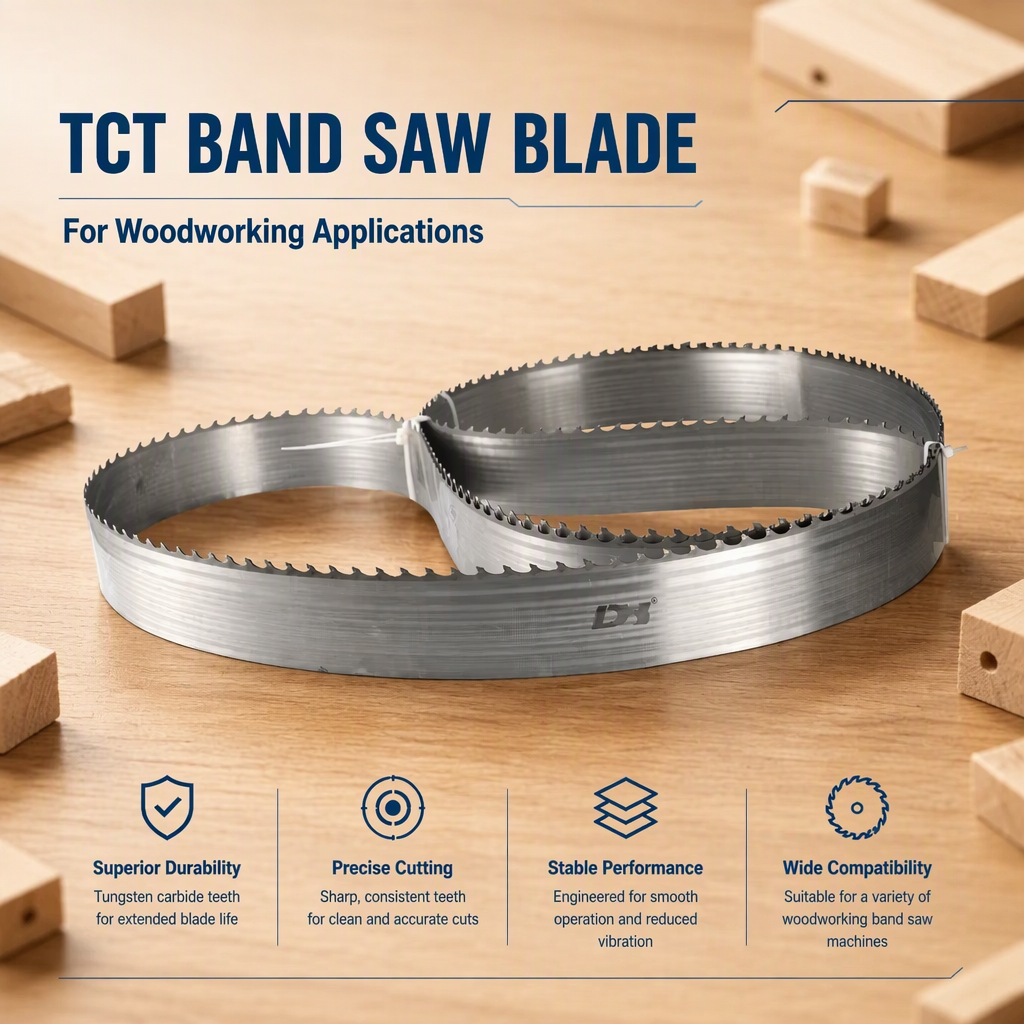
Kazi za Msingi za Misumeno ya Bendi ya TCT katika Utengenezaji mbao
The TCT band saw blade serves as a high-performance cutting tool specifically engineered for applications where standard blades fail prematurely. Tungsten carbide tips brazed onto the tooth points provide exceptional wear resistance when cutting abrasive engineered woods, laminates, na mbao ngumu zenye silika.
Unlike conventional blades that dull rapidly, ya TCT bendi ya blades hudumisha makali yake kupitia uendeshaji uliopanuliwa wa uzalishaji, kupunguza muda wa mabadiliko ya blade. Maombi ya kawaida ni pamoja na kukata miti ngumu yenye thamani, usindikaji wa kiasi kikubwa cha MDF na particleboard, kukata paneli za laminated, na kushughulikia mbao zilizorudishwa na uchafu uliopachikwa. For high-production sawmills, cabinet shops, and furniture factories, the TCT band saw blade delivers consistent cut quality and exceptional value over its extended service life.

Matatizo Matano ya Kawaida na Masuluhisho ya Vitendo
Tatizo 1: Cold-Weather Cracking and Blade Breakage
Many operators notice a troubling pattern: as autumn turns to winter and temperatures drop, TCT band saw blades suddenly become prone to cracking, snapping, and tooth chipping. This is not coincidence. Low temperatures directly change the physical properties of the steel backing—the band becomes harder and more brittle, its toughness drops, and its tolerance for stress falls sharply. A blade that performs reliably in summer may crack under only minor loading in winter.
Suluhisho: Adjust your maintenance routine for cold weather.
Kwanza, always warm up the machine at low speed before cutting—never start a cold machine at high speed or feed it large, hard material immediately, as the sudden impact can instantly chip teeth or snap the band.
Pili, break in new blades gently: run light material at reduced feed for the first cuts so the tooth tips condition gradually.
Tatu, set tension slightly looser than your summer setting, since cold steel has less elasticity and over-tensioning accelerates cracking.
Nne, avoid heavy loading on a cold machine, and allow the blade to reach operating temperature before demanding work. Hatimaye, store TCT band saw blades in a dry, sealed environment—moisture in winter causes rust spots, and every rust spot becomes a stress weakness that invites cracking once the blade is mounted.

Tatizo 2: Kuchakaa kwa meno kabla ya wakati au kutoboka
One of the most frequent complaints with the TCT band saw blade is teeth wearing faster than expected. Hii kawaida hutokea wakati wa kukata nyenzo za abrasive sana, wakati blade inasukuma zaidi ya uwezo wake, au wakati kuni ina silika nyingi au uchafu uliopachikwa.
Suluhisho: Verify that you are using the correct blade for your material—extremely abrasive stock may require specialized carbide grades. Reduce feed pressure; forcing material too aggressively generates heat that accelerates wear. Ensure proper blade speed, since running too fast increases friction dramatically. Inspect workpieces for nails, mawe, and sand before cutting. Hatimaye, ensure the TCT band saw blade is properly broken in by reducing feed pressure for the first several cuts.
Tatizo 3: Vidokezo vya Carbide iliyovunjika au iliyovunjika
Chipped or missing carbide tips compromise cut quality and safety. Tatizo hili kwa kawaida hutokana na upakiaji wa mshtuko-ghafla kukutana na vitu vigumu, kulazimisha blade katika curves tight, au kutumia shinikizo kubwa la malisho kwenye nyenzo zenye mnene. Carbide ni ngumu sana lakini pia ni brittle.
Suluhisho: Replace the blade immediately if tips are missing or severely chipped. Avoid feeding material with loose knots, misumari, au kuingizwa kwa gome. Reduce feed pressure when entering cuts and avoid forcing the TCT band saw blade around radii beyond its design capability. Ensure guides are properly adjusted so the blade cannot twist, and consider a wider blade for straight cuts to improve stability.
Tatizo 4: Mabedui au Vipunguzi vilivyopotoka
When the TCT band saw blade begins cutting off the intended line, the issue usually relates to blade tension, seti ya meno, au mpangilio wa mwongozo. A drifting blade wastes material and compromises part accuracy.
Suluhisho: Angalia mvutano wa blade kwanza-blade zisizo na mvutano huzunguka bila kutabirika. Verify guide bearings sit close to the blade without pinching. Inspect the tooth set; seti ya kutofautiana husababisha kukata mara kwa mara, and a blade resharpened many times may have compromised set requiring replacement. Feed the work following the blade’s natural tendency rather than forcing lateral pressure, and use a wider TCT band saw blade for resawing to gain beam strength.
Tatizo 5: Alama za Kuchoma au Nyuso Zilizoangaziwa
Burn marks indicate excessive friction heat generated by the TCT band saw blades. This typically stems from dull teeth, kasi ya kulisha haitoshi, au mkusanyiko wa resin kwenye kingo za kukata.
Suluhisho: Replace or resharpen the blade at the first sign of surface degradation—TCT blades require specialized diamond wheel grinding. Increase feed speed so each tooth takes a thicker chip that carries heat away. Clean the blade thoroughly to remove pitch and resin, which insulate heat and create friction. Reduce depth of cut if burning persists, taking multiple lighter passes.
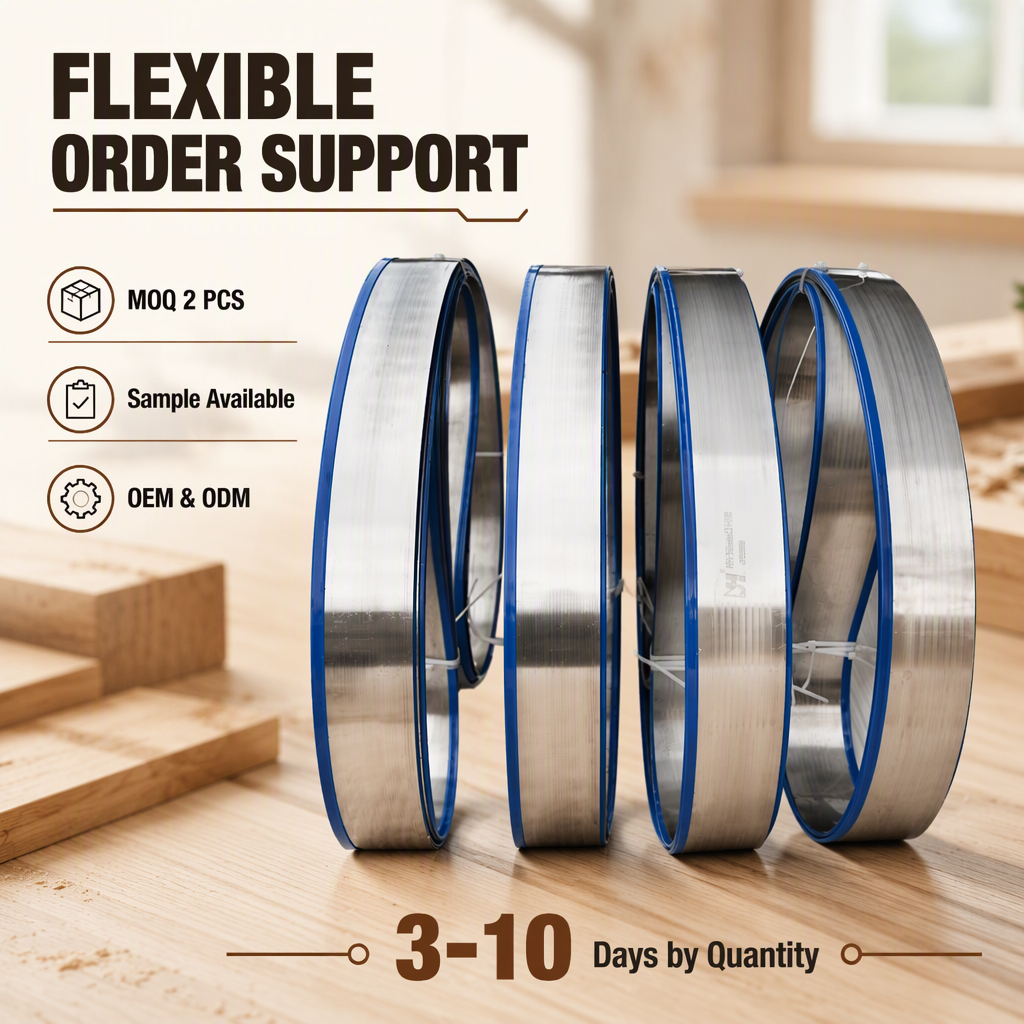
Faida ya Chapa ya DH: Ugavi wa Kuaminika na Usaidizi wa Kitaalam
For woodworkers and tool distributors seeking dependable band saw tooling, DH brand TCT band saw blades offer compelling advantages built on 27 miaka ya uzoefu wa tasnia. DH understands that every workshop and production line has unique requirements—which is why we provide fast delivery, mwongozo wa kitaaluma wa uhandisi, na msaada msikivu baada ya mauzo.
Our TCT band saw blades are available in a full range of sizes and tooth configurations to match any machine and application, with custom specifications produced to your exact requirements. Our experienced engineers help you select the right blade, set optimal tension and feed parameters, and troubleshoot seasonal problems such as winter cracking before they cost you production time.
DH’s diverse woodworking tool supply covers the full range of production needs—from band saw blades to sizing cutters, drill bits, and cutter heads—with consistently high quality and extended tool life. Kwa wazalishaji wanaojiendesha na wasambazaji wa zana, DH hutoa ugavi wa uhakika ambao huokoa gharama na kutoa muda na nishati ili kuzingatia kujenga bidhaa bora na kuwahudumia wateja wao wenyewe.. Kwa majibu ya haraka baada ya mauzo ya mwongozo na 27 years of manufacturing expertise behind every blade, DH ndiye mshirika unayeweza kutegemea.
Mapendekezo Muhimu ya Usalama kwa Misumeno ya Bendi ya TCT
Working with the TCT band saw blades requires strict adherence to safety practices. Vaa miwani ya usalama kila wakati au ngao ya uso— vile vile vilivyovunjika au vifaa vya kazi vilivyotupwa vinaweza kusababisha majeraha makubwa ya macho.. Kinga zinazostahimili kukatwa hulinda mikono wakati wa mabadiliko ya blade, but never wear gloves while operating the saw.
Kabla ya kila matumizi, inspect the TCT band saw blades for cracks, kukosa vidokezo vya carbudi, au welds kuharibiwa; blade iliyoathiriwa inaweza kugawanyika kwa kasi ya kufanya kazi. In cold weather, inspect even more carefully, since low temperatures increase brittleness. Weka mikono vizuri kutoka kwa eneo la kukata, kutumia vijiti vya kushinikiza au fixtures kwa workpieces ndogo. Hakikisha ulinzi wa blade umewekwa na kurekebishwa ipasavyo—usiwahi kukwepa miingiliano ya usalama. Wakati wa kubadilisha blade, ondoa nguvu kwenye chanzo. Dumisha safi, dry work area; winter moisture and accumulated debris both interfere with blade tracking. Hatimaye, use appropriate dust extraction, as fine particles from engineered wood are respiratory hazards.

Hitimisho
The TCT band saw blades provides exceptional wear resistance and cutting performance for demanding woodworking applications. By understanding its primary functions and recognizing the five common issues outlined above—cold-weather cracking, premature wear, vidokezo vilivyopigwa, kupunguzwa kwa kutangatanga, na kuchoma alama-waendeshaji wanaweza kutekeleza ufumbuzi wa vitendo ambao hurejesha ubora wa kukata na kupanua maisha ya blade. Winter demands special attention: warm up slowly, break in gently, tension slightly looser, avoid cold heavy loads, and store dry and sealed.
Na chapa ya DH 27 miaka ya utaalamu, utoaji wa haraka, mwongozo wa kitaaluma wa uhandisi, msikivu baada ya mauzo msaada, na usambazaji wa vifaa vya hali ya juu tofauti, unapata mshirika anayeaminika aliyejitolea kuweka uzalishaji wako kwa ufanisi na kwa gharama nafuu. Kwa uangalifu na uendeshaji sahihi, quality TCT band saw blades deliver the consistent performance that modern woodworking demands.
Mapendekezo mengine