

A Mkataji wa pamoja wa kidole is the beating heart of any finger-jointing operation, kubadilisha njia fupi fupi kuwa kali, hisa zinazoweza kutumika kwa samani, baraza la mawaziri, na vipengele vya muundo. Bado hata njia dhabiti zaidi ya uzalishaji inaweza kusimama wakati zana hii ya usahihi inapofanya kazi vibaya. Kwa watengenezaji na wasambazaji wa zana ambao wanategemea pato thabiti, the difference between profit and loss often comes down to how well you manage the five most common failures associated with this cutting tool. This article breaks down those pain points and offers practical, field-tested solutions—while highlighting why DH has become the trusted supply partner for woodworking businesses seeking reliability without the hidden costs.
1. Side Gaps and Loose Joints After Assembly
One of the most frequent complaints from operators is visible side gaps or a loose fit when the fingers are pressed together. This typically stems from a Mkataji wa pamoja wa kidole whose planar tolerance has drifted or whose body has deformed slightly after extended use, causing the machined slot to become wider than the cutter’s tooth profile . Another culprit is the distance between the planer saw blade and the worktable, which affects finger length consistency.
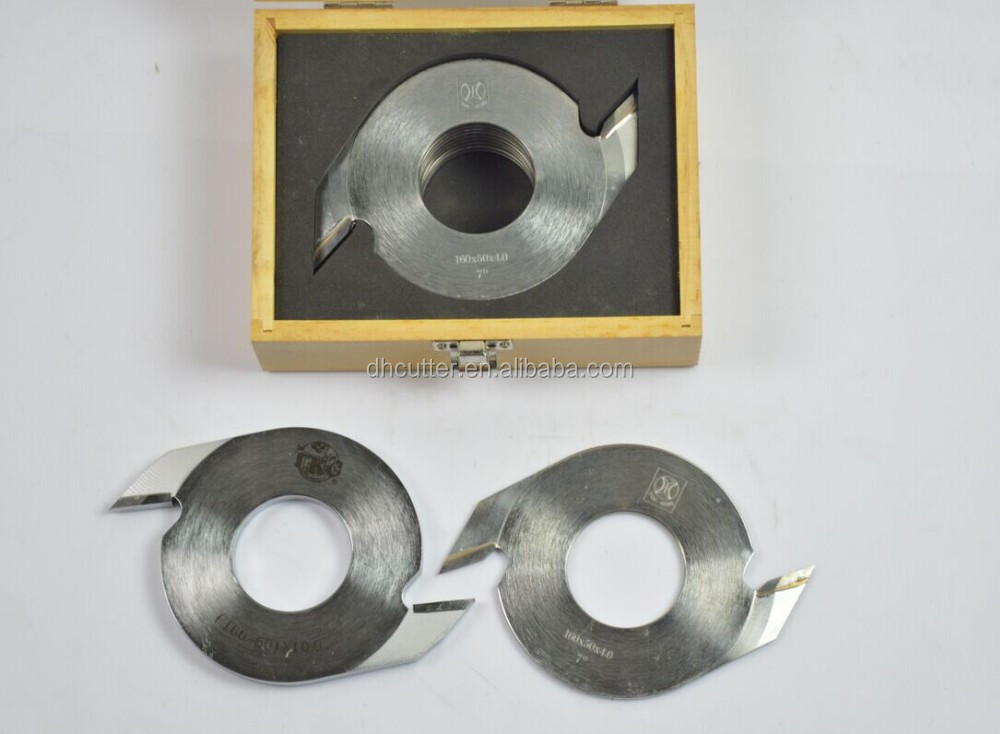
The DH Solution: DH engineers recommend a simple two-step check. Kwanza, verify the cutter’s flatness and replace any unit showing deformation immediately. Pili, adjust the planing saw’s height relative to the table—moving it closer shortens the finger length, while moving it away lengthens it . DH’s CNC-machined cutter bodies maintain dimensional stability far longer than conventional alternatives, reducing the frequency of this adjustment. For distributors, this translates to fewer warranty claims and more predictable inventory turnover.
2. Inconsistent Finger Depth and “Needle Eye” Gaps
When individual cutters within a stack have mismatched outer diameters—whether from manufacturing variance or uneven bore tolerances—the resulting finger depths vary across the joint. The visible symptom is a pinhole gap at the tip or side of the assembled board . This is especially common when operators mix cutters from different production batches or when low-cost tooling lacks rigorous bore control.

The DH Solution: Every DH Mkataji wa pamoja wa kidole is ground to tight bore and diameter tolerances as a matched set, ensuring that all units in a stack cut to identical depths. Yetu 27 years of manufacturing experience means we understand that a few microns of variance at the spindle translates to millimetres of gap at the joint. For production managers, this means fewer rejected panels and less time spent re-calibrating stacks mid-shift.
3. Premature Dulling and “Burning” of the Workpiece
A Mkataji wa pamoja wa kidole that dulls prematurely does more than slow production—it burns the wood, creates fuzzy edges, and forces operators to increase feed pressure, which accelerates wear further. The root causes range from incorrect spindle speed to cutting hardwoods or composite materials that punish lower-grade carbide .
The DH Advantage: DH tooling is built with premium carbide grades selected for the specific demands of finger-jointing, whether the customer runs softwoods, mbao ngumu, or engineered panels. Our cutters hold their edge significantly longer, which directly reduces downtime for blade changes and keeps the feed rate steady. For a workshop owner, that means more board feet per shift. For a distributor, it means a product that earns repeat orders rather than complaints.

4. Chip Packing and Poor Chip Evacuation-Finger joint cutter
As cutting speeds increase, chips can pack into the gullets between teeth, creating excessive heat and causing the Mkataji wa pamoja wa kidole to deflect or chatter. Patent literature on finger-joint tooling specifically identifies chip accumulation at the V-groove bottom as a cause of finger tip defects and cracking, particularly in brittle materials like particleboard and MDF . Once chips compact, the cutting action degrades rapidly.
The DH Solution: DH’s cutter geometry is optimized for efficient chip flow, with gullet designs that clear debris before it can compact. Our engineers work directly with customers to match cutter specifications to their material and feed rates—a level of application support that generic suppliers simply cannot provide. When a customer calls with a chip evacuation issue, our responsive after-sales team can typically diagnose the problem over the phone and recommend a fix the same day.
 –Mkataji wa pamoja wa kidole
5. Rapid Wear and Short Tool Life on Production Lines
High-volume finger-jointing punishes tooling. A Mkataji wa pamoja wa kidole that lasts only weeks instead of months forces repeated purchases, frequent recalibration, and unpredictable downtime. The hidden cost is not just the replacement cutter—it is the labour hours spent swapping and re-setting stacks, and the orders that slip because the line stopped.
Why DH Changes the Equation: Na 27 years in cutting tool manufacturing, DH has refined heat treatment and grinding processes that deliver consistent hardness and edge integrity across every batch. Our tools are designed for longevity, which means production managers spend less on consumables and more on the things that grow their business. For distributors, DH’s high-quality, long-life tooling builds a reputation for reliability—and a supply partner who delivers fast, with professional engineering guidance and rapid after-sales response when questions arise.
Safety Recommendations for Every Operator-Finger joint cutter
Even the best Mkataji wa pamoja wa kidole demands respect. Before mounting, inspect the cutter for cracks, chipped teeth, or deformation—never install a damaged tool . Verify that the spindle speed does not exceed the cutter’s rated maximum. Ensure all guards are in place and that the feed direction matches the cutter’s rotation arrow; running a Mkataji wa pamoja wa kidole backwards invites catastrophic tooth failure . Keep hands clear of the feed path and use push sticks for narrow stock. Hatimaye, train operators to listen for changes in cutting sound—abnormal noise often signals a loose stack or a damaged cutter before a visible defect appears.

The DH Partnership: Supply You Can Build On-Finger joint cutter
For manufacturers and tool distributors alike, the real cost of a Mkataji wa pamoja wa kidole is never just the purchase price. It is the downtime, the rejected stock, the warranty headaches, and the customer trust eroded by inconsistent quality. DH exists to eliminate those variables. Our fast delivery keeps your production schedule intact. Our professional engineers provide application guidance that prevents problems before they start. Yetu 27 years of industry experience inform every design decision. And our responsive after-sales support means that when something does go wrong, you are not left waiting for answers.
With a diverse range of woodworking tools backed by guaranteed quality and extended service life, DH gives you the supply certainty to focus on what matters: building better products for your customers, and spending less time firefighting problems on the shop floor.
