
In woodworking workshops and industrial cutting environments, Teeth hardened band saw blades offer an excellent balance of affordability and performance. By selectively hardening only the tooth tips while keeping the blade body flexible, these blades resist wear better than standard carbon steel options without the higher cost of carbide-tipped alternatives.
Jedoch, even reliable Teeth hardened band saw blades can develop issues when used improperly. Recognizing common problems and knowing how to resolve them quickly not only extends blade life but also maintains cut quality and prevents costly downtime. This article covers the essential functions of Teeth hardened band saw blades, five frequent operational issues with practical solutions, and critical safety recommendations.
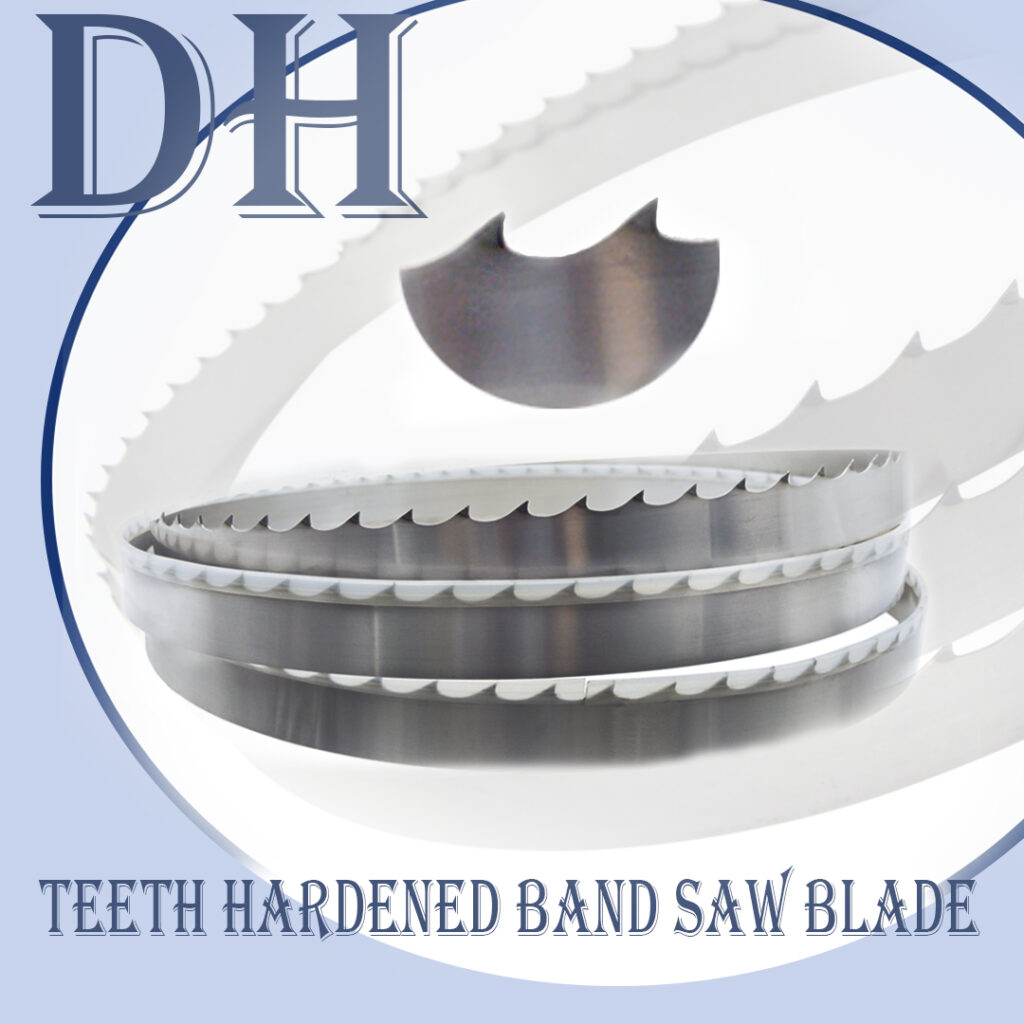
Primary Functions of Teeth Hardened Band Saw Blades in Woodworking
Teeth hardened band saw blades serve as versatile workhorses in woodworking applications where moderate production volumes and material variety make premium blades unnecessarily expensive. The selective hardening process creates teeth that maintain sharpness longer than standard blades when cutting clean softwoods, Harthölzer, and many composite materials. Common applications include contour cutting in furniture production, resawing lumber in small to medium workshops, and general fabrication where occasional abrasive materials are encountered.
Unlike fully hardened blades that become brittle, Teeth hardened band saw blades retain a flexible backing that withstands the repeated flexing around band wheels, making them ideal for curved and intricate cuts. Their cost-effectiveness makes them particularly popular in educational workshops, job shops, and maintenance departments where blade budgets are constrained but performance expectations remain high.


Fünf häufige Probleme und praktische Lösungen
Problem 1: Rapid Blunting or Dulling
One of the most frequent complaints with Teeth hardened band saw blades Verlieren die Zähne viel schneller als erwartet an Schärfe?. Dies tritt typischerweise beim Schneiden abrasiver Materialien wie MDF auf, Spanplatte, or wood containing embedded dirt or silica. The hardened tooth tips, while tougher than standard steel, kann nicht mit der Verschleißfestigkeit von Hartmetall mithalten.
Lösung: Erste, verify you are using the correct blade for your material. Teeth hardened band saw blades perform best on clean, natural woods. Switch to carbide-tipped blades for abrasive composites or recycled lumber containing debris. Zweite, reduce feed pressure—forcing material too aggressively generates heat that accelerates wear. Dritte, Achten Sie auf die richtige Klingengeschwindigkeit; running too fast on hard woods increases friction dramatically. Endlich, inspect your workpiece for foreign objects like nails or stones before cutting.
Problem 2: Cracked or Missing Teeth
Finding broken or missing teeth on Teeth hardened band saw blades is dangerous and compromises cut quality. This problem usually results from shock loading—suddenly encountering hard objects, forcing the blade into tight curves, or using excessive feed pressure on dense materials.
Lösung: Replace the blade immediately if teeth are missing, as running a damaged blade risks catastrophic failure. To prevent recurrence, reduce feed pressure when entering cuts and avoid forcing the blade around tight radii that exceed the blade’s design capabilities. For curved cuts, select a narrower blade specifically designed for contour work. Zusätzlich, ensure your blade guides are properly adjusted—excessive clearance allows the blade to twist, subjecting individual teeth to disproportionate loads.
Problem 3: Wavy or Uneven Cuts
Wann Teeth hardened band saw blades produce wavy surfaces instead of straight, clean cuts, the issue often relates to tension, Zahngarnitur, or blade condition. Wavy cuts waste material and require additional finishing work.
Lösung: Prüfen Sie zunächst die Sägeblattspannung – unter Spannung Teeth hardened band saw blades wander and produce undulating surfaces. Follow your saw manufacturer’s tension recommendations carefully. Nächste, Überprüfen Sie das Zahngarniturmuster; Eine ungleichmäßige Einstellung führt dazu, dass die Klinge unregelmäßig schneidet. Wenn die Klinge mehrmals nachgeschliffen wurde, Das Set ist möglicherweise beschädigt und ein Austausch ist erforderlich. Also verify that feed pressure is consistent; surging or uneven feeding produces wavy patterns. Endlich, check wheel condition—worn rubber tires cause blade flutter that transfers to the cut surface.
Problem 4: Excessive Blade Breakage
Während Teeth hardened band saw blades are designed for flexibility, they can snap prematurely when subjected to fatigue stress, improper tension, or storage damage. Breakage damages workpieces and poses serious safety hazards.
Lösung: Avoid over-tensioning the blade—this stresses the steel backing and accelerates crack formation. Umgekehrt, under-tensioning allows excessive flexing that fatigues the metal at the weld joint. When installing new Teeth hardened band saw blades, perform a proper break-in procedure by running at reduced feed for the first several cuts. Store blades hanging vertically, never coiled tightly, as tight coiling introduces stress points that lead to cracking. Inspect the blade weld regularly; Eine schlecht verarbeitete Schweißnaht ist ein häufiger Fehlerpunkt. Also ensure band wheels are coplanar and properly aligned.
Problem 5: Poor Chip Evacuation
When sawdust packs between the teeth of Teeth hardened band saw blades, cutting efficiency drops dramatically. This problem typically occurs when cutting green or resinous woods, or when using blades with insufficient gullet depth for the material thickness.
Lösung: Select blades with deeper gullets when processing softwoods or green lumber. For resinous woods, periodic cleaning with appropriate solvents removes pitch buildup that traps chips. Reduce feed rate to give chips time to clear the cut zone. If your machine has a chip blower or brush, ensure it is functioning properly. For particularly problematic materials, consider Teeth hardened band saw blades with variable tooth pitch, which helps break up continuous chip formation. Never allow chips to accumulate around the blade guides, as packed debris generates heat that affects tooth hardness.

Essential Safety Recommendations for Teeth Hardened Band Saw Blades
Arbeiten mit Teeth hardened band saw blades erfordert die strikte Einhaltung von Sicherheitspraktiken. Always wear safety glasses or a face shield, as broken teeth or thrown blades can cause serious eye injuries. Schnittfeste Handschuhe schützen die Hände beim Klingenwechsel und beim Einrichten, but never wear gloves when operating the saw—they can catch on moving parts. Vor jedem Gebrauch, inspect the blade for cracks, fehlende Zähne, oder beschädigte Schweißnähte; Eine beschädigte Klinge kann bei Betriebsgeschwindigkeit zersplittern. Halten Sie Ihre Hände mindestens 15 cm vom Schneidbereich entfernt, using push sticks or fixtures for small workpieces.
Stellen Sie sicher, dass die Klingenschutzvorrichtungen angebracht und richtig eingestellt sind. Umgehen Sie niemals die Sicherheitsverriegelungen und entfernen Sie die Schutzvorrichtungen niemals aus Bequemlichkeitsgründen. Beim Klingenwechsel, Trennen Sie die Stromversorgung an der Quelle, anstatt sich nur auf den Schalter zu verlassen. Sorgen Sie für Sauberkeit, gut beleuchteter Arbeitsbereich rund um die Säge; Rutschige Böden oder überfüllte Arbeitsplätze tragen zur Unfallgefahr bei. Endlich, erhalten Sie eine entsprechende Schulung an Ihrer spezifischen Maschine, as different band saws have unique safety characteristics.
Abschluss
Teeth hardened band saw blades provide an excellent cost-performance balance for a wide range of woodworking applications. By understanding their primary functions and recognizing the five common issues outlined above—rapid blunting, cracked teeth, wavy cuts, Bruch, and poor chip evacuation—operators can implement practical solutions that restore cutting quality and extend blade service life. Regelmäßige Inspektion, richtige Spannung, entsprechende Vorschubgeschwindigkeiten, und die Einhaltung von Sicherheitspraktiken stellen dies sicher Teeth hardened band saw blades deliver reliable performance while maintaining a safe work environment. Mit der richtigen Sorgfalt und Aufmerksamkeit, Diese vielseitigen Klingen bewältigen die meisten Schneidaufgaben in der Werkstatt effektiv und wirtschaftlich.
Bandsägeblätter zum Schneiden von Holz Bandsägeblatt für Hartholz Horizontales Holzbandsägewerk
Holzbandsägeblatt aus Kohlenstoffstahl SK5 mit gehärteten Zähnen und Spule
Other Recommendations
Food Band Saw Blade(Teeth Hardened)
1 1/4″ X1″ Pechholz 1075 Klinge aus Kohlenstoffstahl, 10-Zoll-Säge 13 Zoll Tct Bandsägeblätter
Legiertes Hartmetall-Bandsägeblatt Tragbares Holz-Schneidband Sägeblätter aus Stellit