
Hardened teeth band saw blades represent a marvel of modern tool engineering, offering exceptional performance for specialized cutting tasks.
Unlike standard blades that treat the entire band uniformly, these blades feature a sophisticated design where only the cutting teeth undergo specialized heat treatment, creating an ultra-hard, wear-resistant edge while maintaining a flexible, fracture-resistant body. This intelligent approach to blade manufacturing makes hardened teeth band saw blades indispensable in various industries, from woodworking to food processing, where precision, durability, and clean cuts are paramount.


Smart Construction: How These Blades Are Engineered for Excellence
The term “hardened teeth” refers specifically to the specialized manufacturing process where only the saw teeth receive intensive heat treatment. While standard blades might have uniform hardness throughout, hardened teeth band saw blades are created through processes like high-frequency induction hardening that specifically target the tooth area.
This technical approach creates blades with teeth boasting impressive hardness levels—often reaching 62HRC for food processing blades or approximately HRC50 for woodworking versions—while the blade body maintains a lower hardness around 44-48HRC. This differential hardening is the secret to their superior performance: the hardened teeth maintain sharpness longer and resist abrasion, while the more flexible body absorbs cutting stresses and prevents breakage. The manufacturing often involves precise methods like high-frequency welding to ensure perfect integration between the tooth properties and body characteristics.


Dual-Industry Dominance: Woodworking and Food Processing Applications
The unique capabilities of hardened teeth band saw blades have made them particularly valuable in two major industries: woodworking and food processing.
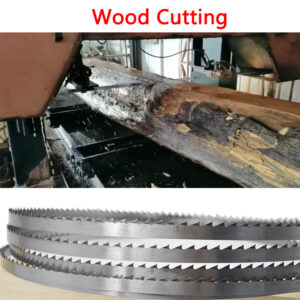
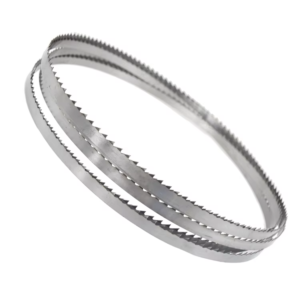
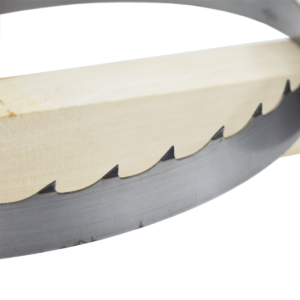
In woodworking, these blades excel at cutting everything from small branches and plywood to plastic pipes and paneling. A typical woodworking hardened teeth band saw blade might feature a 10-inch Japanese high-carbon steel blade with 11 TPI (teeth per inch) design, optimized for smooth cutting in both push and pull motions. The slender shape of the blade tip allows for working in confined spaces, while the hardened teeth maintain sharpness even when cutting abrasive materials like engineered wood products.
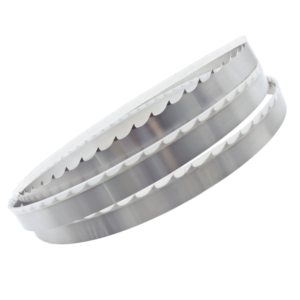
For food processing applications, specifically in meat cutting operations, hardened teeth band saw blades are engineered differently. They typically feature a 3-4 TPI configuration with a thinner profile (approximately 0.56mm thickness) and are made from food-grade steels like SK5 or C75. The teeth hardness in food blades can reach 62HRC, perfect for cleanly slicing through both fresh and frozen meat and bone, while the corrosion-resistant materials and specific geometries meet stringent food safety requirements.
Bandsaw Blades for Cutting Wood Bandsaw Blade for Hard Wood Horizontal Wood Band Saw Mill
Precision Performance: Cutting Capabilities and Ideal Use Cases
The advanced design of hardened teeth band saw blades delivers remarkable cutting performance across their application spectrum. In woodworking, they provide exceptionally smooth cuts in both hard and soft woods, with the hardened teeth resisting dulling even when encountering wood resins, adhesives, or occasional embedded contaminants. The precision of these blades makes them favorites among carpenters, furniture makers, and hobbyists who require clean, accurate cuts without frequent blade changes.
In food processing, the hardened teeth band saw blades demonstrate their worth by producing clean cuts through challenging materials—slicing smoothly through frozen meat, bones, and connective tissue without tearing or shredding the product. This preservation of product integrity is crucial for both appearance and reducing waste. The blades’ design minimizes material loss and ensures consistent portion control, essential considerations in commercial food operations.

Superior Design: The Clear Advantages Over Standard Blades
When compared to conventional band saw blades, hardened teeth band saw blades offer several distinct advantages that justify their specialized nature. The most significant benefit lies in their dramatically extended service life—the hardened teeth resist wear far longer than standard blades, reducing replacement frequency and downtime. Additionally, the differential hardening creates a blade that’s both hard and tough, significantly reducing the likelihood of tooth damage or catastrophic blade failure when encountering unexpected obstacles in the material.
Standard blades typically feature uniform hardness, which often forces a compromise between tooth sharpness retention and blade flexibility. In contrast, hardened teeth band saw blades eliminate this compromise entirely. As one supplier notes, their hardened teeth blades can cut through both hardwoods and materials that would quickly dull conventional blades, while the flexible body prevents breakage. This intelligent design also results in more consistent cutting performance throughout the blade’s life, maintaining cut quality long after standard blades would require sharpening or replacement.
1200*0.56*16 Meat And Bone Cutting Teeth Hardened Band Saw Blade
Prolonging Performance: Essential Maintenance Practices
Proper maintenance significantly extends the service life of hardened teeth band saw blades, maximizing return on investment. The single most important practice is appropriate blade “break-in”—a carefully controlled initial use period that gradually acclimates the blade to cutting stresses. Proper break-in alone can extend blade life by over 50% by allowing the ultra-hard teeth to form a slight radius that prevents premature chipping or fracture.
Operators should also ensure correct blade speed and feed rate settings, as excessively aggressive cutting can damage even hardened teeth. For structural materials, maintaining appropriate blade speed (around 250 FPM for carbon steel) is crucial—too slow can be as harmful as too fast. Regular cleaning to remove pitch, resin, or biological materials prevents corrosion and maintains cutting efficiency. For food processing blades, immediate cleaning with appropriate sanitizers is essential.
Additionally, using the right blade for each material type prevents unnecessary stress—selecting the appropriate TPI (teeth per inch) configuration for wood density or food product type ensures efficient cutting without overloading the teeth. Following these maintenance practices will help ensure that your hardened teeth band saw blades deliver their full potential of long service life and consistent cutting performance.
The strategic engineering behind hardened teeth band saw blades represents a perfect marriage of cutting-edge metallurgy and practical application needs. By delivering the ideal combination of extreme hardness at the cutting surface and shock-absorbing flexibility in the blade body, these specialized tools solve the perennial challenge of tooth wear versus blade integrity. For professionals in woodworking and food processing who demand reliability, precision, and cost-effectiveness from their cutting tools, hardened teeth band saw blades offer an intelligent solution that standard blades simply cannot match.