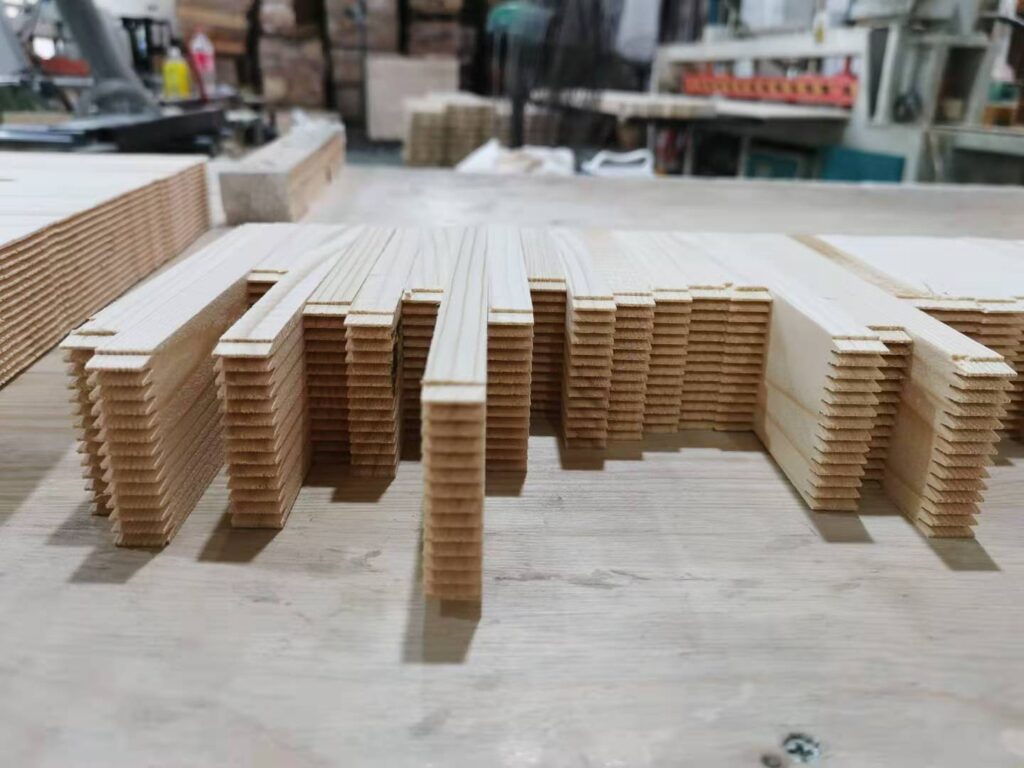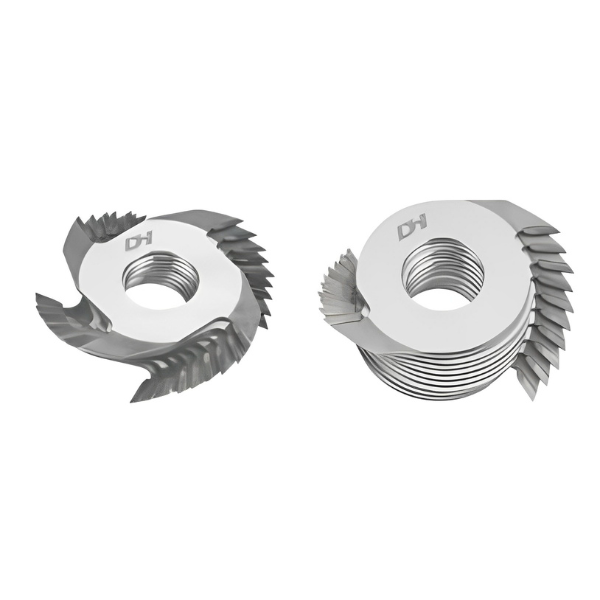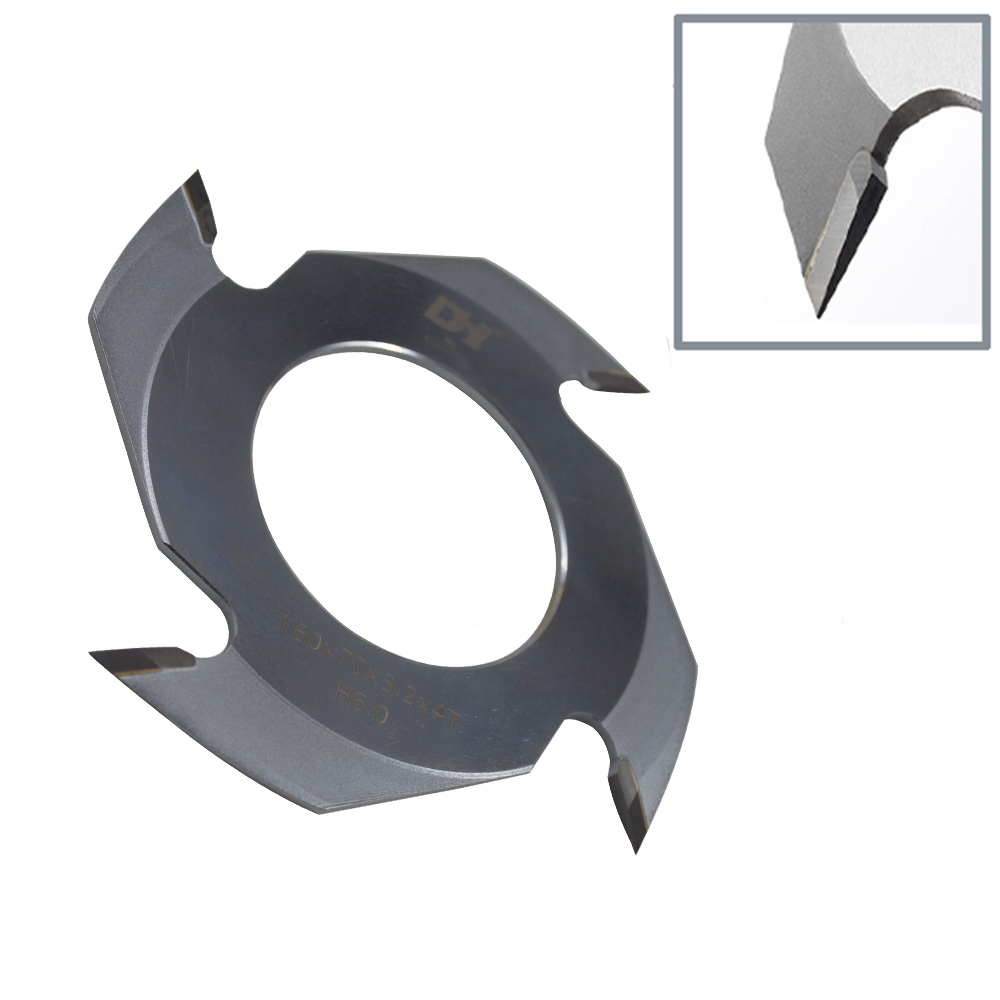
Have you ever wondered how furniture manufacturers turn short, seemingly useless wood scraps into long, flawless boards? The secret lies in a specialized tool known as the Finger Joint Cutter. This essential woodworking tool creates interlocking profiles that allow small pieces of wood to be joined end-to-end, forming strong, stable, and visually appealing longer lengths. In this article, we will explore what this tool is made of, where to use it, the critical differences between solid and insert-type designs, and how it can drastically reduce your production costs while keeping your workshop safe.
Core Construction and Simple Manufacturing Process of Finger Joint Cutter
A Finger Joint Cutter is not a simple steel blade; it is a precision tool built to withstand tremendous stress. The main body is typically made from high-grade tool steel, which provides the necessary rigidity. The cutting edges, however, are the most critical part. These are made from tungsten carbide, an extremely hard material that stays sharp even when cutting dense hardwoods or abrasive materials like MDF.
The manufacturing process begins by turning a steel disc on a CNC lathe to achieve perfect flatness. Next, the “gaps” or gullets are cut into the perimeter to form the teeth. The most crucial step is brazing—a process where small carbide tips are welded onto each steel tooth using high heat and silver solder. Finally, the tool is ground on specialized CNC grinders to create the exact finger profile. Every single tooth must be ground to an identical shape and height; even a microscopic difference of 0.01mm will cause a poor glue joint.
Processing Effects and Ideal Application Scenarios of Finger Joint Cutter
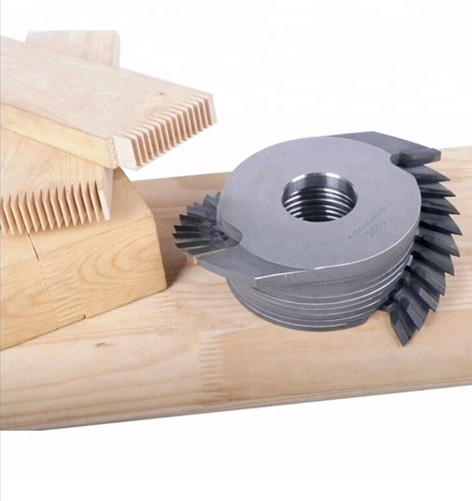
When used correctly, a Finger Joint Cutter produces a “finger” or comb-like pattern on the end grain of a board. When two such profiles are pressed together with adhesive, they mesh perfectly, creating a bond that is often stronger than natural wood. The resulting surface is smooth and ready for sanding, leaving nearly invisible joint lines on finished furniture.
So, where should you use this tool? It shines in three main scenarios. First, in furniture manufacturing, it turns leftover finger-jointed poplar or pine into tabletops and chair legs. Second, in the construction industry, it is used to create long Glulam beams for supporting roofs or bridges. Third, it is essential for making window and door frames, where it eliminates natural defects like knots, resulting in perfectly straight, warp-resistant profiles. If you work with short boards or high-value timber, this tool is your best friend.


Solid vs. Insert-Type Cutter: The Unique Advantages of the Indexable Design
Broadly speaking, finger joint cutters fall into two categories: solid body and insert-type (or replaceable blade). A solid body cutter has carbide tips permanently brazed directly onto the steel disc. Once these tips become dull, the entire tool must be sent to a professional sharpening service or replaced entirely. This leads to significant downtime.
In contrast, the insert-type Finger Joint Cutter features individual, small blades that are mechanically clamped onto the body with screws. The unique advantage here is convenience and speed. When a tooth chips or wears down, you simply unscrew that single blade and flip it to a fresh edge or replace it entirely. There is no waiting for resharpening. Furthermore, because you only replace the damaged blade, the body lasts for years, making this design much more economical for high-volume production. While the upfront cost is higher, the insert-type system reduces machine downtime from hours to just minutes.

 V S
V S
 V S
V S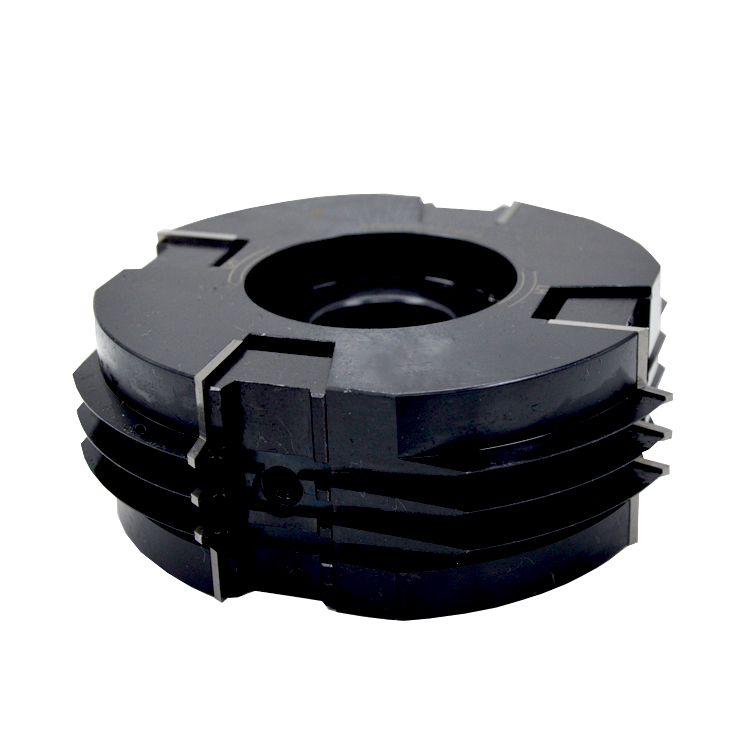
Safety, Maintenance, and How to Extend Tool Life
Safety must always come first. Before installing any Finger Joint Cutter, unplug the machine and wear cut-resistant gloves. Ensure the cutter’s rotation arrow matches the spindle direction; installing it backward will ruin the tool and create dangerous kickback. Never exceed the maximum RPM engraved on the tool body.
To make your tool last longer, follow three simple maintenance rules. First, clean the tool after every shift. Wood resins and glue residue (especially PVA glue) build up on the teeth, causing friction and heat. Use a non-toxic resin remover and a soft brush. Second, listen to your machine. If you hear a “ringing” sound or feel vibration, stop immediately—the tool may have lost its balance. Third, store cutters in a dry, dedicated box with silica gel packets. Moisture causes rust on the steel body, which can loosen the carbide tips. A well-maintained cutter can perform over 50,000 linear meters of cutting before needing attention.
Economic Benefits and Cost Savings
Investing in a high-quality Finger Joint Cutter directly improves your bottom line. The most obvious saving comes from material utilization. Without finger jointing, short pieces under 300mm are usually thrown away or sold as firewood. With this tool, you can reclaim 90% of that waste. For example, a cabinet shop buying expensive oak can reduce raw material costs by roughly 30% simply by joining offcuts.
Additionally, consider the energy savings. Because a sharp, well-maintained cutter cuts cleanly, your spindle motor draws less current, reducing electricity bills. There is also the labor factor. Insert-type cutters, as mentioned earlier, reduce resharpening downtime. In a factory producing 1000 linear meters of board per hour, a 30-minute delay for tool change costs hundreds of dollars in lost production. By using a reliable Finger Joint Cutter with fast-change inserts, you eliminate that loss entirely. Over a year, these savings on wood, electricity, and labor will easily pay for the tool many times over.